 English
 Español
NEWS
NEWS
NEWS
NEWS
NEWS
NEWS
NEWS
NEWS
NEWS
NEWS
NEWS
NEWS
NEWS
NEWS
NEWS
NEWS

Industry News
Home / News / Industry News / How to Implement ASTM B117 Salt Spray Testing Without Compromising Data Integrity
How to Implement ASTM B117 Salt Spray Testing Without Compromising Data Integrity
Content
- 1 Why ASTM B117 Remains the Reference Standard for Salt Fog Exposure
- 2 Core Test Parameters Defined by the Standard
- 3 Chamber Design Requirements for Reliable Compliance
- 4 Preparing and Maintaining the Salt Solution
- 5 Specimen Placement and Exposure Handling
- 6 Common Deviations That Invalidate Test Results
- 7 Complementary Cyclic Testing for Real-World Correlation
- 8 Recording Data and Interpreting Results
- 9 Calibration and Maintenance Practices for Long-Term Accuracy
- 10 Frequently Asked Questions
- 10.0.1 Q1: How long should a typical ASTM B117 test run?
- 10.0.2 Q2: Can results from two different chambers be compared directly?
- 10.0.3 Q3: Why do some test plans combine salt fog with cyclic humidity and temperature testing?
- 10.0.4 Q4: What is the most common cause of non-repeatable results between test batches?
- 10.0.5 Q5: Does a longer exposure time always give a more meaningful result?
Why ASTM B117 Remains the Reference Standard for Salt Fog Exposure
ASTM B117 describes a controlled salt fog environment used to evaluate how metallic parts, coatings, and finished assemblies respond to prolonged exposure to a corrosive atmosphere. It does not predict service life directly, but it gives engineers a repeatable way to rank the relative corrosion resistance of materials and surface treatments under a fixed set of conditions.
The value of the standard depends entirely on how precisely the chamber, solution, and specimen handling match the written procedure. Small deviations in temperature, fog density, or specimen angle can shift results enough to invalidate a comparison between test batches.
Laboratories that run this test as part of quality control, incoming material inspection, or coating development need equipment capable of holding narrow tolerances for days or weeks without operator intervention. This article walks through the practical requirements for setting up and running a compliant test cycle, along with the points where testing programs most often lose data integrity.
Core Test Parameters Defined by the Standard
The specification sets tight tolerances for the exposure zone. A chamber that drifts outside these ranges for even part of a test cycle can produce results that are not comparable to a prior run or to another laboratory's data.
| Parameter | Specified Condition |
|---|---|
| Chamber exposure zone temperature | 35 degrees C (95 degrees F) |
| Sodium chloride solution concentration | 5 percent by mass, plus or minus 1 percent |
| Solution pH at collection | 6.5 to 7.2 |
| Fog collection rate | 1.0 to 2.0 mL per hour per 80 square centimeter collection area |
| Air saturator tower temperature | Approximately 47 degrees C |
| Specimen angle from vertical | 15 to 30 degrees |
These figures are not arbitrary. The fog collection rate, for example, is a direct indicator of whether the atomizing nozzle and compressed air supply are producing a fine, evenly dispersed mist rather than large droplets that would wash specimens instead of coating them uniformly.
Chamber Design Requirements for Reliable Compliance
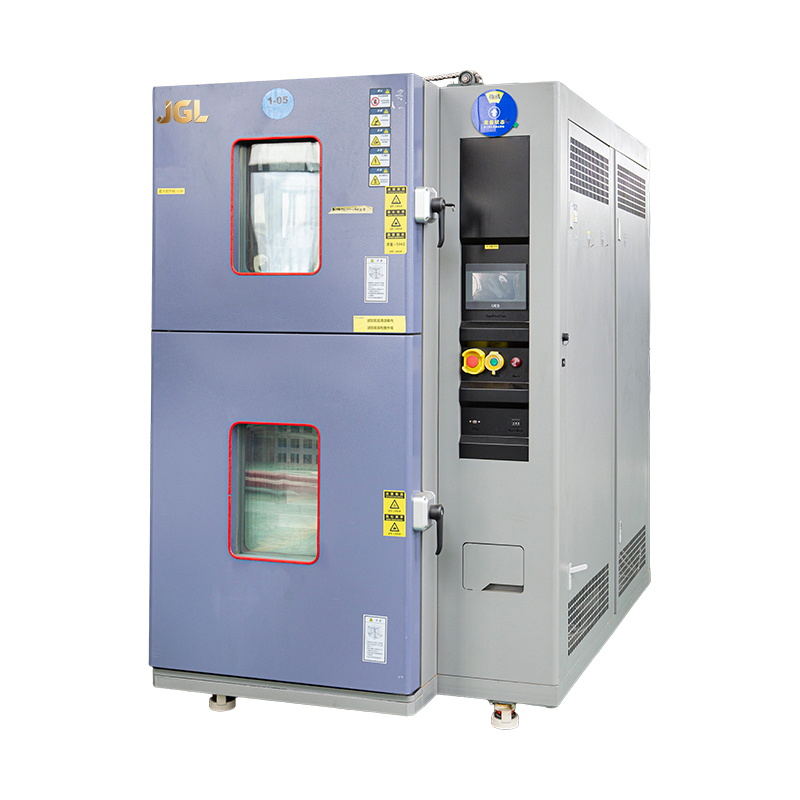
Running this test to specification for extended periods (commonly 24, 96, 240, or 500 hours) puts continuous demand on the equipment. Purpose-built environmental test chambers are constructed with corrosion-resistant internal surfaces, a dedicated air saturator tower, and closed-loop temperature control so the exposure zone does not fluctuate as the fog condenses and drains.
Interior Material
Non-reactive linings prevent the chamber itself from contaminating the fog or reacting with condensed salt solution over long cycles.
Fog Uniformity
A properly sized saturator tower conditions compressed air before it reaches the atomizer, keeping droplet size consistent across the exposure zone.
Drainage Path
Sloped chamber floors and controlled drainage stop condensate from pooling against specimen racks or feeding back into the fog stream.
Chamber cross-section airflow is worth understanding even for operators who did not design the equipment, since it explains why specimen placement rules exist.
Preparing and Maintaining the Salt Solution
Solution quality is one of the most common sources of test error, largely because it is invisible until results come back inconsistent. A few handling practices reduce that risk:
- Use reagent-grade sodium chloride with low copper and nickel content, since trace metals can accelerate or suppress corrosion independent of the specimen itself.
- Prepare solution with distilled or deionized water to avoid introducing minerals that alter conductivity and pH.
- Filter the solution before loading it into the reservoir to remove undissolved particulate that can clog the atomizing nozzle.
- Recheck pH after preparation rather than relying solely on the mixing ratio, since ambient CO2 absorption can shift pH over storage time.
- Replace standing solution on a defined schedule rather than topping off an existing batch indefinitely.
Specimen Placement and Exposure Handling
Specimen orientation and spacing directly affect how much fog contacts the test surface and whether condensate from one specimen drips onto another.
| Practice | Reason |
|---|---|
| Mount specimens at the specified angle rather than flat or vertical | Matches the exposure condition the standard was validated against |
| Space specimens so drip paths do not intersect | Prevents cross-contamination between test pieces of different materials |
| Mask cut edges where specified by the test plan | Isolates the coating or surface under evaluation from base metal exposure |
| Clean specimens with a specified solvent before loading | Removes handling oils that would otherwise blank a section of the surface |
Common Deviations That Invalidate Test Results
Most disputed or non-repeatable results trace back to a small number of recurring issues rather than an unusual failure mode.
| Deviation | Effect on Results |
|---|---|
| Chamber temperature drifting below specified range | Understates corrosion rate, making a poor coating appear acceptable |
| Fog collection rate outside the specified band | Test is not comparable to prior data even if temperature is correct |
| Condensate dripping from chamber ceiling onto specimens | Creates localized washing that produces uneven, unrepresentative corrosion patterns |
| Specimens placed too close together | Cross-contamination from corrosion byproducts of adjacent materials |
| Solution reused past its intended service life | Gradual pH and concentration drift skews later specimens in a long cycle |
Complementary Cyclic Testing for Real-World Correlation
Continuous salt fog exposure is useful for ranking materials, but it does not reproduce the wet-dry and temperature swings that most products experience in actual service. For that reason, many test plans pair ASTM B117 with cyclic exposure using a cyclic high and low temperature humidity test chamber, which alternates the specimen between controlled humidity, elevated temperature, and cooling phases within a single program.
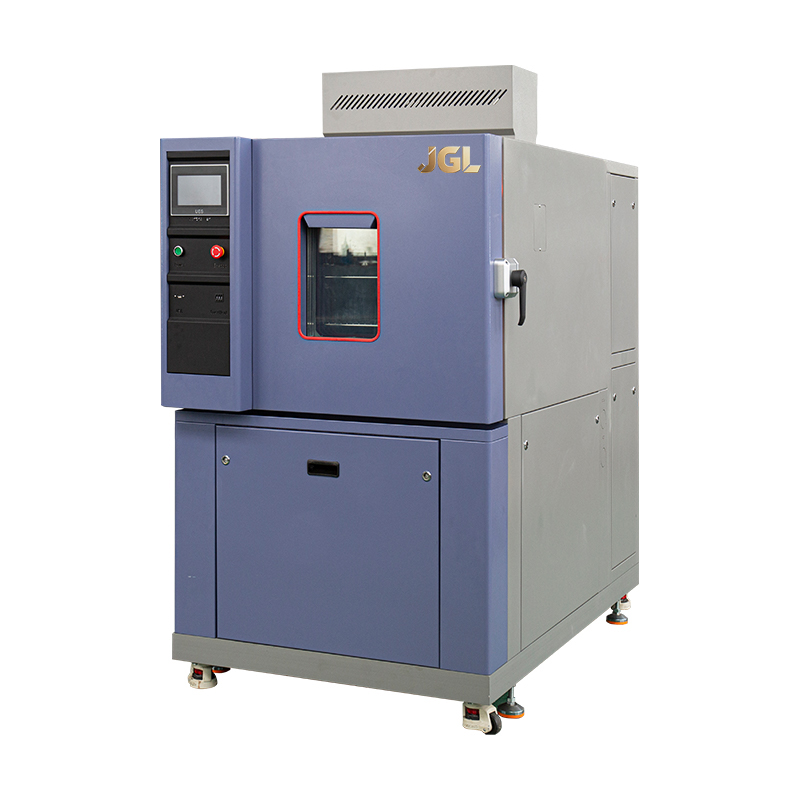
Alternating conditions tend to produce corrosion morphology closer to field failures, since repeated wetting and drying stresses a coating differently than sustained saturation. A typical combined program sequences the two test types rather than running them simultaneously.
Facilities running both programs in the same lab generally standardize on controlled corrosion testing equipment from a single control system, which simplifies data logging and reduces the chance of transcription errors between test stages.
Recording Data and Interpreting Results
ASTM B117 itself does not define a pass or fail rating; that judgment comes from a separate evaluation standard applied after exposure, typically covering blistering, scribe creepage, or red rust coverage. What the testing lab controls directly is the quality of the record supporting that later evaluation.
- Photograph specimens at defined intervals rather than only at the end of the cycle, so progressive changes are traceable.
- Log chamber temperature, fog collection rate, and solution pH at set checkpoints throughout the run, not just at startup.
- Record specimen position within the chamber, since location can introduce minor exposure variation even in a well-designed unit.
- Note any interruption to the cycle, including door openings for inspection, since these introduce brief drops in humidity and temperature.
Calibration and Maintenance Practices for Long-Term Accuracy
A chamber that passed calibration a year ago is not guaranteed to be in tolerance today. Salt fog is corrosive to the equipment as well as the specimens, and drift tends to be gradual rather than sudden.
| Task | Suggested Interval |
|---|---|
| Verify fog collection rate at multiple points in the chamber | Weekly during active testing |
| Check reservoir solution pH and concentration | Each solution batch |
| Calibrate temperature sensors against a reference thermometer | Quarterly |
| Descale and inspect the saturator tower | Based on water hardness and usage, typically quarterly |
| Inspect nozzle for salt buildup or partial blockage | Before each extended test cycle |
Building these checks into a documented schedule, rather than reacting only when results look unusual, is what keeps a testing program defensible when customers or auditors ask how a rating was produced.
Frequently Asked Questions
Q1: How long should a typical ASTM B117 test run?
Duration depends on the material and the purpose of the test. Screening tests may run 24 to 96 hours, while coating qualification programs commonly extend to 240 or 500 hours or longer, based on the specification governing the part.
Q2: Can results from two different chambers be compared directly?
Only if both chambers are verified to hold the same temperature, fog collection rate, and solution parameters within the specified tolerances. Even small, consistent offsets between units can make cross-lab comparisons unreliable.
Q3: Why do some test plans combine salt fog with cyclic humidity and temperature testing?
Continuous salt fog does not reproduce the wet-dry and thermal cycling that most products see in service. Adding a cyclic program helps correlate lab results with field corrosion behavior more closely than salt fog exposure alone.
Q4: What is the most common cause of non-repeatable results between test batches?
Solution handling and fog collection rate drift are the most frequent culprits, followed by inconsistent specimen angle and spacing. Both are correctable through routine calibration and documented handling procedures.
Q5: Does a longer exposure time always give a more meaningful result?
Not necessarily. Exposure duration should match what the applicable specification or internal quality standard calls for. Extending time beyond that without a defined evaluation basis mainly adds cost without adding comparability.
PREV:Dew Point Temperature Equation: Formula, Worked Example, and Applications in Testing
NEXT:ISO 16750 & IEC 60068: Automotive Environmental Testing
NEXT:ISO 16750 & IEC 60068: Automotive Environmental Testing
Interested in cooperation or have questions?
Featured Products
Related products
Quick Link
Contact Information
- Tel: +86-13861043568
- E-mail: 1840784112@qq.com
- Add: Tianting District, Changzhou City, Jiangsu Province, China, No. 6 Hecircuit
Scan Code
Copyright © JIANGSU BAISHENG INDUSTRIAL CO., LTD.
All Rights Reserved. Privacy Custom Precision Laboratory Testing Equipment Manufacturers
