 English
 Español
NEWS
NEWS
NEWS
NEWS
NEWS
NEWS
NEWS
NEWS
NEWS
NEWS
NEWS
NEWS
NEWS
NEWS
NEWS
NEWS

Industry News
Home / News / Industry News / Dew Point Temperature Equation: Formula, Worked Example, and Applications in Testing
Dew Point Temperature Equation: Formula, Worked Example, and Applications in Testing
Content
- 1 What Is Dew Point Temperature and Why It Matters
- 2 The Dew Point Temperature Equation: Formula and Coefficients
- 3 How to Calculate Dew Point Temperature: A Worked Example
- 4 Comparing Dew Point Calculation Methods: Accuracy and Limitations
- 5 Why Dew Point Temperature Matters in Environmental Testing
- 6 How to Choose a Humidity Chamber Based on Dew Point Performance
- 7 Frequently Asked Questions About the Dew Point Temperature Equation
- 7.0.1 Q1: What is the dew point temperature equation?
- 7.0.2 Q2: What is the difference between dew point and relative humidity?
- 7.0.3 Q3: How accurate is the Magnus–Tetens equation?
- 7.0.4 Q4: What is frost point, and when should I use it instead of dew point?
- 7.0.5 Q5: Why does dew point matter in humidity chamber testing?
Condensation forming on the inside of a temperature and humidity test chamber window is not a random event. For a reliability engineer running a cyclic humidity test at 40 °C and 60% RH, the dew point inside that chamber is about 30.8 °C. If any part of the test specimen falls below that temperature during a cooling ramp, water condenses on it, and the test result becomes ambiguous. The dew point temperature equation is the tool that predicts when that condensation will occur.
The equation most engineers use is the Magnus–Tetens approximation:
Td = (b × α(T, RH)) / (a − α(T, RH))
where α(T, RH) = (a × T) / (b + T) + ln(RH / 100)
where α(T, RH) = (a × T) / (b + T) + ln(RH / 100)
This formula answers a core question: at what temperature does the air become fully saturated with the moisture it is currently holding? In simpler terms, the dew point is the temperature at which condensation begins. This article explains how the equation works, walks through a worked example, compares the accuracy of different calculation methods, and explains why dew point matters when you are selecting and operating a humidity test chamber.
What Is Dew Point Temperature and Why It Matters
Dew point temperature is the temperature to which air must be cooled, at constant pressure and constant water vapor content, for moisture to condense. It is an absolute measure of moisture in the air, unlike relative humidity, which is a ratio that changes with temperature.
For a test engineer, the dew point provides a clear yes/no answer to a practical question: if my sample is held at this temperature, will moisture condense on it? If the surface temperature is at or below the dew point, condensation forms. That is why dew point is directly relevant to humidity chamber operation, especially when a test profile combines temperature cycling with high humidity.
The Dew Point Temperature Equation: Formula and Coefficients
The Magnus–Tetens equation is the most widely used dew point temperature equation in industrial and meteorological settings. It is not a single universal formula. The coefficients change depending on whether you are calculating over liquid water or over ice, and they are calibrated for different temperature ranges.
Magnus–Tetens Coefficients for Air Over Liquid Water
The most common version covers the range from about −45 °C to +60 °C. It uses the following coefficients:
- a = 17.625 — the constant in the numerator of α
- b = 243.04 °C — the temperature constant in the denominator of α
In the equation, the variables are:
- T — the actual air temperature, in degrees Celsius.
- RH — the relative humidity, expressed as a percentage between 0 and 100.
- ln — the natural logarithm to base e.
- Td — the dew point temperature, in degrees Celsius.
When the dew point is below 0 °C and condensation forms as ice, the standard Magnus–Tetens coefficients shift to a = 21.875 and b = 241.79. Many atmospheric science equations use the over-ice version to describe frost point. If you are designing a test at sub-zero setpoints, using the correct coefficient set is not a minor detail. It can change your calculated dew point by a measurable margin, which directly affects condensation risk assessments.
How to Calculate Dew Point Temperature: A Worked Example
Let us run the equation with concrete numbers to make the process tangible. Suppose a test chamber is set to 40 °C and the relative humidity is measured at 60%. The goal is to calculate the dew point.
Step 1: Calculate α(T, RH).
α = (17.625 × 40) / (243.04 + 40) + ln(60 / 100)
α = 705 / 283.04 + ln(0.6)
α = 2.4912 + (−0.5108)
α = 1.9804
α = 705 / 283.04 + ln(0.6)
α = 2.4912 + (−0.5108)
α = 1.9804
Step 2: Calculate Td.
Td = (243.04 × 1.9804) / (17.625 − 1.9804)
Td = 481.29 / 15.6446
Td = 30.76 °C
Td = 481.29 / 15.6446
Td = 30.76 °C
The dew point at 40 °C and 60% RH is therefore approximately 30.8 °C. In a testing context, this number tells you that if any surface in the chamber cools to below 31 °C during a steady-state dwell, it will begin to collect moisture. That single result influences everything from the placement of a sample on a fixture to the design of a cooling ramp profile.
Comparing Dew Point Calculation Methods: Accuracy and Limitations
The Magnus–Tetens equation is popular because it is simple and reasonably accurate. With the correct coefficients, it delivers a typical error of about ±0.3 °C across the range −45 °C to 60 °C. For most environmental testing work, this is more than sufficient. However, other formulations exist, and each offers a different trade-off between simplicity and precision.
Magnus–Tetens Accuracy: ±0.3 °C Use: General testing, −45 to 60 °C
Simple approximation Accuracy: ±1.5 °C Use: Quick checks, warm conditions
Hyland–Wexler (1983) Accuracy: ±0.01 °C Use: High-precision metrology
Sonntag (1994) Accuracy: ±0.02 °C Use: Industrial and forensic standards
The simple approximation is a linear relation often written as Td ≈ T − (100 − RH) / 5. It works reasonably well above 20 °C and for RH values above 40%, but it can be off by several degrees in cold or very dry conditions. Higher-order formulations such as Hyland–Wexler and Sonntag use psychrometric vapor pressure equations over liquid water or ice. They often require iterative solving, which is why they appear in data loggers, precision hygrometers, and metrology software rather than in daily manual calculations.
Key takeaway
For humidity chamber specification and routine testing, the Magnus–Tetens equation is accurate enough for most test protocols, including IEC 60068, JEDEC, and MIL-STD 810 test standards. High-order equations matter when you are calibrating humidity probes or building a metrology-grade uncertainty budget.
For humidity chamber specification and routine testing, the Magnus–Tetens equation is accurate enough for most test protocols, including IEC 60068, JEDEC, and MIL-STD 810 test standards. High-order equations matter when you are calibrating humidity probes or building a metrology-grade uncertainty budget.
Why Dew Point Temperature Matters in Environmental Testing
When you run a temperature and humidity cycling test, the chamber controller is usually regulating relative humidity as the setpoint. But the physical phenomenon that actually affects your sample is the dew point. This distinction becomes critical during temperature ramps.
Consider a cyclic test where the chamber is powered from 30 °C / 90% RH down to −10 °C as quickly as possible. During the cool-down, the dew point of the chamber air does not fall as quickly as the surface temperature of the sample. If the sample surface temperature drops below the current dew point, moisture condenses directly on the specimen. That condensation can cause electrical shorts on PCBs, alter the weight of a material sample, or produce test failures that have nothing to do with the actual durability characteristic under evaluation.
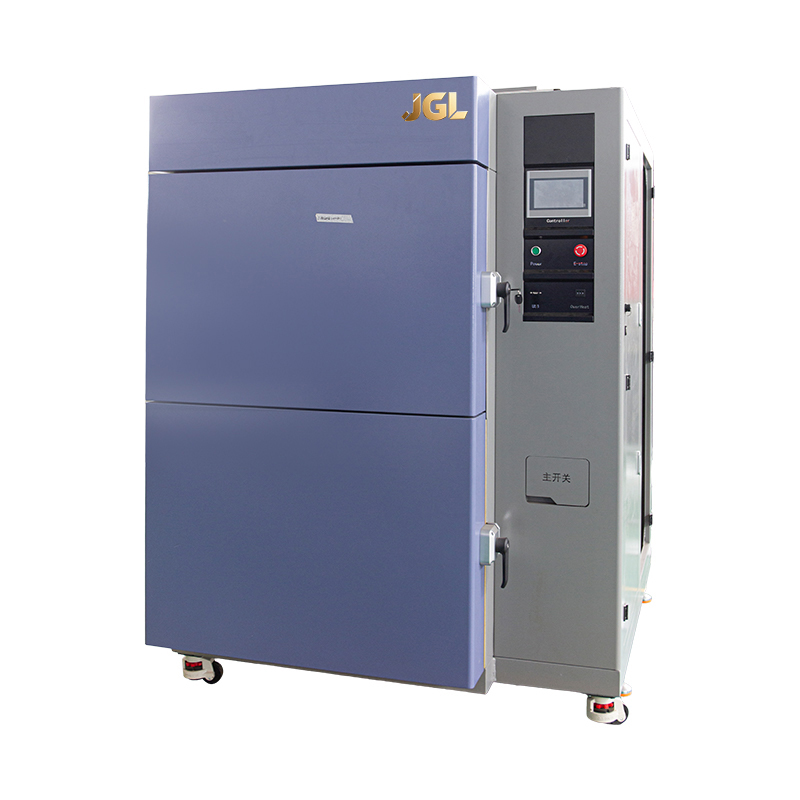
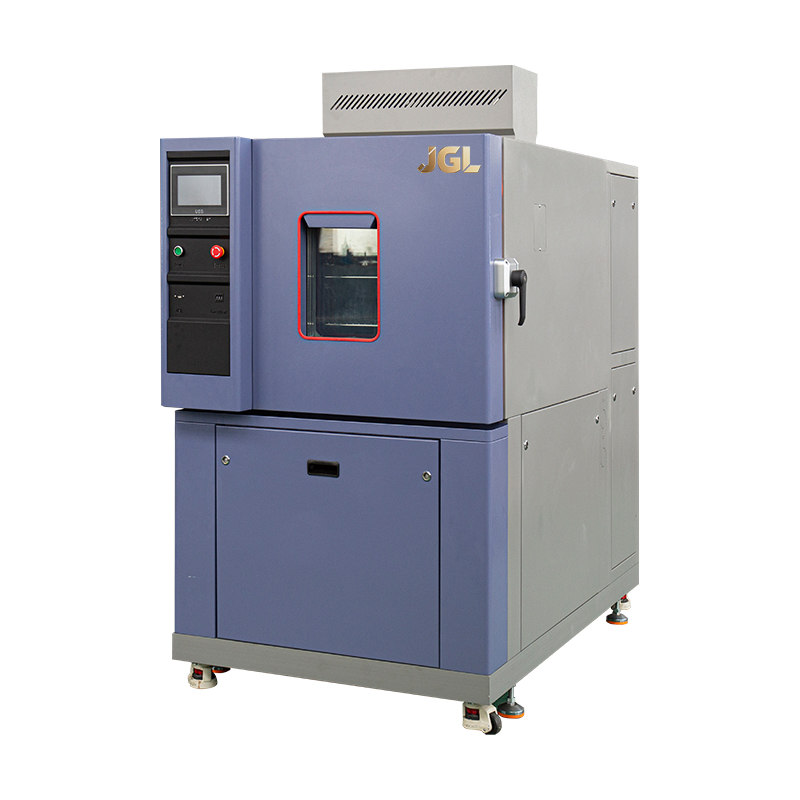
This is why selecting a chamber with well-characterized humidity behavior is not just a purchasing detail. A chamber that maintains 20 °C at 55% RH needs to hold a dew point near 10 °C. A chamber rated for 85 °C / 85% RH needs to hold a dew point above 78 °C. These are different machine requirements. They change the refrigeration capacity, the dehumidification design, and the type of moisture purge strategy the chamber needs. A UTH100A alternating high-low temperature humidity chamber is an example of a platform configured for exactly this kind of continuous humidity conditioning work, with a humidity range designed to support dependable dew point behavior throughout a cycling profile.
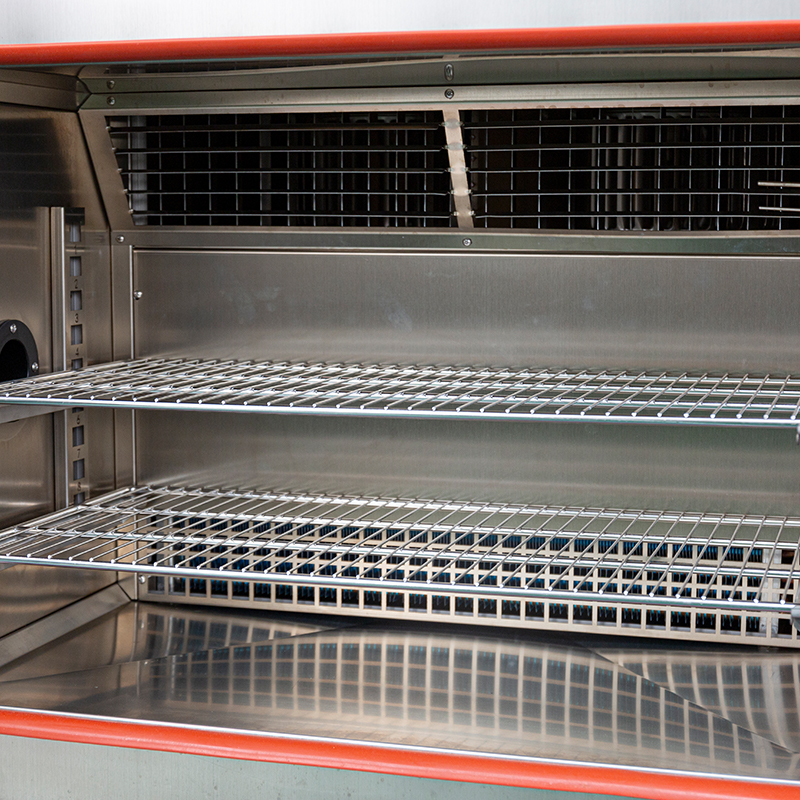 Alternating High/Low Temperature Humidity Chamber for Continuous Humidity ConditioningThis chamber supports dependable dew point behavior through cycling profiles, with precise balanced temperature and humidity control for stable conditioning in environmental tests.View Product →
Understanding the link between temperature, relative humidity, and dew point also helps you read test standards more critically. Many standards specify humidity as a relative humidity percentage, but they define tolerances in terms of vapor pressure, which is effectively a dew point tolerance. When you see that in a spec, the dew point equation gives you the translation between the two.
How to Choose a Humidity Chamber Based on Dew Point Performance
There are three practical factors that determine whether a chamber can hold the dew point conditions your test requires.
- Low-end dew point capability. The chamber must be able to remove moisture from the air down to a sufficiently low dew point. This is governed by the cooling coil, desiccant, or purge air system. If you need a dew point below 0 °C during a cold dwell, look for a chamber with forced dry-air purge or a dedicated dehumidification subsystem.
- High-end dew point stability. At high humidity, the chamber must hold a stable dew point while the wall temperature and the sample both interact with the chamber air. That requires good airflow, uniform temperature, and a properly sized refrigeration system. Damp heat tests at 85 °C / 85% RH push the dew point close to 80 °C, with a small margin between saturation and controller performance.
- Ramp-rate behavior. During fast temperature transitions, the dew point and the sample surface temperature are effectively chasing each other. A chamber that can maintain dew point control during a steep ramp produces far more repeatable results. The U5QTH100A-W fast temperature humidity cycling chamber
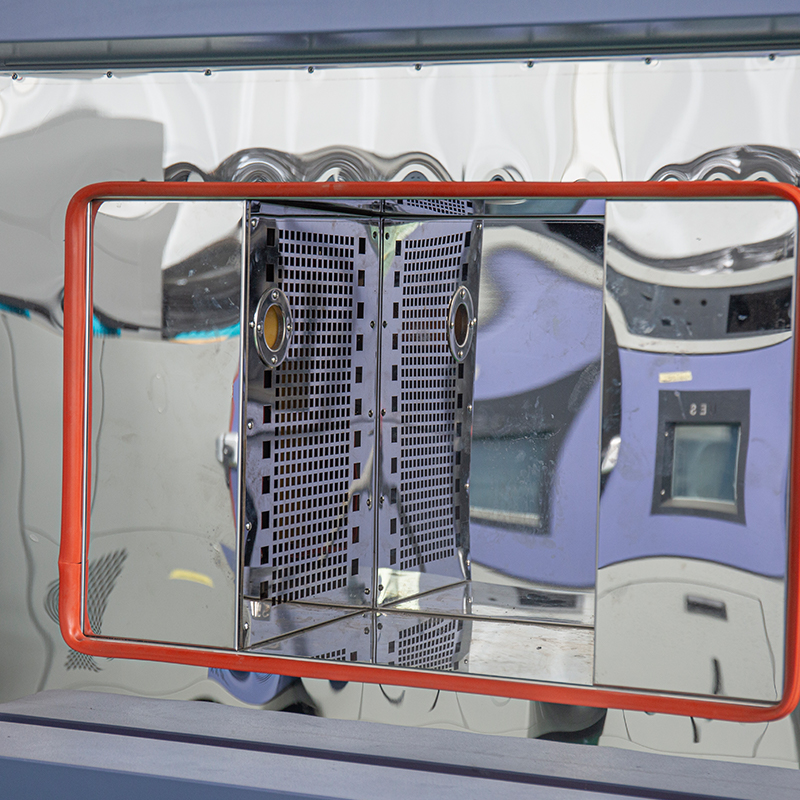 Fast Temperature and Humidity Cycling Chamber for Rapid Rate TestingIdeal for tests requiring rapid temperature changes, this chamber offers selectable rates up to 20°C/min while maintaining precise humidity control for sensitive materials.View Product → is built for those steep transitions, which makes it a practical option when your protocol requires accelerated cycling in a moisture-controlled environment.
When you review a chamber datasheet, ask: what is the dew point at the stated temperature and relative humidity setpoint? Many datasheets list a minimum and maximum RH range, but the dew point the system can actually hold at low or high temperature matters more than the RH range it claims. For example, a chamber that reaches 10% RH at 20 °C may have a dew point of about −7 °C, while a chamber reaching 5% RH at the same temperature goes to about −13 °C. That difference is significant if your material is sensitive to trace moisture.
If you are planning a cyclic humidity chamber test, cross-check the chamber's humidity limits at each temperature point against the dew point values you calculate. This is a quick but effective way to avoid specifying a profile the physical system cannot achieve.
Frequently Asked Questions About the Dew Point Temperature Equation
Q1: What is the dew point temperature equation?
The most common form is the Magnus–Tetens equation: Td = (b × α) / (a − α), where α = (a × T) / (b + T) + ln(RH / 100). For air over liquid water, a = 17.625 and b = 243.04, and the result is in degrees Celsius.
Q2: What is the difference between dew point and relative humidity?
Relative humidity is a ratio of current water vapor pressure to saturation pressure at the air temperature, so it changes with temperature. Dew point is a fixed moisture content value that does not change with air temperature unless moisture is removed or added. That makes dew point the better parameter for analyzing chamber moisture behavior across temperature variations.
Q3: How accurate is the Magnus–Tetens equation?
With the correct coefficients, it is typically accurate to about ±0.3 °C between −45 °C and 60 °C. The error grows at very low dew points and below freezing unless you switch to the over-ice coefficient set. Higher-order equations such as Hyland–Wexler and Sonntag offer higher precision for calibration tasks.
Q4: What is frost point, and when should I use it instead of dew point?
Frost point is the temperature at which water vapor condenses directly into ice. It applies when the dew point is below 0 °C and the condensing surface is below freezing. The frost point differs from the dew point at the same vapor pressure, and confusing the two can produce errors of several degrees in cold-chamber work.
Q5: Why does dew point matter in humidity chamber testing?
Because condensation begins as soon as the sample surface reaches the dew point. In a temperature cycling chamber, the dew point determines whether moisture pools on the test specimen, which can trigger false failures, corrosion, or changes in dimensional weight. A chamber's achievable dew point at a given temperature and RH setpoint is therefore a critical specification in any damp heat or cyclic humidity program.
PREV:How to Calculate Relative Humidity and Dew Point: Formulas, Examples, and Applications
NEXT:How to Implement ASTM B117 Salt Spray Testing Without Compromising Data Integrity
NEXT:How to Implement ASTM B117 Salt Spray Testing Without Compromising Data Integrity
Interested in cooperation or have questions?
Featured Products
Related products
Quick Link
Contact Information
- Tel: +86-13861043568
- E-mail: 1840784112@qq.com
- Add: Tianting District, Changzhou City, Jiangsu Province, China, No. 6 Hecircuit
Scan Code
Copyright © JIANGSU BAISHENG INDUSTRIAL CO., LTD.
All Rights Reserved. Privacy Custom Precision Laboratory Testing Equipment Manufacturers
