 English
 Español
product
product
product
product
product
product
product
product
product
product
product
product
product
product
product
product

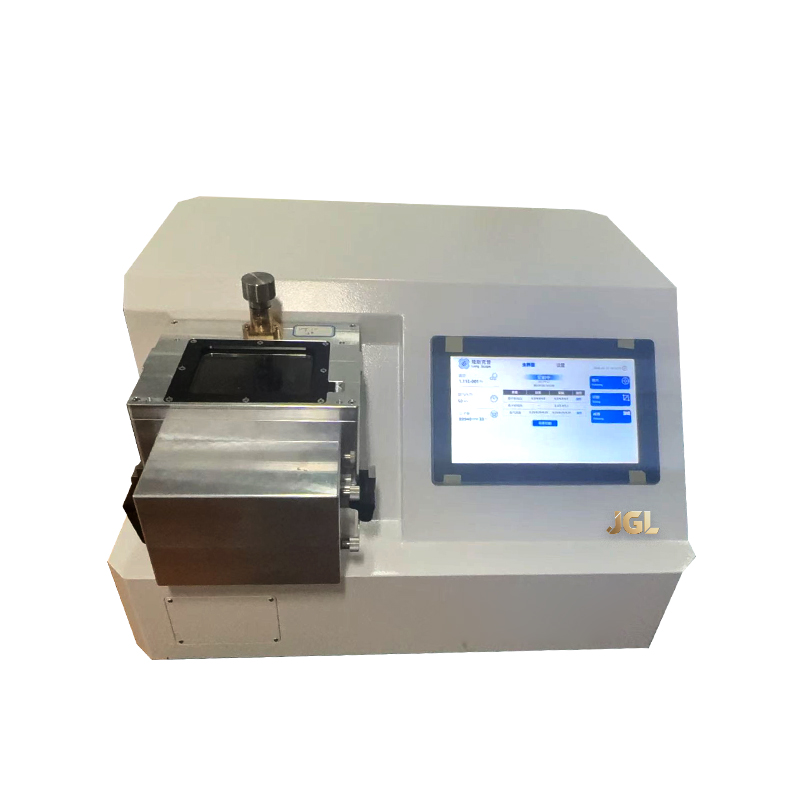
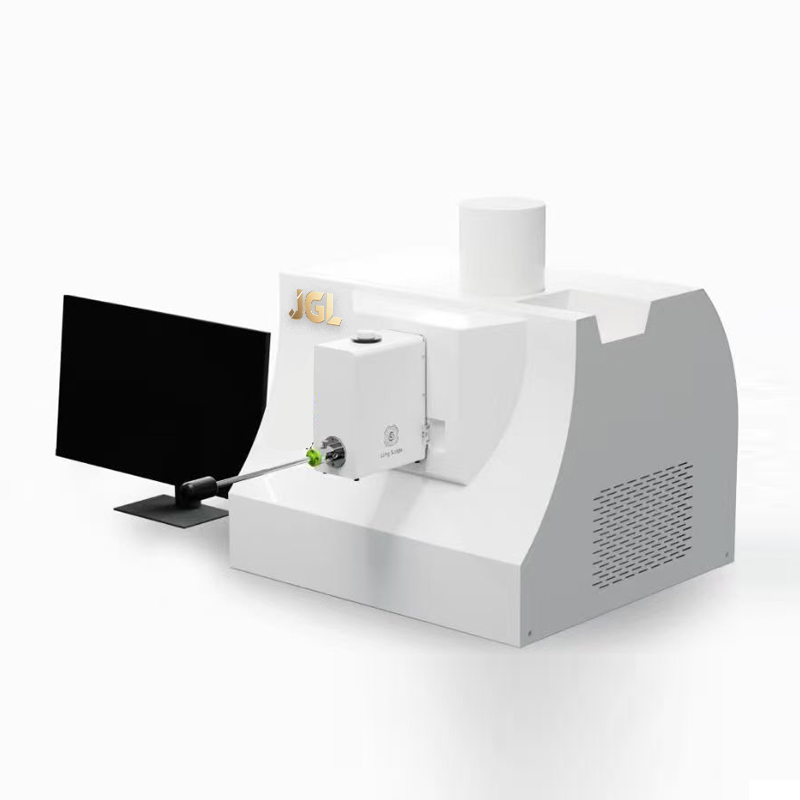
Multi-Beam Ion Beam Etching Deposition and Polishing System
Home / Products / Vacuum Cryogenic Transport Device / Multi-Beam Ion Beam Etching Deposition and Polishing System
Product Series
-
Environmental Test Chambers
- Double-Layer Explosion-Proof High and Low Temperature Test Chamber
- High and Low Temperature Test Chamber
- Two-Section Thermal Shock Test Chamber
- Rapid Temperature Change Humidity Test Chamber
- Cyclic High and Low Temperature Humidity Test Chamber
- Walk-In Explosion-Proof High and Low Temperature Humidity Test Chamber
- Vacuum Cryogenic Transport Device
- Electronic Test Instruments
Product Category
-
Environmental Test Chambers
- Double-Layer Explosion-Proof High and Low Temperature Test Chamber
- High and Low Temperature Test Chamber
- Two-Section Thermal Shock Test Chamber
- Rapid Temperature Change Humidity Test Chamber
- Cyclic High and Low Temperature Humidity Test Chamber
- Walk-In Explosion-Proof High and Low Temperature Humidity Test Chamber
- Vacuum Cryogenic Transport Device
- Electronic Test Instruments
Contact us
 +86-13861043568
Custom Multi-Beam Ion Etching Coating and Polishing System Manufacturers
Message Feedback
About Us
JIANGSU BAISHENG INDUSTRIAL CO., LTD.
Specializing in the research and development, as well as the
supply of laboratory equipment and safety compliance testing instruments.
JIANGSU BAISHENG INDUSTRIAL CO., LTD. is China Custom Multi-Beam Ion Etching Coating and Polishing System Manufacturers and Multi-Beam Ion Beam Etching Deposition and Polishing System Suppliers, a technology-driven enterprise specializing in the research, development, and supply of high-end laboratory equipment and safety testing instruments. By seamlessly integrating innovative engineering with professional international trade expertise, we have established a solid reputation within the industry. Unlike traditional trading companies, our core advantage lies in our dedicated R&D team, which focuses on precision design and technical excellence to ensure that every product meets rigorous technical specifications. We are committed to continuous innovation and the constant refinement of our product lines, providing our partners with reliable, customized solutions. We offer Custom Multi-Beam Ion Etching Coating and Polishing System for sale.

JIANGSU BAISHENG INDUSTRIAL CO., LTD.
Certificate Of Honor
What’s News
Industry Insights & Updates
View All News
-
2026-10-15Industry News
-
2026-10-08Industry News
-
2026-10-01Industry News
Industry Knowledge
How Modern Ion Beam Systems Utilize Optical End-point Detection to Prevent Over-Etching of Ultra-Thin Samples
When preparing ultra-thin samples for Transmission Electron Microscopy (TEM)—where thickness must typically be less than 100 nm—one of the most difficult challenges is precisely controlling when to stop the etching process. Optical End-point Detection technology acts as the "retina" of the system. Its working principle and mechanism for preventing over-etching are as follows:
- Monitoring of Light Transmission and Reflection Intensity: The system uses a laser or high-brightness light source to illuminate the sample. As the ion beam strips away material, the sample thickness decreases, causing non-linear changes in light transmittance (for transparent/translucent materials) or reflectance (for opaque materials like metals).
- Interference Fringe Capture: For extremely thin films, light reflecting between the top and bottom surfaces of the sample creates interference. The system uses sensors to capture the displacement and intensity fluctuations of these interference fringes in real-time. When the fringe characteristics reach a preset "critical thickness value," the algorithm determines that the preparation is nearing completion.
- Automatic Feedback Control Loop: The detection system is interconnected with the ion source control module in real-time. Once the optical sensor detects that the signal intensity has reached a set threshold, or a sudden change occurs due to sample perforation, the system shuts down the ion beam within milliseconds. This effectively prevents the center of the sample from being completely etched through or excessively damaged.
As a technology-driven enterprise, JIANGSU BAISHENG INDUSTRIAL CO., LTD. has deeply integrated precision optical detection technology with ion beam control systems in the development of high-end laboratory equipment. Unlike traditional trading companies, we rely on a dedicated R&D team to ensure sample repeatability and safety at extreme thicknesses. Through the design of our Multibeam Ion Beam Etching, Deposition and Polishing System, which features self-developed high-sensitivity optical modules, we provide global research partners with customized solutions that meet rigorous technical specifications.
Technical Parameter Comparison: Optical End-point Detection vs. Traditional Manual Monitoring
| Evaluation Metric | Optical End-point Detection (JIANGSU BAISHENG Standard) | Traditional Manual Monitoring | Impact on Experimental Results |
| Response Time | < 10 ms (Automatic trigger) | 2-5 seconds (Visual observation + manual) | Millisecond shutdown preserves the fragile edges of the thin area. |
| Thickness Control Accuracy | Error < 5 nm | Error > 50 nm | Determines if the sample can achieve atomic-level resolution. |
| Repeatability | > 95% | Highly volatile (experience dependent) | Significantly improves the success rate of high-throughput preparation. |
| Monitoring Method | Real-time multi-band spectral analysis | Visual inspection through microscope | Prevents misjudgment caused by human fatigue. |
Frequently Asked Questions (FAQ)
Q1: Is optical end-point detection still effective for completely opaque thick metal samples?
A1: Yes, it is. The R&D team at JIANGSU BAISHENG INDUSTRIAL CO., LTD. has engineered the system to support reflection mode monitoring. By capturing the characteristic curves of surface reflectance as they change with roughness and thickness, and coordinating this with our high-performance multi-beam ion system, we can achieve precise shutdown control and ensure technical excellence in the preparation process.
Q2: How does JIANGSU BAISHENG INDUSTRIAL CO., LTD. resolve interference from ambient light on detection accuracy?
A2: Our core advantage lies in our attention to precision in every detail. JIANGSU BAISHENG INDUSTRIAL CO., LTD. utilizes frequency-modulated laser sources and narrow-band filtering technology, making the sensors sensitive only to specific wavelengths. This innovative engineering filters out interference from ion beam glow or other ambient light within the chamber, ensuring every product meets the strictest experimental specifications.
Q3: Why choose a JIANGSU BAISHENG INDUSTRIAL CO., LTD. ion beam system over products from traditional traders?
A3: Traditional trading companies often lack the ability to perform secondary development on core underlying technologies. In contrast, JIANGSU BAISHENG INDUSTRIAL CO., LTD. has an R&D team focused on precision design and technical innovation. We do more than just supply equipment; we are committed to providing customized optical end-point detection algorithms and process packages based on the specific material properties of our partners—such as highly sensitive heat-sensitive materials—ensuring your research remains at the cutting edge.
How Multi-Beam Ion Beam Assisted Deposition (IBAD) Technology Significantly Enhances Thin Film Adhesion and Density Compared to Traditional Thermal Evaporation
In the field of thin film preparation, traditional "thermal evaporation" technology relies primarily on heating materials to vaporize and condense them onto a substrate. However, this method often results in films with coarse particles, weak adhesion, and a tendency to form porous columnar crystal structures. Multi-Beam Ion Beam Assisted Deposition (IBAD) technology fundamentally changes the growth quality of the film by introducing high-energy ion beam bombardment during the deposition process:
- Kinetic Energy Transfer and "Atomic Hammering" Effect: Unlike thermal evaporation which relies solely on low-energy thermal motion, IBAD utilizes the controlled ion beams generated by the Multibeam Ion Beam Etching, Deposition and Polishing System to continuously bombard the deposition surface. This high-energy collision acts like a "hammer," embedding deposited atoms deep into the substrate and squeezing out micro-pores within the film, resulting in ultra-high density approaching that of bulk materials.
- Formation of an Interface Pseudo-diffusion Layer: The ion beam bombardment causes displacement of substrate surface atoms, leading to a mutual mixing of substrate and deposited atoms at the interface. This "pseudo-diffusion layer" greatly enhances the chemical bonding force between the thin film and the substrate, increasing adhesion several times over traditional evaporation techniques.
- Elimination of Columnar Crystals and Internal Stress Regulation: Traditional evaporated films are prone to loose columnar crystal structures, making them fragile and poorly resistant to corrosion. The ion-assisted action of IBAD technology breaks this growth pattern, promoting the formation of fine-grained structures. Simultaneously, by adjusting the incident angle and energy of multiple ion beams, internal stress can be precisely neutralized, preventing the peeling of thick film layers.
As a technology-driven enterprise, JIANGSU BAISHENG INDUSTRIAL CO., LTD. is dedicated to the research, development, and innovation of high-end laboratory equipment. Unlike traditional trading companies, we have a dedicated R&D team focused on precision design and technical excellence. In the development of our multi-beam ion assisted deposition systems, we ensure excellent film quality under rigorous technical specifications through precise modeling of ion source energy distribution, providing reliable and customized technical solutions for global partners.
Technical Parameter Comparison: IBAD Technology vs. Traditional Thermal Evaporation
| Key Performance Metric | Multi-Beam Assisted Deposition (IBAD) | Traditional Thermal Evaporation | Impact on Application |
| Film Density | Near Bulk Material (95% - 99%) | Low (70% - 85%) | Determines refractive index stability and oxidation resistance. |
| Adhesion | Extremely Strong (Interface mixing) | Weak (Physical adsorption only) | Prevents peeling under thermal cycling or mechanical stress. |
| Microstructure | Fine-grained, Isotropic | Loose Columnar Crystals | Enhances hardness, wear resistance, and barrier function. |
| Process Controllability | Independent Energy, Angle, and Flow Control | Temp and Rate Control Only | Supports atomic-level precision for complex multilayer films. |
Frequently Asked Questions (FAQ)
Q1: How does IBAD technology perform when processing heat-sensitive substrates?
A1: This is a major advantage of IBAD. Because it enhances film quality through ion beam kinetic energy rather than high-temperature thermal radiation, high-quality films can be achieved at lower substrate temperatures. The R&D team at JIANGSU BAISHENG INDUSTRIAL CO., LTD. utilizes precision temperature control systems combined with multi-beam management technology to ensure that heat-sensitive materials (such as polymers or low-melting-point alloys) obtain high-performance coatings without deformation.
Q2: Why is the multi-beam design of JIANGSU BAISHENG INDUSTRIAL CO., LTD. more advantageous than single-beam systems?
A2: Our core advantage lies in the continuous pursuit of precision design and technical excellence. The multi-beam system developed by JIANGSU BAISHENG INDUSTRIAL CO., LTD. achieves bombardment uniformity over large areas, avoiding the issues of central overheating or insufficient edge coverage common in single-beam systems. This innovative engineering design ensures the product meets the most rigorous industrial technical specifications.
Q3: Can your company provide customized equipment for specific film refractive index or hardness requirements?
A3: Absolutely. JIANGSU BAISHENG INDUSTRIAL CO., LTD. is committed to providing customized solutions through continuous innovation. Unlike traditional trading companies, our R&D team can optimize ion beam arrangements and energy feedback algorithms based on a customer's specific research or production needs, ensuring every layer of film output meets your expected physical and chemical characteristics.
Quick Link
Contact Information
- Tel: +86-13861043568
- E-mail: 1840784112@qq.com
- Add: Tianting District, Changzhou City, Jiangsu Province, China, No. 6 Hecircuit
Scan Code
Copyright © JIANGSU BAISHENG INDUSTRIAL CO., LTD.
All Rights Reserved. PrivacyCustom Multi-Beam Ion Etching Coating and Polishing System Suppliers
