 English
 Español
product
product
product
product
product
product
product
product
product
product
product
product
product
product
product
product

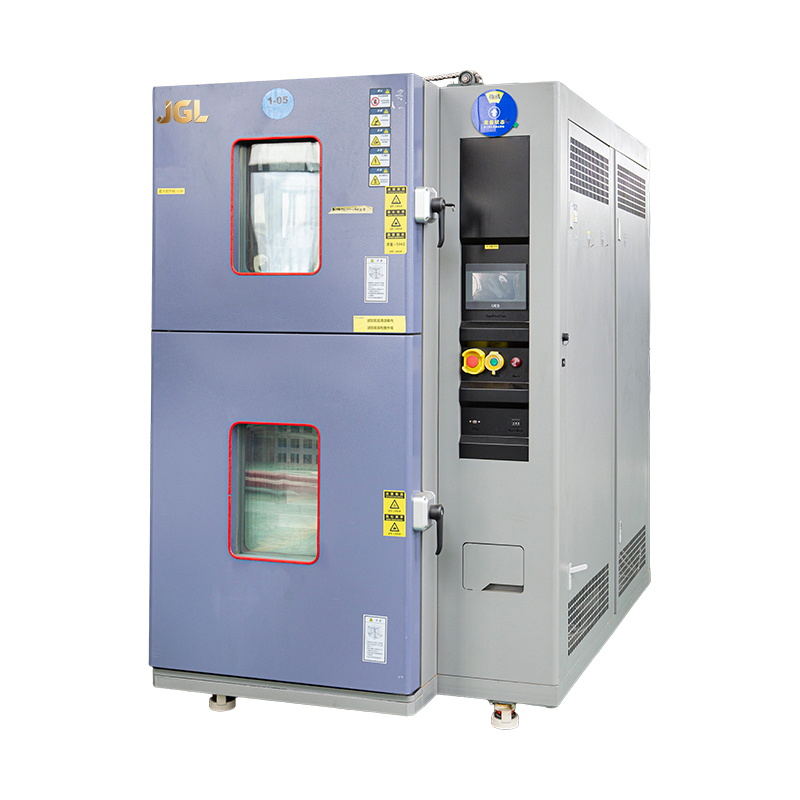
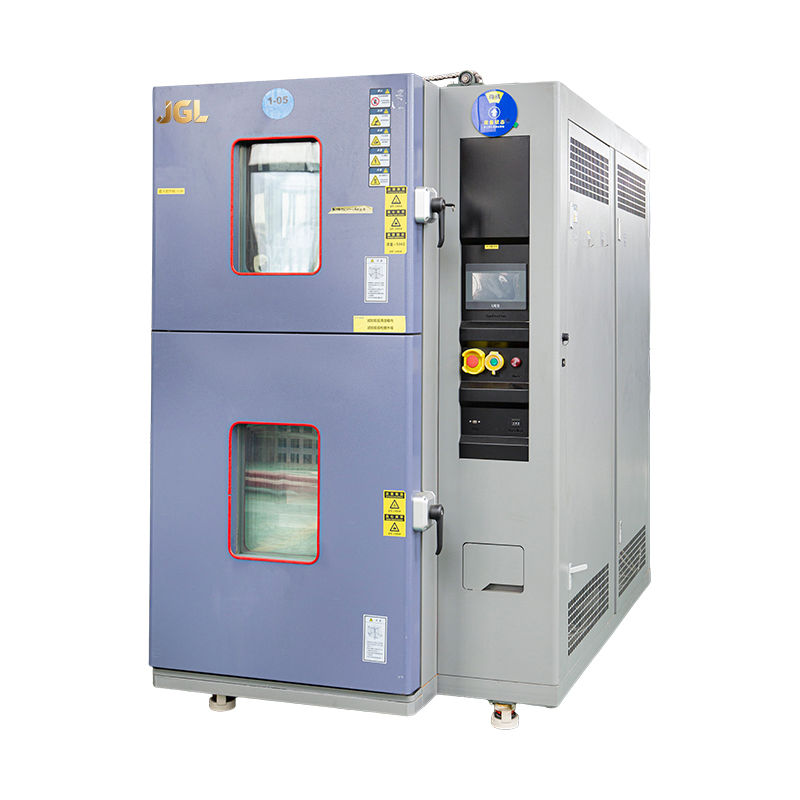
Two-Section Thermal Shock Test Chamber
Product Series
-
Environmental Test Chambers
- Double-Layer Explosion-Proof High and Low Temperature Test Chamber
- High and Low Temperature Test Chamber
- Two-Section Thermal Shock Test Chamber
- Rapid Temperature Change Humidity Test Chamber
- Cyclic High and Low Temperature Humidity Test Chamber
- Walk-In Explosion-Proof High and Low Temperature Humidity Test Chamber
- Vacuum Cryogenic Transport Device
- Electronic Test Instruments
Product Category
-
Environmental Test Chambers
- Double-Layer Explosion-Proof High and Low Temperature Test Chamber
- High and Low Temperature Test Chamber
- Two-Section Thermal Shock Test Chamber
- Rapid Temperature Change Humidity Test Chamber
- Cyclic High and Low Temperature Humidity Test Chamber
- Walk-In Explosion-Proof High and Low Temperature Humidity Test Chamber
- Vacuum Cryogenic Transport Device
- Electronic Test Instruments
Contact us
 +86-13861043568
Custom Two-Section Thermal Shock Test Chamber Manufacturers
Message Feedback
About Us
JIANGSU BAISHENG INDUSTRIAL CO., LTD.
Specializing in the research and development, as well as the
supply of laboratory equipment and safety compliance testing instruments.
JIANGSU BAISHENG INDUSTRIAL CO., LTD. is China Custom Temperature Shock Test Chamber Manufacturers and Two-Zone Thermal Shock Test Chamber Suppliers, a technology-driven enterprise specializing in the research, development, and supply of high-end laboratory equipment and safety testing instruments. By seamlessly integrating innovative engineering with professional international trade expertise, we have established a solid reputation within the industry. Unlike traditional trading companies, our core advantage lies in our dedicated R&D team, which focuses on precision design and technical excellence to ensure that every product meets rigorous technical specifications. We are committed to continuous innovation and the constant refinement of our product lines, providing our partners with reliable, customized solutions. We offer Custom Two-Section Thermal Shock Test Chamber for sale.

JIANGSU BAISHENG INDUSTRIAL CO., LTD.
Certificate Of Honor
What’s News
Industry Insights & Updates
View All News
-
2026-10-15Industry News
-
2026-10-08Industry News
-
2026-10-01Industry News
Industry Knowledge
Why Thermal Shock Testing Is a Non-Negotiable Step in Product Qualification
In product reliability engineering, gradual temperature cycling and instantaneous thermal shock are fundamentally different stress conditions. While a standard climate chamber ramps temperature slowly over several minutes, a Temperature Shock Test Chamber exposes specimens to near-instantaneous transitions — often moving from +150 °C to −65 °C in under 10 seconds. This abrupt change induces differential thermal expansion between dissimilar materials, solder joints, and polymer-metal interfaces, uncovering latent defects that would never appear under gradual cycling.
Industries with zero tolerance for field failure — aerospace, automotive electronics, military hardware, and advanced consumer devices — rely on thermal shock testing as a mandatory qualification gate. Standards such as MIL-STD-883, IEC 60068-2-14, and JEDEC JESD22-A104 all prescribe specific transition times, dwell durations, and temperature extremes that only dedicated shock chambers can reliably deliver.
Understanding the distinction between a standard temperature cycling test and a genuine thermal shock test is essential when selecting equipment. A chamber that cannot achieve a transition time below 30 seconds should not be classified as a true thermal shock system, regardless of its temperature range.
Two-Zone vs. Two-Section Architecture: What the Terminology Actually Means
Procurement teams frequently encounter the terms Two-Zone Thermal Shock Test Chamber and Two-Section Thermal Shock Test Chamber used interchangeably, yet they can describe subtly different design philosophies.
A two-zone chamber maintains two independent temperature-controlled zones — typically a high zone and a low zone — simultaneously at their target conditions. The specimen basket is mechanically transferred between these zones, either by a pneumatic lift, a horizontal shuttle, or a basket-flip mechanism. Because both zones are always at temperature, the transition is governed only by the speed of the transfer mechanism and the thermal mass of the specimen basket itself.
A two-section design refers more specifically to the physical enclosure configuration: two discrete chambers sharing a common structural frame, with the specimen compartment moving between them. In practice, most modern systems combine both attributes — they are simultaneously two-zone (independent thermal conditioning) and two-section (separate physical enclosures). The key performance metric remains the same: transition time from hot zone to cold zone, typically specified at the basket, not at the air sensor.
| Feature | Two-Zone Chamber | Single-Zone Cycling Chamber |
|---|---|---|
| Temperature Transition Time | < 10–30 seconds | Minutes to tens of minutes |
| Both Zones Active Simultaneously | Yes | No |
| Specimen Transfer Mechanism | Motorized basket/lift | Not applicable |
| Applicable Standards | MIL-STD-883, IEC 60068-2-14, JEDEC | IEC 60068-2-1/2 |
| Primary Failure Mode Detected | Solder fatigue, delamination, CTE mismatch | General thermal drift, seal aging |
Critical Specification Parameters Engineers Must Evaluate Before Purchasing
Selecting a Two-Section Thermal Shock Test Chamber involves evaluating several interdependent parameters that collectively determine whether a chamber is fit for a given test protocol. JIANGSU BAISHENG INDUSTRIAL CO., LTD. recommends engineers assess the following before committing to a specification:
- Temperature Range: Most standard configurations cover −65 °C to +150 °C, but semiconductor and aerospace applications may require −70 °C to +200 °C. Confirm the sustained holding accuracy at extremes (typically ±2 °C), not just the peak capability.
- Transfer Time: The specification sheet value is usually measured with an empty basket. Under actual specimen loading — especially high-mass metal parts — the effective transition time will be longer. Request data at rated load, not empty-basket conditions.
- Basket Volume and Load Capacity: Basket volumes for benchtop units typically range from 2 L to 10 L, while floor-standing models can exceed 50 L. Verify the maximum load capacity in kg, as overloading extends thermal recovery time and invalidates test results.
- Recovery Time: After each transfer, the chamber must recover to setpoint before the dwell timer begins. Fast recovery — ideally under 3 minutes — is essential for high-cycle throughput and accurate cycle counting per shift.
- Refrigeration System: Cascade refrigeration using environmentally compliant refrigerants (R404A, R23, or CO₂ cascade) is standard for low-temperature performance. Confirm the compressor type and annual maintenance intervals.
- Controller and Data Logging: PLC-based touchscreen controllers with USB/LAN export, programmable cycle profiles, and alarm histories are the minimum expectation for modern traceability requirements. Ensure the controller supports at least 100 programmable step profiles.
Common Application Scenarios Across Industries
Thermal shock chambers serve a diverse range of qualification and accelerated life testing (ALT) programs. Understanding where these chambers add the most value helps labs prioritize investment and configure test profiles effectively.
Automotive Electronics
Engine control units, battery management systems, and ADAS sensor modules must survive thermal shock profiles defined by AEC-Q100 Grade 0 (−40 °C to +150 °C). With EV adoption accelerating globally, battery cell and module-level thermal shock testing has become one of the fastest-growing application segments, often requiring chambers with both large basket volumes and rapid cycle capability.
Consumer Electronics and Semiconductors
Chip-scale packages, BGA components, and flexible PCBs undergo JEDEC-defined thermal shock as part of standard board-level reliability (BLR) qualification. For consumer devices, 500 to 1,000 shock cycles is a typical acceptance criterion before a component is approved for mass production integration.
Aerospace and Defense
MIL-STD-810 and MIL-STD-883 govern thermal shock requirements for military hardware. Test conditions are often more extreme than commercial equivalents, and documentation traceability is mandatory. Chambers used in these programs must support calibration records tied to NIST-traceable standards and provide complete audit-ready test logs. Our team at JIANGSU BAISHENG INDUSTRIAL CO., LTD. works directly with procurement and engineering teams to ensure chamber specifications align with the applicable military standard revision and program-specific SOW requirements.
Medical Devices
Implantable devices, diagnostic sensors, and surgical instruments undergo thermal shock as part of IEC 60601 and ISO 14971 risk management frameworks. Material compatibility between housings, seals, and internal electronics must be validated, particularly where regulatory submissions require evidence of environmental stress screening under ISO 13485 quality systems.
Quick Link
Contact Information
- Tel: +86-13861043568
- E-mail: 1840784112@qq.com
- Add: Tianting District, Changzhou City, Jiangsu Province, China, No. 6 Hecircuit
Scan Code
Copyright © JIANGSU BAISHENG INDUSTRIAL CO., LTD.
All Rights Reserved. PrivacyCustom Two-Section Thermal Shock Test Chamber Suppliers
