 English
 Español
NEWS
NEWS
NEWS
NEWS
NEWS
NEWS
NEWS
NEWS
NEWS
NEWS
NEWS
NEWS
NEWS
NEWS
NEWS
NEWS

Industry News
ISO 16750 & IEC 60068: Automotive Environmental Testing
Content
- 1 Why Automotive Electronics Demand Standardized Environmental Validation
- 2 Understanding ISO 16750: Scope and Test Categories
- 3 IEC 60068: The Foundational Framework for Environmental Testing
- 4 Comparing ISO 16750 and IEC 60068 Test Philosophies
- 5 Key Test Parameters: Temperature, Humidity, Vibration, and Ingress Protection
- 6 Climatic Sequence Testing and Combined Stress Profiles
- 7 Equipment Considerations for Standard Compliant Testing
- 8 Building a Compliance Ready Test Program
- 9 Frequently Asked Questions
- 9.0.1 Q1: What is the main difference between ISO 16750 and IEC 60068?
- 9.0.2 Q2: Do all automotive components need to meet the same temperature range?
- 9.0.3 Q3: Why is rate of temperature change important in chamber testing?
- 9.0.4 Q4: Is combined or sequential stress testing required by these standards?
- 9.0.5 Q5: How often should test chamber calibration be verified for compliance purposes?
- 9.0.6 Q6: Can ingress protection testing be performed using the same chamber as thermal testing?
Why Automotive Electronics Demand Standardized Environmental Validation
Modern vehicles carry dozens of electronic control units, sensors, and connectors that must function reliably across extreme swings in temperature, humidity, vibration, and moisture exposure. A component that performs flawlessly on a lab bench can fail within months when it experiences the thermal cycling of an engine bay, the road spray of a winter commute, or the sustained vibration of a highway drive. This gap between bench performance and field reliability is precisely what environmental test chambers are built to close.
Two standards sit at the center of automotive environmental qualification: ISO 16750 and IEC 60068. Together they define how electrical and electronic equipment in road vehicles should be stressed, measured, and evaluated before it reaches production. Understanding how these standards apply in practice, and how test equipment should be configured to meet them, is essential for any engineering team responsible for component qualification.
40 percent of automotive electronics warranty claims trace back to environmental stress factors not caught in early testing
15 years typical service life expectation for underhood and chassis electronic modules
6 zones distinct thermal installation zones defined for component classification under ISO 16750
Understanding ISO 16750: Scope and Test Categories
ISO 16750 is published in multiple parts, each addressing a distinct stress category relevant to road vehicle electrical and electronic equipment. Rather than treating environmental testing as a single generic procedure, the standard separates requirements by physical mechanism, which allows engineering teams to target specific failure modes.
The Five Core Parts
- General requirements and definitions covering test conditions, tolerances, and installation location classifications
- Electrical loads, including supply voltage variation, overvoltage, reverse polarity, and load dump events
- Mechanical loads, covering vibration profiles specific to engine-mounted, body-mounted, and chassis-mounted equipment
- Climatic loads, addressing temperature cycling, humidity, thermal shock, and solar radiation
- Chemical loads, covering exposure to fluids such as fuel, coolant, and cleaning agents commonly encountered in service
Installation Location Classification
A central concept in ISO 16750 is that test severity should match where a component physically lives on the vehicle. A control unit mounted directly on the engine experiences a very different thermal and vibration profile than one mounted inside the passenger cabin. The standard defines location categories that translate into specific temperature ranges, vibration spectra, and duration requirements, which is why test planning should always begin with an accurate installation classification rather than a generic worst-case assumption.
| Installation Zone | Typical Temperature Range | Primary Stress Concern |
|---|---|---|
| Engine compartment, engine mounted | Minus 40C to 140C | Extreme thermal cycling, high vibration |
| Engine compartment, body mounted | Minus 40C to 105C | Moderate thermal cycling, splash exposure |
| Passenger compartment | Minus 40C to 85C | Solar loading, humidity, limited vibration |
| Trunk or luggage area | Minus 40C to 85C | Humidity, dust ingress |
| Exterior, exposed | Minus 40C to 90C | UV exposure, moisture, salt spray |
IEC 60068: The Foundational Framework for Environmental Testing
Where ISO 16750 is automotive-specific, IEC 60068 provides the broader methodological foundation used across electronics, aerospace, and industrial equipment testing. Automotive test programs frequently reference IEC 60068 test methods directly, particularly for procedures such as dry heat, cold, damp heat, and vibration that are not uniquely automotive in nature.
Structure of the Series
IEC 60068 is organized into three broad groupings that engineers should be familiar with when reading a test specification.
Part 1 establishes general information and guidance applicable across all subsequent test methods, including definitions of test severities and recovery periods.
Part 2 contains the individual test methods themselves, such as Test A for cold, Test B for dry heat, Test Ca for damp heat steady state, Test Db for damp heat cyclic, and Test Fc for vibration.
Part 3 provides supporting documentation on topics like calibration of temperature and humidity chambers, guidance on test severities, and procedures for combined testing.
Why Cross-Referencing Matters
Because ISO 16750 leans on IEC 60068 methodology for many of its procedures, a test lab needs equipment capable of executing both the automotive-specific profiles and the base IEC test methods within a single qualification campaign. This is one reason equipment selection matters as much as procedural knowledge: a chamber that cannot achieve the rate of temperature change specified in a given test method invalidates the result regardless of how carefully the test plan was written.
Comparing ISO 16750 and IEC 60068 Test Philosophies
Although the two standards work together in practice, they differ in intent. ISO 16750 tells an engineer what conditions a vehicle component must survive based on where it sits on the vehicle. IEC 60068 tells an engineer how to physically execute a given environmental stress test with consistent, repeatable methodology.
| Aspect | ISO 16750 | IEC 60068 |
|---|---|---|
| Primary focus | Automotive component survivability requirements | General environmental test methodology |
| Scope | Road vehicle electrical and electronic equipment | Electrotechnical products broadly |
| Test severity source | Vehicle installation location and use case | Application-defined severity levels |
| Typical use | Defines pass or fail requirements | Defines how the stress is applied and measured |
| Relationship | References IEC 60068 test methods | Serves as the procedural backbone |
In practical terms, a component qualification report will often cite an ISO 16750 requirement for the target condition, followed by an IEC 60068 test method reference for how that condition was generated and verified in the chamber.
Key Test Parameters: Temperature, Humidity, Vibration, and Ingress Protection
Environmental qualification under these standards typically spans four interrelated stress categories. Each requires distinct chamber capabilities and measurement approaches.
Temperature Cycling and Thermal Shock
Rapid transitions between temperature extremes reveal solder joint fatigue, connector seal degradation, and material expansion mismatches that steady-state testing would miss entirely. Thermal shock testing, where a specimen is transferred between hot and cold chambers within seconds, is especially aggressive and is commonly specified for underhood connectors and sensor housings.
Humidity and Condensation Cycling
Damp heat cyclic testing exposes components to alternating high humidity and condensation conditions that simulate seasonal transitions and daily dew cycles. This is particularly relevant for connector housings and printed circuit board assemblies where moisture ingress can cause corrosion or electrical leakage paths over time.
Vibration and Mechanical Endurance
Vibration profiles under ISO 16750 vary significantly by mounting location, distinguishing between sinusoidal sweeps for structural resonance identification and random vibration profiles that better represent real road input. Engine-mounted components see the most severe vibration spectra due to combined engine and road excitation.
Ingress Protection Verification
Many automotive components must also demonstrate resistance to dust and water ingress, typically referenced against IP rating test methods. While ingress protection testing is procedurally distinct from thermal and vibration testing, it is frequently bundled into the same qualification campaign since it shares environmental chamber infrastructure for pre and post conditioning.
Thermal Cycling Thermal Shock Damp Heat Cyclic Random Vibration Ingress Protection Solar Radiation
Climatic Sequence Testing and Combined Stress Profiles
A growing trend in automotive qualification is combined or sequential stress testing, where a specimen moves through multiple environmental conditions in a defined order rather than being tested against each stress in isolation. This better represents the layered stresses a component actually experiences during a vehicle life cycle, and it often reveals interaction effects that single-stress testing cannot detect.
Sequencing decisions are not arbitrary. Placing thermal cycling before vibration testing, for example, can reveal whether thermally induced microcracking reduces a component's fatigue life under subsequent mechanical stress. A well-designed sequence mirrors the order and combination of stresses a component would realistically encounter over a service life, rather than testing each condition as an isolated event.
Equipment Considerations for Standard Compliant Testing
Meeting ISO 16750 and IEC 60068 requirements depends heavily on chamber performance characteristics, not just on following the written procedure. A test lab evaluating or specifying equipment should look closely at several parameters before assuming a chamber is fit for automotive qualification work.
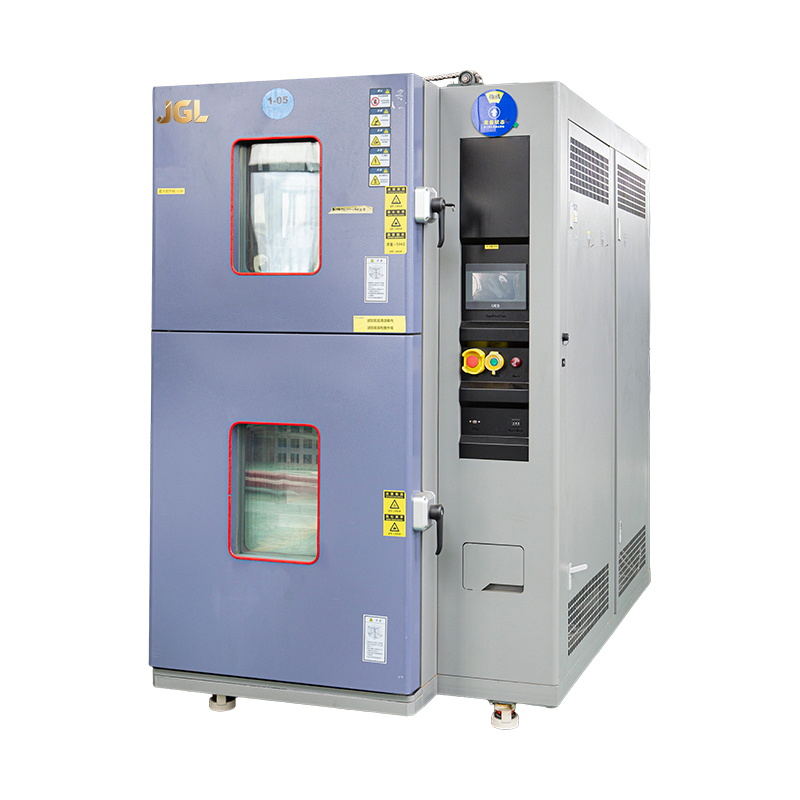
Rate of Temperature Change
Several ISO 16750 and IEC 60068 test methods specify a required rate of temperature change, often expressed as degrees per minute. A chamber that cannot achieve the specified ramp rate will under-stress the specimen, producing a test result that does not accurately represent field conditions even if the final temperature setpoints match.
Uniformity and Overshoot Control
Temperature uniformity across the working chamber volume affects whether every specimen in a batch test receives equivalent stress. Chambers with poor uniformity can produce inconsistent results across nominally identical parts, complicating failure analysis and potentially masking marginal design issues.
Humidity Control Range
Damp heat testing requires precise humidity control alongside temperature, and the two systems must work in coordination rather than independently, since condensation testing specifically relies on controlled transitions through the dew point.
Purpose Built Chambers for Automotive Programs
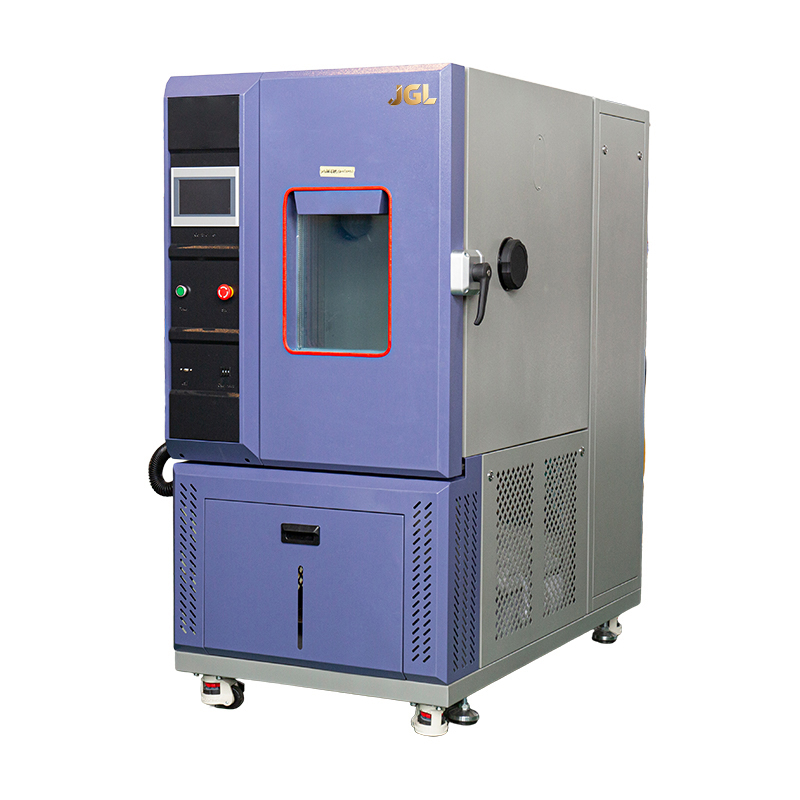
For labs running frequent ISO 16750 and IEC 60068 qualification cycles, a high and low temperature test chamber configured with automotive-relevant ramp rates and working volume tends to reduce cycle time compared to general purpose equipment not designed around these specific test profiles. Chamber selection should be matched to the range of installation zones a lab typically tests, since a facility working primarily with cabin-mounted electronics has different requirements than one qualifying engine-mounted modules.
Building a Compliance Ready Test Program
Establishing a repeatable, audit-ready test program around these standards involves more than acquiring capable equipment. The following sequence reflects common practice among engineering teams building automotive qualification capability from the ground up.
- Classify each component by installation zone to determine applicable temperature, vibration, and ingress requirements
- Map required test methods to the corresponding IEC 60068 procedures referenced by ISO 16750
- Confirm chamber specifications against the ramp rate, uniformity, and range requirements of the selected test methods
- Define a combined stress sequence that reflects realistic field exposure order where applicable
- Establish functional verification checkpoints between stress phases rather than only at test completion
- Document calibration intervals and traceability records to support audit and customer review requirements
Test programs that treat environmental qualification as a documentation exercise rather than an engineering discipline tend to discover failure modes in the field instead of the lab, which is a far more costly place to find them.
Common Pitfalls
| Pitfall | Consequence |
|---|---|
| Using generic test conditions instead of zone-specific requirements | Under-testing or over-testing components relative to actual field exposure |
| Skipping intermediate functional checks | Missed detection of intermittent failures that recover before final inspection |
| Inconsistent chamber calibration records | Test results rejected during customer or regulatory audit |
| Testing stresses in isolation only | Missed interaction effects between combined thermal and mechanical loads |
Frequently Asked Questions
Q1: What is the main difference between ISO 16750 and IEC 60068?
ISO 16750 defines the environmental requirements a road vehicle electrical or electronic component must survive based on its installation location, while IEC 60068 provides the general test methods and procedures used to generate and measure those environmental stresses in a controlled setting.
Q2: Do all automotive components need to meet the same temperature range?
No. Required temperature ranges vary by installation zone. Engine mounted components typically face the widest and most severe range, while cabin mounted components generally see a narrower range with more emphasis on humidity and solar exposure.
Q3: Why is rate of temperature change important in chamber testing?
Many test methods specify a required ramp rate because thermal stress on materials and solder joints depends not only on the temperature extremes reached but also on how quickly those transitions occur. A chamber that ramps too slowly can significantly understate real world thermal shock stress.
Q4: Is combined or sequential stress testing required by these standards?
Sequential or combined testing is not universally mandated for every component, but it is increasingly used because it better represents the layered environmental exposure a component experiences in actual vehicle service compared to isolated single stress tests.
Q5: How often should test chamber calibration be verified for compliance purposes?
Calibration intervals should follow the chamber manufacturer recommendation and any customer or industry audit requirements, with most automotive test labs verifying temperature and humidity calibration on a fixed periodic schedule and maintaining documented traceability records.
Q6: Can ingress protection testing be performed using the same chamber as thermal testing?
Ingress protection testing typically uses dedicated dust and water spray equipment rather than a standard thermal chamber, though pre and post conditioning for ingress tests is often performed using the same environmental chamber infrastructure used for thermal qualification.
PREV:How to Implement ASTM B117 Salt Spray Testing Without Compromising Data Integrity
NEXT:How Electrical Safety Testing Protects Semiconductor and PCB Integrity Across the Production Lifecycle
NEXT:How Electrical Safety Testing Protects Semiconductor and PCB Integrity Across the Production Lifecycle
Interested in cooperation or have questions?
Quick Link
Contact Information
- Tel: +86-13861043568
- E-mail: 1840784112@qq.com
- Add: Tianting District, Changzhou City, Jiangsu Province, China, No. 6 Hecircuit
Scan Code
Copyright © JIANGSU BAISHENG INDUSTRIAL CO., LTD.
All Rights Reserved. Privacy Custom Precision Laboratory Testing Equipment Manufacturers
