 English
 Español
product
product
product
product
product
product
product
product
product
product
product
product
product
product
product
product

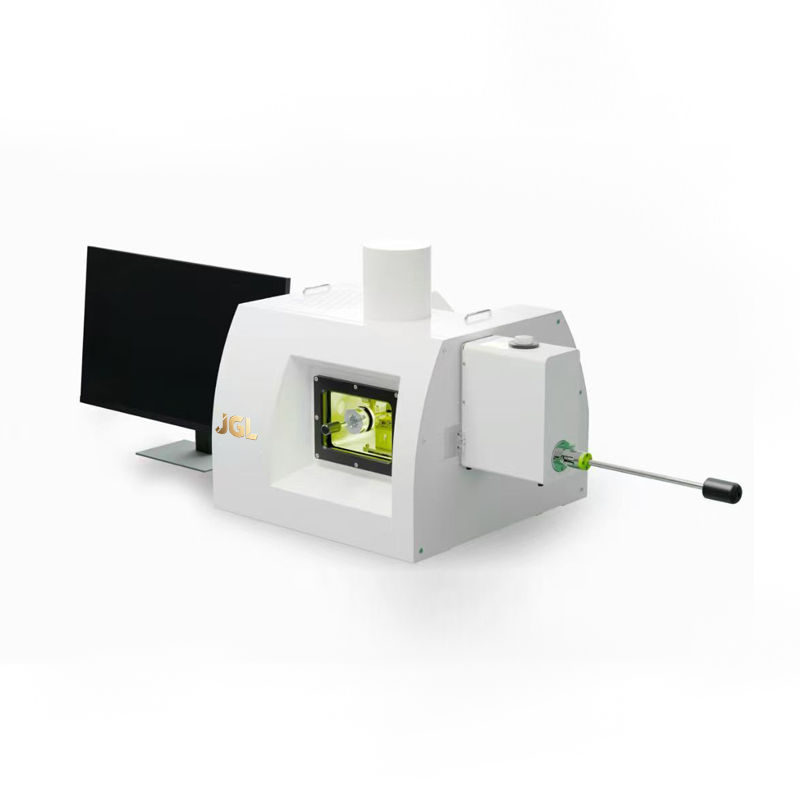
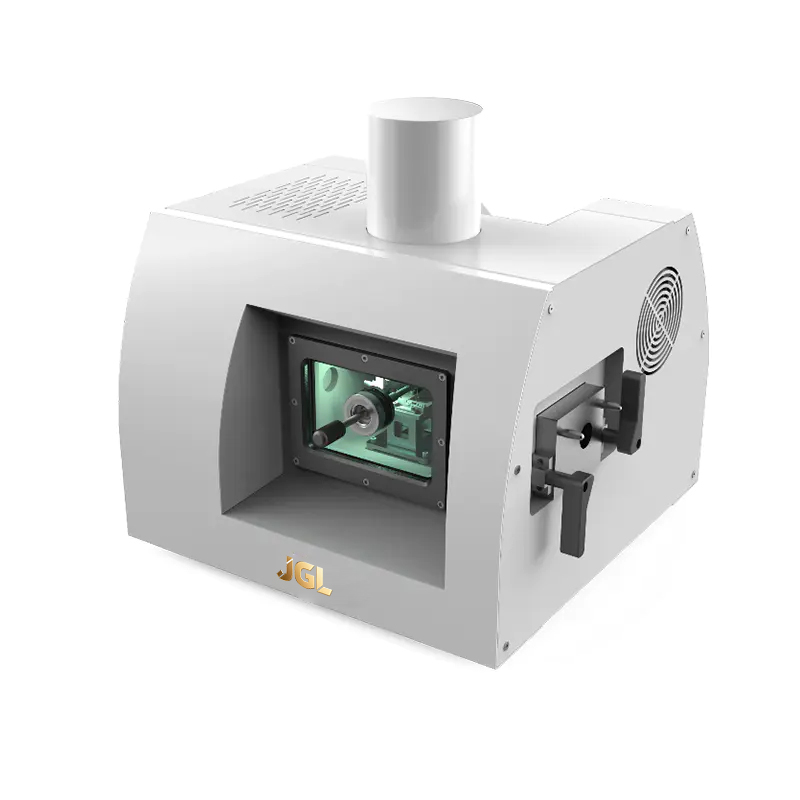
Multi-Functional Cryogenic Laboratory Chamber
Product Series
-
Environmental Test Chambers
- Double-Layer Explosion-Proof High and Low Temperature Test Chamber
- High and Low Temperature Test Chamber
- Two-Section Thermal Shock Test Chamber
- Rapid Temperature Change Humidity Test Chamber
- Cyclic High and Low Temperature Humidity Test Chamber
- Walk-In Explosion-Proof High and Low Temperature Humidity Test Chamber
- Vacuum Cryogenic Transport Device
- Electronic Test Instruments
Product Category
-
Environmental Test Chambers
- Double-Layer Explosion-Proof High and Low Temperature Test Chamber
- High and Low Temperature Test Chamber
- Two-Section Thermal Shock Test Chamber
- Rapid Temperature Change Humidity Test Chamber
- Cyclic High and Low Temperature Humidity Test Chamber
- Walk-In Explosion-Proof High and Low Temperature Humidity Test Chamber
- Vacuum Cryogenic Transport Device
- Electronic Test Instruments
Contact us
 +86-13861043568
Custom Multi-functional Cryo-Chamber Manufacturers
Message Feedback
About Us
JIANGSU BAISHENG INDUSTRIAL CO., LTD.
Specializing in the research and development, as well as the
supply of laboratory equipment and safety compliance testing instruments.
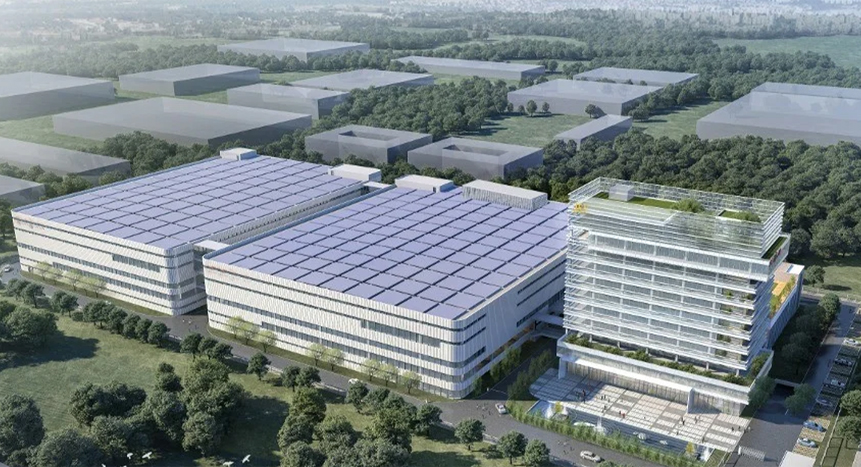
JIANGSU BAISHENG INDUSTRIAL CO., LTD. is China Custom Multi-functional Cryo-Chamber Manufacturers and Multi-Functional Cryogenic Laboratory Chamber Suppliers, a technology-driven enterprise specializing in the research, development, and supply of high-end laboratory equipment and safety testing instruments. By seamlessly integrating innovative engineering with professional international trade expertise, we have established a solid reputation within the industry. Unlike traditional trading companies, our core advantage lies in our dedicated R&D team, which focuses on precision design and technical excellence to ensure that every product meets rigorous technical specifications. We are committed to continuous innovation and the constant refinement of our product lines, providing our partners with reliable, customized solutions. We offer Custom Multi-functional Cryo-Chamber for sale.
JIANGSU BAISHENG INDUSTRIAL CO., LTD.
Certificate Of Honor
What’s News
Industry Insights & Updates
View All News
-
2026-10-15Industry News
-
2026-10-08Industry News
-
2026-10-01Industry News
Industry Knowledge
How Variable Temperature Technology Achieves Precise Switching from Liquid Helium to Room Temperature in a Multi-functional Cryo-Chamber
In physical experiments and material characterization, the ability to span from extreme cryogenic levels (such as the liquid helium range at 4.2K) to room temperature (300K) with precision is the core capability of a Multi-functional Cryo-Chamber. The technical logic behind achieving this wide-temperature precision switching involves the following three aspects:
- Active Heating Compensation Technology: In a cryogenic environment, the cryocooler or cryogenic liquid provides continuous cooling power. Variable temperature technology utilizes high-precision, non-inductive heaters installed on the sample stage to compensate for this cooling in real-time using PID control algorithms. By applying the principle of thermal cancellation, the sample can be stabilized at any designated temperature point from liquid helium levels to room temperature.
- Staged Application of High-Precision Temperature Sensors: Since a single sensor rarely maintains linearity and high sensitivity across the full range from 4K to 300K, a high-performance Multifunctional Cryogenic Laboratory Chamber is typically configured with a composite sensor system (such as Cernox paired with thermocouples). Cernox sensors offer superior resolution at extreme low temperatures, while thermocouples or platinum resistors handle precise feedback in the higher temperature segments.
- Thermal Link and Isolation Design: To achieve rapid temperature ramping while minimizing thermal drift, the chamber interior employs precision flexible thermal links. This design ensures efficient heat conduction while utilizing low-thermal-conductivity support materials to reduce heat loss, thereby ensuring thermal uniformity and stability during temperature transitions.
As a technology-driven enterprise, JIANGSU BAISHENG INDUSTRIAL CO., LTD. possesses deep technical expertise in the field of precision temperature control. Unlike traditional trading companies, we have a dedicated R&D team focused on precision design and technical excellence. In the development of our multi-functional cryo-chambers, we optimize vacuum insulation architectures and thermal cycling systems to ensure every unit achieves precise control across a wide temperature range under rigorous technical specifications, providing reliable, customized solutions for global research partners.
Technical Parameter Comparison: Variable Temperature Cryo-Chamber vs. Standard Isothermal Chamber
| Technical Metric | Variable Temperature Chamber (JIANGSU BAISHENG) | Standard Isothermal Chamber | Experimental Value |
| Temperature Range | 4.2K - 325K (Fully Adjustable) | Fixed Temperature (e.g., 77K only) | Supports research on temperature-dependent properties. |
| Control Stability | ±10mK to ±50mK | ±1K | High stability ensures crisp imaging without blur. |
| Ramp Rate | Controllable (0.1K/min - 10K/min) | Uncontrollable | Protects sensitive samples from thermal shock damage. |
| Sensor Configuration | Multi-sensor Staged Compensation | Single Low-precision Sensor | Ensures data accuracy across the entire temperature range. |
Frequently Asked Questions (FAQ)
Q1: How do you prevent sample surface frosting when warming up from liquid helium to room temperature?
A1: The key lies in maintaining an ultra-high vacuum (UHV) environment. The R&D team at JIANGSU BAISHENG INDUSTRIAL CO., LTD. optimizes chamber vacuum sealing processes—such as using 316L stainless steel and gold wire sealing—to ensure that even during drastic temperature fluctuations, the vacuum level remains below 10⁻⁵ Pa. Through this innovative engineering, we block moisture ingress at the source.
Q2: How does JIANGSU BAISHENG INDUSTRIAL CO., LTD. solve mechanical displacement (thermal drift) during temperature changes?
A2: Displacement caused by thermal expansion and contraction is a major hurdle for high-magnification imaging. As an enterprise focusing on high-end laboratory equipment R&D, JIANGSU BAISHENG INDUSTRIAL CO., LTD. utilizes symmetrical thermal compensation structures and materials with low expansion coefficients. Our engineers use precise simulation calculations to cancel out mechanical stress caused by temperature changes, ensuring the sample remains positioned stably across different temperature levels.
Q3: Can your company customize variable temperature chambers for specific optical or electrical experimental needs?
A3: Absolutely. JIANGSU BAISHENG INDUSTRIAL CO., LTD. is committed to providing reliable, customized solutions through continuous innovation. Unlike traditional trading companies, our strong R&D team can conduct specific precision designs based on your experimental requirements—such as integrating specific optical windows, multi-pin electrical feedthroughs, or magnetic field compatibility—ensuring the equipment meets your exact scientific technical specifications.
How the System Eliminates Amorphous Layer Damage via Low-energy Fine Polishing During Nano-scale Polishing
When preparing high-quality samples for TEM (Transmission Electron Microscopy) or EBSD (Electron Backscatter Diffraction), traditional mechanical polishing or high-energy ion bombardment often leaves an amorphous damage layer dozens of nanometers thick. The Multi-Beam Ion Etching Coating and Polishing System utilizes precise "Low-energy Fine Polishing" technology to reduce surface damage to the atomic level through the following methods:
- Staged Energy Grading: The system initially employs high-energy ion beams (e.g., 5kV-10kV) for rapid thinning. As the sample approaches the target thickness, it automatically switches to low-energy mode (0.1kV-0.5kV). These low-energy ions have extremely shallow penetration depths, acting only on the top few atomic layers to gradually strip away the amorphous layer created by previous high-energy bombardment.
- Optimization of Grazing Incidence Angles: Low-energy refinement is typically coordinated with extremely small incident angles (e.g., 0.5° to 2°). This "wiping" bombardment mode minimizes momentum transfer into the material's interior, preventing lattice distortion while effectively removing surface protrusions to achieve mirror-like flatness.
- Precise Thermal Effect Control: Low-energy ion beams generate minimal heat. When combined with the cryogenic cooling technology of the Multifunctional Cryogenic Laboratory Chamber, it prevents phase transitions or recrystallization in heat-sensitive materials during polishing, ensuring the authenticity of the material's original structure.
As a technology-driven enterprise, JIANGSU BAISHENG INDUSTRIAL CO., LTD. is dedicated to solving the challenges of precision sample preparation in the laboratory. Unlike traditional traders, we have a professional R&D team focused on precision design and technical excellence. By introducing ultra-low energy control modules into our multi-beam ion systems, we ensure that every piece of equipment achieves non-destructive polishing at the sub-micron or even nano-scale, providing global partners with customized solutions that meet rigorous technical specifications.
Technical Parameter Comparison: Low-energy Fine Polishing vs. Traditional Ion Thinning
| Key Parameter | Low-energy Fine Polishing (JIANGSU BAISHENG Standard) | Traditional High-energy Ion Thinning | Impact on Sample Quality |
| Ion Beam Energy | 100eV - 500eV (Adjustable) | 2keV - 10keV | Low energy significantly reduces surface amorphous layer thickness. |
| Amorphous Layer Thickness | < 1 nm | 10 nm - 50 nm | Determines the resolution and clarity of TEM imaging. |
| Incidence Angle | 0.5° - 3° (Grazing Incidence) | 10° - 45° | Small angles yield wider thin areas and better flatness. |
| Surface Roughness (Ra) | Atomic-level flatness (< 0.2 nm) | Nano-level (> 1.0 nm) | Eliminates curtaining effects and improves EBSD indexing rates. |
Frequently Asked Questions (FAQ)
Q1: Why is low-energy polishing necessary after completing high-energy thinning?
A1: While high-energy ions are efficient, they act like "projectiles" that disrupt the lattice integrity of the material surface. The R&D team at JIANGSU BAISHENG INDUSTRIAL CO., LTD. has integrated automatic energy gradient control through technical innovation. By introducing low-energy polishing at the final stage, we can completely eliminate physical damage left by earlier processes, ensuring you obtain an authentic, undeformed microstructure.
Q2: How does JIANGSU BAISHENG INDUSTRIAL CO., LTD. guarantee the stability of the multi-beam ion system?
A2: Stability stems from precision design. JIANGSU BAISHENG INDUSTRIAL CO., LTD. utilizes advanced ion-optical simulations during system development. Our R&D team focuses on every detail—from the constant current control of the ion source to electromagnetic shielding within the chamber—ensuring that multiple beams maintain consistent focus and energy distribution over long periods to meet rigorous technical specifications.
Q3: How does your system provide customized polishing solutions for composite materials of varying hardness?
A3: This is our core advantage. JIANGSU BAISHENG INDUSTRIAL CO., LTD. is committed to continuous innovation, providing customized solutions for our partners. Unlike traditional trading companies, we can adjust the scanning patterns and energy distribution of ion beams for specific materials, such as semiconductor multilayer structures or multiphase alloys, providing comprehensive technical support from process development to equipment supply.
Quick Link
Contact Information
- Tel: +86-13861043568
- E-mail: 1840784112@qq.com
- Add: Tianting District, Changzhou City, Jiangsu Province, China, No. 6 Hecircuit
Scan Code
Copyright © JIANGSU BAISHENG INDUSTRIAL CO., LTD.
All Rights Reserved. PrivacyCustom Multi-functional Cryo-Chamber Suppliers
