 English
 Español
product
product
product
product
product
product
product
product
product
product
product
product
product
product
product
product

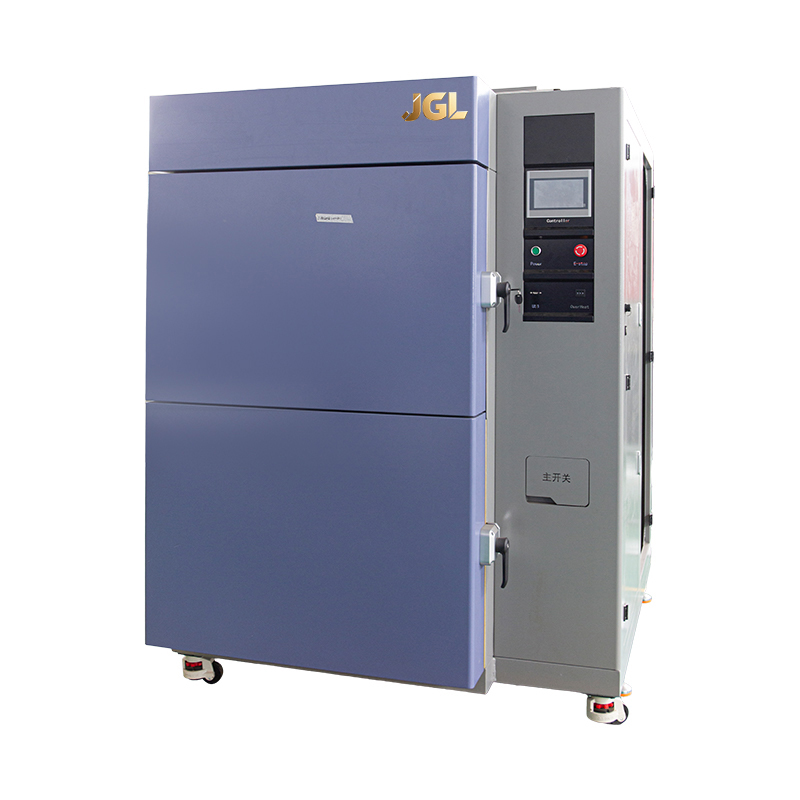
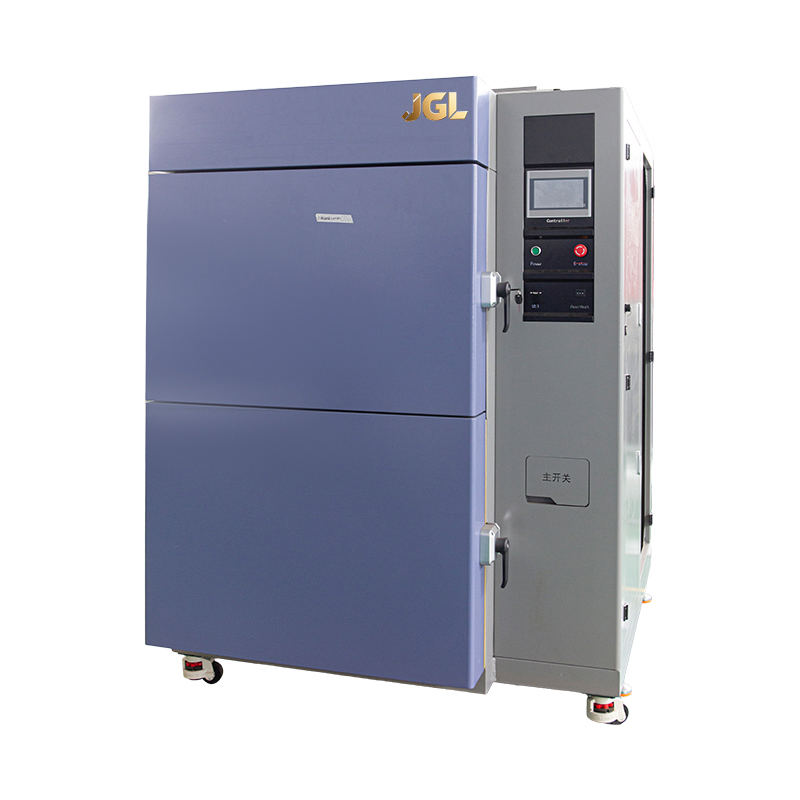
Rapid Temperature Change Humidity Test Chamber
Product Series
-
Environmental Test Chambers
- Double-Layer Explosion-Proof High and Low Temperature Test Chamber
- High and Low Temperature Test Chamber
- Two-Section Thermal Shock Test Chamber
- Rapid Temperature Change Humidity Test Chamber
- Cyclic High and Low Temperature Humidity Test Chamber
- Walk-In Explosion-Proof High and Low Temperature Humidity Test Chamber
- Vacuum Cryogenic Transport Device
- Electronic Test Instruments
Product Category
-
Environmental Test Chambers
- Double-Layer Explosion-Proof High and Low Temperature Test Chamber
- High and Low Temperature Test Chamber
- Two-Section Thermal Shock Test Chamber
- Rapid Temperature Change Humidity Test Chamber
- Cyclic High and Low Temperature Humidity Test Chamber
- Walk-In Explosion-Proof High and Low Temperature Humidity Test Chamber
- Vacuum Cryogenic Transport Device
- Electronic Test Instruments
Contact us
 +86-13861043568
Custom Rapid Temperature Change Humidity Test Chamber Manufacturers
Message Feedback
About Us
JIANGSU BAISHENG INDUSTRIAL CO., LTD.
Specializing in the research and development, as well as the
supply of laboratory equipment and safety compliance testing instruments.
JIANGSU BAISHENG INDUSTRIAL CO., LTD. is China Custom Rapid Temperature Change Humidity Test Chamber Manufacturers and Rapid Temperature Change Test Chamber Suppliers, a technology-driven enterprise specializing in the research, development, and supply of high-end laboratory equipment and safety testing instruments. By seamlessly integrating innovative engineering with professional international trade expertise, we have established a solid reputation within the industry. Unlike traditional trading companies, our core advantage lies in our dedicated R&D team, which focuses on precision design and technical excellence to ensure that every product meets rigorous technical specifications. We are committed to continuous innovation and the constant refinement of our product lines, providing our partners with reliable, customized solutions. We offer Custom Rapid Rate Thermal Cycling Chamber for sale.

JIANGSU BAISHENG INDUSTRIAL CO., LTD.
Certificate Of Honor
What’s News
Industry Insights & Updates
View All News
-
2026-10-15Industry News
-
2026-10-08Industry News
-
2026-10-01Industry News
Industry Knowledge
The Engineering Case for High-Rate Temperature Cycling in Modern Product Qualification
Not all temperature cycling tests are created equal. A conventional climate chamber might ramp at 1–3 °C per minute — adequate for general conditioning but insufficient for simulating the thermal stress patterns that real-world products encounter during rapid power cycling, altitude transitions, or harsh operational environments. A Rapid Temperature Change Humidity Test Chamber is specifically engineered to deliver controlled ramp rates of 5 °C/min up to 30 °C/min or higher, reproducing stress conditions that expose fatigue failure mechanisms before a product ever reaches the field.
This distinction matters because the failure modes triggered by rapid temperature change are categorically different from those caused by slow cycling. High ramp rates generate steep thermal gradients across multi-material assemblies, inducing differential expansion stresses at adhesive bonds, solder joints, overmolded interfaces, and connector seals. Slow ramps allow enough time for thermal equilibration, masking these stresses entirely. For applications governed by standards such as IEC 60068-2-14 Test Nb, MIL-STD-810 Method 503, or ISO 16750-4, the ramp rate is not a footnote — it is the primary test parameter.
The addition of humidity control in combined units extends the utility further. Moisture ingress under thermal cycling, electrochemical migration during condensation phases, and seal degradation from repeated humidity swings are all phenomena that humidity-capable rapid cycling chambers can simultaneously evaluate — compressing what would otherwise require two separate test sequences into a single accelerated qualification run.
Decoding Ramp Rate Claims: What Manufacturers Specify vs. What Tests Actually Demand
Ramp rate specifications are among the most frequently misread figures on a chamber datasheet. The number quoted — say, 20 °C/min — almost always refers to the unloaded air temperature ramp rate measured at the chamber's air sensor, not the rate experienced by the specimen itself. Under actual test loading, the effective specimen ramp rate will be lower, governed by the specimen's thermal mass, surface geometry, and the chamber's airflow design.
When evaluating a Rapid Temperature Change Test Chamber, engineers should request performance data under representative load conditions, not just empty-chamber specifications. Key questions to ask include:
- What is the rated ramp rate at maximum allowable specimen load? Chambers with robust forced-air circulation and oversized refrigeration capacity maintain higher effective ramp rates under load.
- Is the ramp rate consistent across the full temperature span? Some chambers achieve peak ramp rates only over a narrow mid-range window, slowing significantly near temperature extremes where refrigeration headroom diminishes.
- How is humidity controlled during rapid ramp phases? Maintaining stable humidity during a 15 °C/min ramp requires an active moisture injection and condensate management system — a feature absent from entry-level units that only control humidity during soak phases.
- What is the temperature uniformity at maximum ramp rate? Spatial uniformity degrades during rapid transitions; a well-designed chamber should maintain ±2 °C uniformity across the working volume even during active ramping.
Understanding these nuances is essential to ensuring that the test chamber you select actually delivers the stress conditions your product qualification protocol demands — and that test results are reproducible and defensible during customer or regulatory audits.
Rapid Rate Thermal Cycling in HALT, HASS, and Accelerated Life Testing Programs
Highly Accelerated Life Testing (HALT) and Highly Accelerated Stress Screening (HASS) have become cornerstone methodologies for compressing product qualification timelines without sacrificing confidence in field reliability. Both methodologies depend on a Rapid Rate Thermal Cycling Chamber capable of delivering aggressive ramp rates — typically 60 °C/min or higher in dedicated HALT systems — to quickly precipitate latent defects that would otherwise surface only after thousands of field operating hours.
Even for labs that do not run full HALT protocols, applying high ramp rates within standard IEC or MIL cycling profiles accelerates the accumulation of fatigue damage per test cycle. This allows engineering teams to achieve statistical confidence in a design's thermal robustness with fewer total cycles — a meaningful reduction in test time when qualification programs must meet aggressive launch schedules. JIANGSU BAISHENG INDUSTRIAL CO., LTD. works with customers to match chamber ramp rate capability to the specific stress targets defined in their HALT/HASS protocols, ensuring the selected equipment can reach and sustain the required stress margins without nuisance trips or compressor overload faults.
| Test Methodology | Typical Ramp Rate Requirement | Primary Standard / Guideline | Humidity Control Required |
|---|---|---|---|
| Standard Temperature Cycling | 1–5 °C/min | IEC 60068-2-14 Test Na | Optional |
| Rapid Temperature Change | 5–30 °C/min | IEC 60068-2-14 Test Nb | Combined units: Yes |
| Automotive Thermal Cycling | Up to 15 °C/min | ISO 16750-4 / AEC-Q100 | Scenario-dependent |
| HALT / HASS | 40–60+ °C/min | Qualmark / HALT methodology | Typically No |
Key Considerations for Chamber Maintenance, Calibration, and Long-Term Performance
Rapid temperature change chambers operate under significantly higher mechanical and thermal stress than standard climate chambers. The compressor, heat exchangers, and blower motors cycle through large temperature differentials continuously, accelerating wear on seals, refrigerant fittings, and door gaskets. A structured preventive maintenance program is not optional — it is a prerequisite for maintaining ramp rate performance and test-to-test repeatability over the equipment's service life.
Calibration intervals for rapid cycling chambers should account for the higher operational intensity. Critical calibration checks include:
- Temperature uniformity mapping: Conducted annually or after any major maintenance event, using a multi-point thermocouple array across the working volume to verify spatial uniformity at both temperature extremes and during active ramping.
- Ramp rate verification: Measured under defined load conditions against the original factory acceptance data. A degradation of more than 15–20% from rated ramp performance typically indicates refrigerant charge loss, heat exchanger fouling, or blower motor wear.
- Humidity sensor calibration: Capacitive humidity sensors drift over time, particularly in chambers that cycle through condensation conditions. Annual replacement or two-point calibration against certified humidity standards is recommended.
- Door seal integrity: Frequent cycling causes gasket compression set. Inspect door seals every six months and replace when air leakage is detectable, as even minor leaks significantly compromise humidity stability and low-temperature performance.
Investing in a chamber from a manufacturer with accessible after-sales technical support and local spare parts availability is as important as the initial specification. Downtime on a rapid cycling chamber during a critical qualification program carries direct schedule and cost consequences that far exceed the price difference between equipment tiers. The engineering team at JIANGSU BAISHENG INDUSTRIAL CO., LTD. provides comprehensive commissioning documentation and calibration guidance to help laboratory operators establish maintenance programs aligned with their test frequency and regulatory requirements.
Quick Link
Contact Information
- Tel: +86-13861043568
- E-mail: 1840784112@qq.com
- Add: Tianting District, Changzhou City, Jiangsu Province, China, No. 6 Hecircuit
Scan Code
Copyright © JIANGSU BAISHENG INDUSTRIAL CO., LTD.
All Rights Reserved. PrivacyCustom Rapid Rate Thermal Cycling Chamber Suppliers
