 English
 Español
product
product
product
product
product
product
product
product
product
product
product
product
product
product
product
product

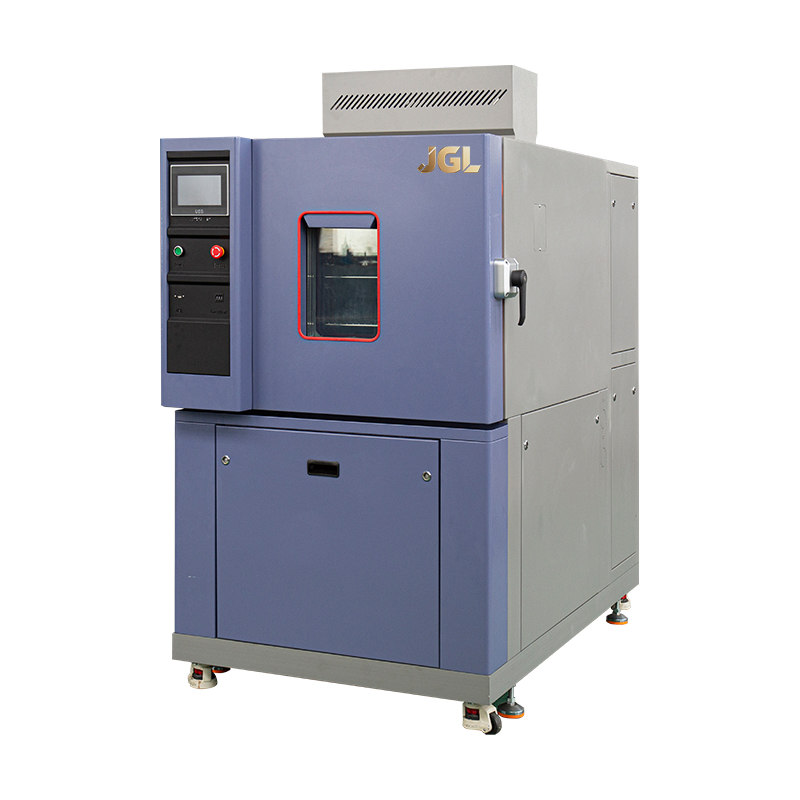
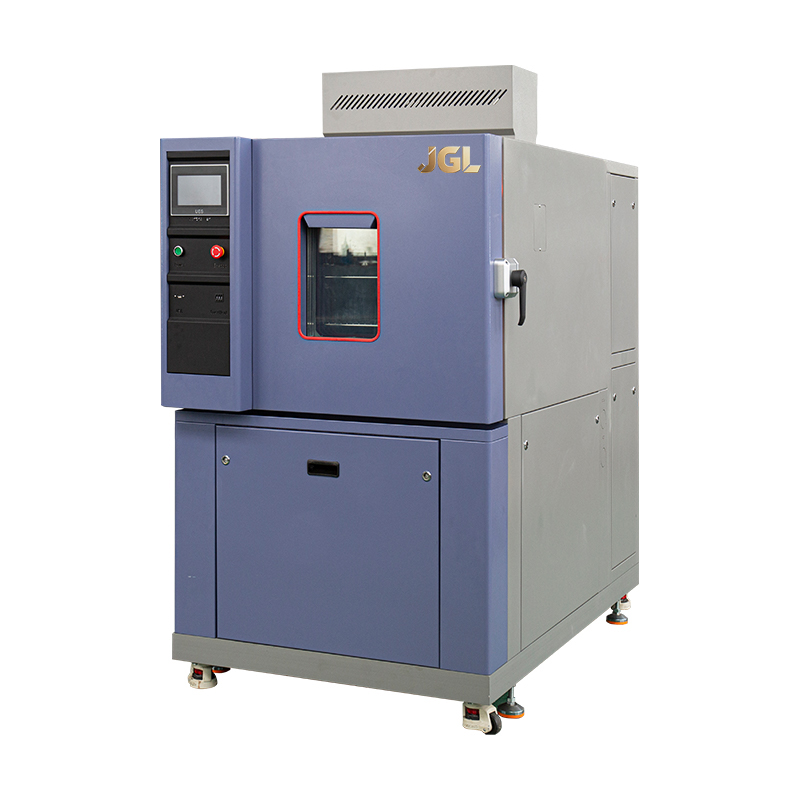
Cyclic High and Low Temperature Humidity Test Chamber
Home / Products / Environmental Test Chambers / Cyclic High and Low Temperature Humidity Test Chamber
Product Series
-
Environmental Test Chambers
- Double-Layer Explosion-Proof High and Low Temperature Test Chamber
- High and Low Temperature Test Chamber
- Two-Section Thermal Shock Test Chamber
- Rapid Temperature Change Humidity Test Chamber
- Cyclic High and Low Temperature Humidity Test Chamber
- Walk-In Explosion-Proof High and Low Temperature Humidity Test Chamber
- Vacuum Cryogenic Transport Device
- Electronic Test Instruments
Product Category
-
Environmental Test Chambers
- Double-Layer Explosion-Proof High and Low Temperature Test Chamber
- High and Low Temperature Test Chamber
- Two-Section Thermal Shock Test Chamber
- Rapid Temperature Change Humidity Test Chamber
- Cyclic High and Low Temperature Humidity Test Chamber
- Walk-In Explosion-Proof High and Low Temperature Humidity Test Chamber
- Vacuum Cryogenic Transport Device
- Electronic Test Instruments
Contact us
 +86-13861043568
Custom Cyclic Humidity Chamber Manufacturers
Message Feedback
About Us
JIANGSU BAISHENG INDUSTRIAL CO., LTD.
Specializing in the research and development, as well as the
supply of laboratory equipment and safety compliance testing instruments.
JIANGSU BAISHENG INDUSTRIAL CO., LTD. is China Custom Cyclic Humidity Chamber Manufacturers and Temperature Humidity Cycling Chamber Suppliers, a technology-driven enterprise specializing in the research, development, and supply of high-end laboratory equipment and safety testing instruments. By seamlessly integrating innovative engineering with professional international trade expertise, we have established a solid reputation within the industry. Unlike traditional trading companies, our core advantage lies in our dedicated R&D team, which focuses on precision design and technical excellence to ensure that every product meets rigorous technical specifications. We are committed to continuous innovation and the constant refinement of our product lines, providing our partners with reliable, customized solutions. We offer Custom Cyclic Humidity Chamber for sale.

JIANGSU BAISHENG INDUSTRIAL CO., LTD.
Certificate Of Honor
What’s News
Industry Insights & Updates
View All News
-
2026-10-15Industry News
-
2026-10-08Industry News
-
2026-10-01Industry News
Industry Knowledge
What Cyclic Humidity Testing Reveals That Static Conditioning Cannot
Static humidity exposure — holding a specimen at a fixed temperature and relative humidity for an extended soak period — remains a valid and widely used conditioning method. But it answers only one question: how does a material or assembly behave under steady-state moisture saturation? A Cyclic Humidity Chamber addresses a fundamentally different and often more damaging phenomenon: the repeated mechanical and chemical stress caused by moisture cycling through absorption and desorption phases.
Each humidity cycle drives moisture in and out of hygroscopic materials — polymers, adhesives, FR4 laminates, conformal coatings, and composite structures. This repeated swelling and contraction generates interfacial stress at dissimilar material boundaries, progressively degrading adhesion, delaminating coatings, and opening micro-cracks in encapsulants. In parallel, condensation formed during the cooling phase of a humidity cycle creates electrolyte films on conductive surfaces, enabling electrochemical migration and dendritic growth on PCB traces — failure mechanisms that static damp-heat testing at constant 85 °C / 85% RH will not reliably accelerate.
For product categories where field reliability must be demonstrated across years of real-world humidity variation — outdoor electronics, automotive sensors, photovoltaic modules, and medical devices used in tropical climates — cyclic humidity testing provides a more representative and more conservative qualification baseline than any static protocol can offer.
Standards That Define Temperature Humidity Cycling Requirements
A Temperature Humidity Cycling Chamber must be capable of executing the precise profile shapes — including controlled condensation phases, defined ramp rates, and accurate humidity tracking during temperature transitions — that the following major standards prescribe. JIANGSU BAISHENG INDUSTRIAL CO., LTD. recommends verifying chamber compliance against each applicable standard before purchase, as profile fidelity requirements vary significantly between them.
- IEC 60068-2-30 (Damp Heat, Cyclic): The most widely referenced cyclic humidity standard. Defines a 24-hour cycle profile with a condensation phase, targeting +25 °C / 95–100% RH at the low-temperature phase and +40 °C or +55 °C at the high-temperature phase. Chamber compliance requires accurate humidity control during temperature ramps, not just at setpoints.
- IEC 60068-2-38 (Composite Temperature/Humidity Cyclic Test, Test Z/AD): Specifically designed to simulate tropical field conditions for electronic components. The profile incorporates both condensation and low-humidity phases within a single cycle, making humidity sensor range and response speed critical chamber parameters.
- ISO 9227 / ASTM B117 (Salt Spray with Humidity Cycling): Where corrosion testing combines cyclic humidity with saline exposure, chambers must support wet-bottom salt fog generation in addition to standard humidity control. Not all cyclic humidity chambers include this capability — verify explicitly.
- IEC 61215 / IEC 61730 (PV Module Qualification): Photovoltaic qualification requires a damp heat test (1,000 hours at 85 °C / 85% RH) followed by humidity freeze cycling. The freeze phase — ramping to −40 °C while tracking humidity — demands cascade refrigeration and precise moisture management to prevent ice formation on humidity sensors.
- ISO 16750-4 / GMW 3172 (Automotive Electronics): Automotive profiles combine rapid temperature ramps with humidity cycling, often requiring ramp rates of 5–10 °C/min while maintaining humidity control — a demanding combination that separates high-performance chambers from entry-level units.
Hardware and Control System Features That Determine Profile Accuracy
Executing a cyclic humidity profile correctly — particularly one that includes condensation phases, sub-zero excursions, or humidity control during active temperature ramping — places demanding requirements on both the chamber's hardware and its control architecture. Several design features distinguish chambers that deliver genuine profile fidelity from those that only approximate the target conditions.
Humidity Generation and Measurement
High-performance units use steam injection for rapid humidity addition combined with a refrigerated dehumidification circuit for fast removal. Wet/dry bulb psychrometer systems offer robustness at high humidity levels but require regular wick maintenance. Capacitive thin-film humidity sensors provide faster response and wider operating range but must be recalibrated annually, as they are susceptible to drift under repeated condensation exposure. Chambers intended for sub-zero humidity cycling must protect sensors from icing — a design detail that is frequently overlooked in lower-cost configurations.
Condensate Management
Controlled condensation on the specimen surface is a requirement of IEC 60068-2-30, not an accidental side effect. The chamber must generate condensation uniformly across the working volume without producing standing water accumulation or drip points that create uneven exposure. Proper working volume geometry, airflow velocity, and drain system design collectively determine whether condensation is uniform and reproducible across test runs.
Programmable Controller Capabilities
Cyclic profiles require controllers that can manage temperature and humidity as coupled variables across ramp segments, not just at soak setpoints. Key controller requirements include: independent ramp rate control for temperature and humidity, conditional logic for triggering phase transitions based on measured specimen temperature rather than elapsed time, support for profiles with at least 100 programmable steps, and real-time data logging with timestamped temperature and humidity records exportable to CSV or compatible LIMS formats.
| Chamber Feature | Entry-Level Configuration | High-Performance Configuration |
|---|---|---|
| Humidity Control During Ramp | Soak phases only | Full ramp + soak control |
| Humidity Generation Method | Ultrasonic humidifier | Steam injection + dehumidification circuit |
| Sub-Zero Humidity Capability | Not available | Available with sensor protection |
| Condensation Phase Control | Uncontrolled / incidental | Programmed, uniform, per IEC 60068-2-30 |
| Data Export | USB only | USB / LAN / LIMS-compatible CSV |
Application-Specific Guidance: Matching Chamber Capability to Industry Requirements
Cyclic humidity chambers serve a broad range of industries, but the specific profile requirements, specimen sizes, and data integrity expectations vary considerably by sector. Understanding these differences helps procurement teams avoid over- or under-specifying equipment.
Photovoltaic and Energy Storage
PV module qualification under IEC 61215 requires chamber working volumes large enough to accommodate full-size modules — typically 2 m × 1.2 m panel footprints — while maintaining ±2 °C temperature uniformity and ±3% RH humidity uniformity across the entire specimen area. Walk-in or drive-in chamber configurations are standard for this segment. Battery module qualification adds the requirement for explosion-proof chamber construction and exhaust ventilation rated for flammable off-gas management.
Consumer Electronics and Wearables
Compact benchtop chambers in the 150–450 L working volume range are the standard configuration for this segment. The primary requirement is cycle repeatability across high-volume screening programs — chambers may run continuously for months, executing thousands of identical cycles. Compressor duty cycle ratings and mean time between maintenance service intervals are therefore more important purchasing criteria than peak temperature range for this application.
Automotive and Industrial Electronics
ISO 16750-4 and OEM-specific standards such as GMW 3172 define humidity cycling profiles that combine aggressive ramp rates with condensation phases — a combination that demands both rapid response refrigeration and precise humidity injection timing. Pass-through ports for in-situ electrical monitoring (operating the specimen under power during the test) are frequently required, necessitating chambers with multiple sealed cable entry glands and sufficient internal clearance for fixture wiring. The engineering team at JIANGSU BAISHENG INDUSTRIAL CO., LTD. configures pass-through port size, quantity, and sealing method to match customer fixture requirements during the pre-order specification process, avoiding field modification costs after delivery.
Quick Link
Contact Information
- Tel: +86-13861043568
- E-mail: 1840784112@qq.com
- Add: Tianting District, Changzhou City, Jiangsu Province, China, No. 6 Hecircuit
Scan Code
Copyright © JIANGSU BAISHENG INDUSTRIAL CO., LTD.
All Rights Reserved. PrivacyCustom Cyclic Humidity Chamber Suppliers
