 English
 Español

NEWS
NEWS
NEWS
NEWS
NEWS
NEWS
NEWS
NEWS
NEWS
NEWS
NEWS
NEWS
NEWS
NEWS
NEWS
NEWS

Industry News
Home / News / Industry News / Dew Point From Relative Humidity: Calculation Formula and Practical Uses
Dew Point From Relative Humidity: Calculation Formula and Practical Uses
Content
You have a temperature-humidity test chamber set to 25°C and 60% relative humidity. You plan to cool the specimen to 15°C. Before you start the ramp, you need to know whether moisture will condense on the surface. The dew point gives you that answer.
Conclusion first: the dew point can be calculated directly from relative humidity using the Magnus formula. For 25°C and 60% RH, the dew point is approximately 16.6°C. Since 15°C is below that threshold, condensation will form. The calculations and physical reasons behind this result are explained in the sections below.
What Is Dew Point and How Does It Relate to Relative Humidity?
Dew point is the temperature to which air must be cooled, at constant absolute humidity and pressure, for relative humidity to reach 100%. At that point, the water vapor in the air begins to condense into liquid water. The lower the dew point, the drier the air.
Relative humidity is the ratio of the actual water vapor pressure in the air to the saturation vapor pressure at the current temperature, expressed as a percentage.
RH = (e / es) × 100%
Here, e is the actual vapor pressure and es is the saturation vapor pressure at temperature T. The dew point is the temperature where e becomes equal to es. Therefore, if you know the ambient temperature and the relative humidity, you have enough information to solve for the dew point.
These two values are connected but describe different physical conditions. Relative humidity depends on the current temperature, which is why a warm day at 60% RH may feel comfortable while a cool day at 60% RH can feel damp and close. Dew point is independent of ambient temperature and represents the actual moisture content more directly.
The Formula for Calculating Dew Point From Relative Humidity
Several formulas have been developed to convert relative humidity into dew point. The most widely used is the August-Roche-Magnus approximation, which offers excellent accuracy for temperatures between -40°C and 50°C when used at standard atmospheric pressure.
gamma = ln(RH / 100) + (a × T) / (b + T)
Td = (b × gamma) / (a - gamma)
In these expressions:
Tdis the dew point in degrees Celsius.Tis the ambient air temperature in degrees Celsius.RHis the relative humidity expressed as a percentage.aandbare constants:a = 17.625andb = 243.04°C.lnis the natural logarithm.
The formula works because the saturation vapor pressure of water follows an approximately exponential relationship with temperature over the practical range used in environmental testing and weather forecasting. The constants a and b were fitted to give the best match to the actual saturation vapor pressure curve.
Quick Check If you need a fast estimate without a scientific calculator, a simpler approximation for most laboratory ranges is:
Td ≈ T - (100 - RH) / 5
This rule of thumb is less accurate but gives a sensible first check. For example, at 25°C and 60% RH, the approximation yields 17°C versus the more precise 16.7°C.
Step-by-Step Calculation Example
To make the formula practical, here is a full worked example. Assume the air in a test chamber is at 25°C and 60% relative humidity.
- Convert relative humidity to a decimal fraction:
RH = 60%, soRH / 100 = 0.60. - Compute the first part:
ln(0.60) = -0.5108. - Compute the second part:
(17.625 × 25) / (243.04 + 25) = 440.625 / 268.04 = 1.6438. - Add the two parts:
gamma = -0.5108 + 1.6438 = 1.1330. - Compute the dew point:
Td = (243.04 × 1.1330) / (17.625 - 1.1330) = 275.35 / 16.492 = 16.70°C.
For a measured input of 25°C and 60% RH, the dew point is approximately 16.7°C. If the chamber surface is cooled below that temperature, condensation will appear. This is why the dew point, not the relative humidity, is the value to watch when planning cooling ramps in an environmental test.
| Relative Humidity | Dew Point |
|---|---|
| 30% | 6.2°C |
| 40% | 10.5°C |
| 50% | 13.9°C |
| 60% | 16.7°C |
| 80% | 21.3°C |
The table shows how quickly wall or specimen temperatures can cross a condensation threshold. A chamber set to 80% RH at 25°C has a dew point near 21.3°C, so a minor cooling step to 20°C is already enough to generate liquid water.
Why Dew Point Matters in Environmental Testing
For engineers running environmental test chambers, the dew point is the practical threshold that separates a dry test from a wet one. Many standards require controlled humidity, but the critical risk is condensation on the device under test. If the dew point of the chamber air is higher than the coldest surface temperature on the test item, water will condense there. This can cause corrosion, ionic contamination, short circuits, and false failures in electronics testing.
Modern cyclic humidity chambers control both temperature and relative humidity independently. They use chilled mirrors, capacitive sensors, or psychrometric calculations to maintain the setpoint. Precision dew point control also matters for moisture resistance analysis of packaging films, coatings, and printed circuit boards, because small changes in humidity translate into meaningful changes in the dew point and therefore in the condensation risk.
16.7°C
Dew point at 25°C / 60% RH
21.3°C
Dew point at 25°C / 80% RH
6.2°C
Dew point at 25°C / 30% RH
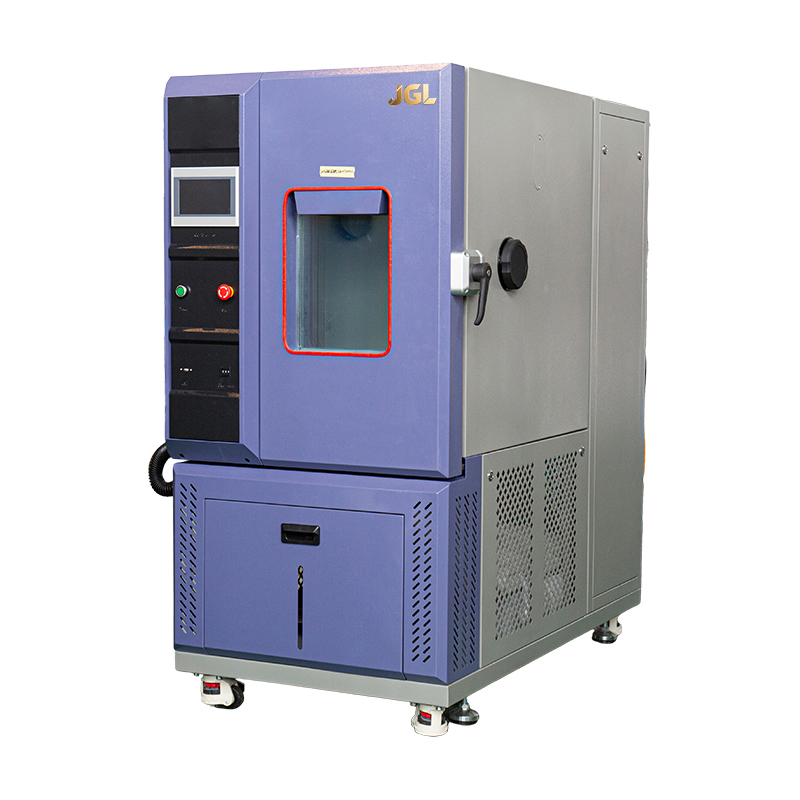
When selecting an environmental test chamber for humidity-sensitive work, the important specification is how accurately the chamber can hold both temperature and humidity across the entire ramp and soak profile. A cabinet such as the UTH100A cyclic high-low temperature humidity chamber is engineered to maintain stable humidity during temperature transitions, which prevents the moisture level from drifting into condensation territory when the temperature drops. For cyclic humidity chamber operation, the difference between simply holding RH and truly controlling dew point often comes down to the sensor and controller design.
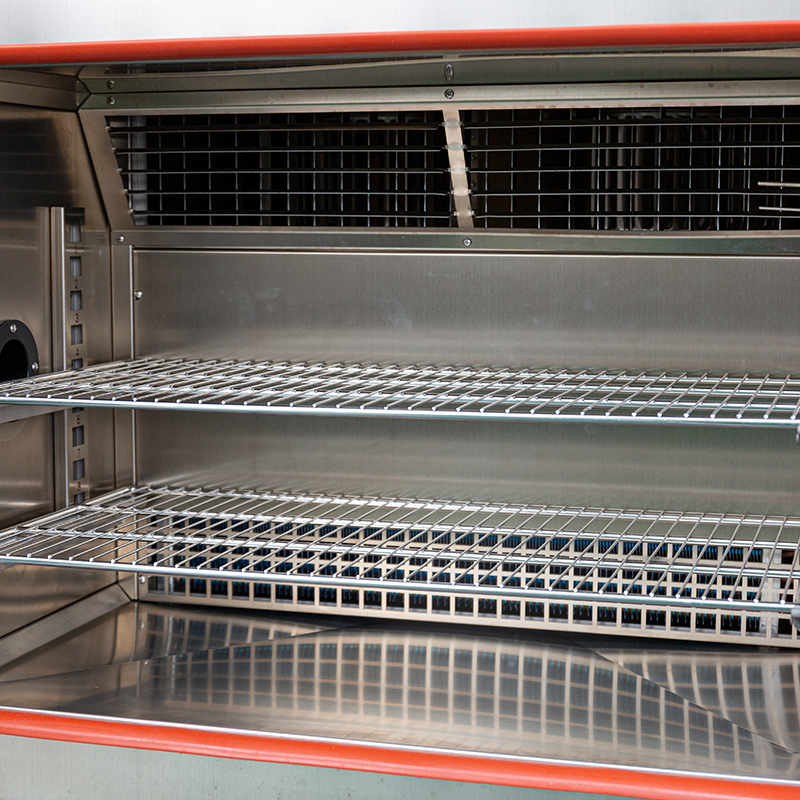 Alternating High/Low Temperature Humidity Chamber for Cyclic TestingThis chamber maintains stable humidity during temperature transitions, preventing condensation when temperature drops. Its dynamic PID and vapor partial pressure control ensure precise environmental conditions for cyclic humidity testing.View Product →
In processes that require rapid temperature change, the situation is more demanding. A chamber like the U5QTH100A-W rapid temperature and humidity cycling chamber needs to keep the dew point below the specimen surface temperature at every moment of the fast ramp, otherwise condensation will occur during the transition itself. This is where measured dew point data, not just RH readings, provides the actionable information for programming safe test profiles.
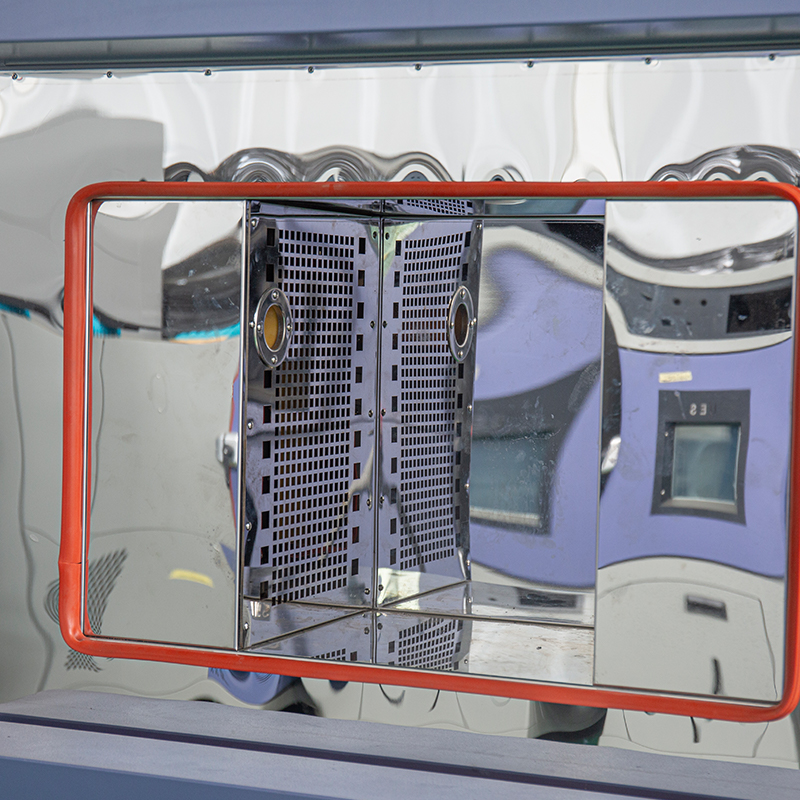 Fast Temperature and Humidity Cycling Chamber with Rapid Ramp RatesDesigned for rapid temperature changes, this chamber offers selectable ramp rates up to 20°C/min. It keeps dew point below specimen surface temperature, ensuring condensation-free transitions during fast cycling.View Product →
When moisture resistance analysis is the main goal, consistent dew point control allows test results to be comparable. For more detail on this aspect, see our article on how precision humidity control chambers redefine moisture resistance analysis.
Common Errors and Practical Considerations
Although the Magnus formula is robust, there are several ways to get misleading results. First, the formula expects temperature in degrees Celsius and relative humidity as a percentage. Mixing Fahrenheit temperatures with Celsius constants is the most common error and can shift the calculated dew point by several degrees.
Second, the formula assumes a constant pressure. Dew point is pressure-dependent, so the value calculated at sea level will not apply exactly at a test site located at high altitude or inside a pressurized chamber. In most environmental test chambers at near-atmospheric pressure, this deviation is small, but in vacuum or hyperbaric applications, a more rigorous psychrometric model is needed.
Third, the Magnus approximation is tuned for temperatures above about -40°C. Below that range, the value may deviate noticeably from the true frost point. The frost point is the temperature at which frost forms instead of liquid water; it is the relevant quantity when the dew point would be below 0°C.
Fourth, sensor accuracy matters. A relative humidity sensor with a tolerance of ±2% RH can produce a dew point error of roughly 0.5°C to 1°C depending on the humidity level. For critical test applications, verify the calibration of both temperature and humidity sensors before relying on calculated dew point values.
For laboratories that need a reliable humidity chamber across a wide range of set points, choosing a unit with the proper heating and cooling capacity is part of the calculation. The UTH150A high-low temperature humidity cycling chamber provides greater capacity than smaller benchtop units while maintaining tight humidity control, which is useful when the calculated dew point must be held stable during long soak periods.
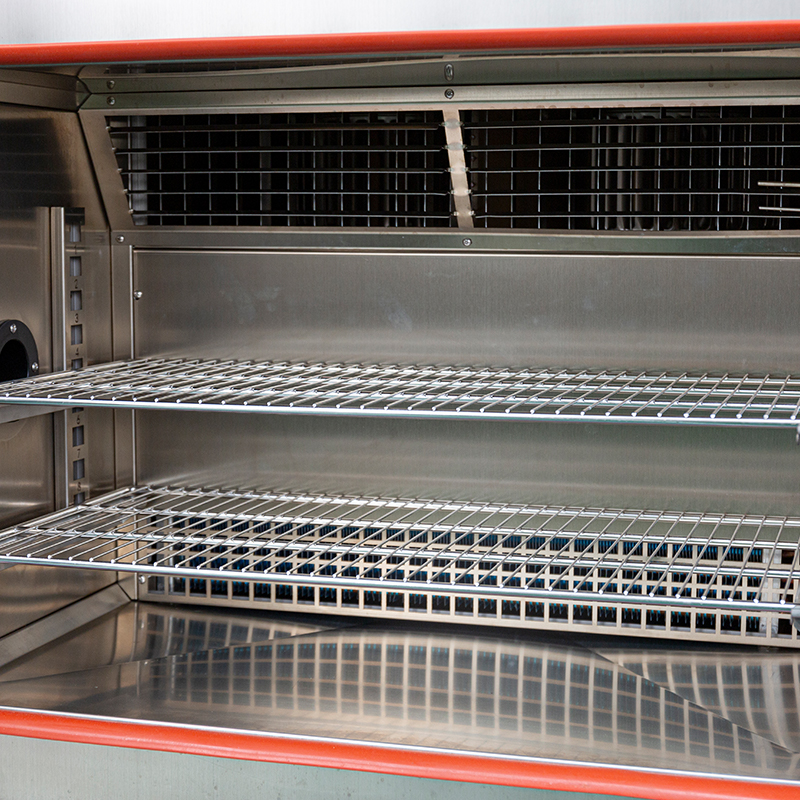 High-Low Temperature Humidity Cycling Chamber with Larger CapacityWith greater capacity than benchtop units, this chamber provides tight humidity control for long soak periods. Its balanced control system and durable components make it suitable for reliable environmental simulation.View Product →
Frequently Asked Questions
Q1: Is the dew point always lower than the ambient temperature?
Yes, unless the relative humidity is 100%. At saturation, the dew point equals the ambient temperature. At any RH below 100%, the dew point is lower than the ambient temperature. The gap between temperature and dew point is directly related to how far the air is from saturation.
Q2: Can I calculate relative humidity if I know the dew point and ambient temperature?
Yes. The Magnus equations can be rearranged for any of the three variables. From dew point and temperature, the relative humidity is RH = 100 × exp((17.625 × Td) / (243.04 + Td)) / exp((17.625 × T) / (243.04 + T)). This is useful for verifying a humidity sensor reading.
Q3: What is the frost point and is it different from the dew point?
The frost point is the temperature at which water vapor sublimes directly into ice. It is used when the dew point would be below 0°C. At subzero temperatures, the saturation vapor pressure over ice differs from the saturation vapor pressure over liquid water, so the frost point is slightly different from the dew point calculated with the standard Magnus equation.
Q4: How accurate is the Magnus formula?
The August-Roche-Magnus approximation is accurate to within about 0.1°C to 0.3°C over the range of -40°C to 50°C at standard pressure. Outside that range, especially below -40°C or above 60°C, the error increases and a more comprehensive psychrometric model may be needed.
Understanding how to calculate dew point from relative humidity turns a chamber setpoint into a real physical constraint. The Magnus formula gives you a reliable answer for most laboratory and industrial conditions, and the calculated dew point tells you exactly where condensation will begin. Whether you are planning a cooling ramp, programming a rapid temperature cycling profile, or setting up a long-term humidity soak, keeping the dew point below your coldest surface temperature is the practical rule that prevents unwanted moisture damage.
PREV:Cold Chamber Testing: What It Measures, Key Standards, and Choosing a Chamber
NEXT:Calculating Dew Point: Practical Formulas, Examples, and Common Pitfalls
NEXT:Calculating Dew Point: Practical Formulas, Examples, and Common Pitfalls
Interested in cooperation or have questions?
Featured Products
Related products
Quick Link
Contact Information
- Tel: +86-13861043568
- E-mail: 1840784112@qq.com
- Add: Tianting District, Changzhou City, Jiangsu Province, China, No. 6 Hecircuit
Scan Code
Copyright © JIANGSU BAISHENG INDUSTRIAL CO., LTD.
All Rights Reserved. Privacy Custom Precision Laboratory Testing Equipment Manufacturers
