 English
 Español

NEWS
NEWS
NEWS
NEWS
NEWS
NEWS
NEWS
NEWS
NEWS
NEWS
NEWS
NEWS
NEWS
NEWS
NEWS
NEWS

Industry News
Home / News / Industry News / Cold Chamber Testing: What It Measures, Key Standards, and Choosing a Chamber
Cold Chamber Testing: What It Measures, Key Standards, and Choosing a Chamber
Content
- 1 What Is Cold Chamber Testing?
- 2 How a Cold Chamber Reaches and Holds Low Temperature
- 3 The Main Cold Test Types and What Each Proves
- 4 Which Standards Govern Cold Chamber Testing?
- 5 What to Check Before Buying a Cold Test Chamber
- 6 Cold Chamber Testing, Thermal Shock, or Cryogenic Handling?
- 7 Frequently Asked Questions
Design a vehicle-mounted controller that passes every functional bench test at 23 °C, and it can still fail hard at -35 °C. A display driver loses calibration, a PCB laminate turns brittle, or a relay simply refuses to pull in. Cold chamber testing exists for exactly this reason: it moves the question from "does it work in the lab" to "does it work where it will actually be used."
Cold chamber testing applies to complete assemblies, bare PCBs, battery packs, polymers, seals, sensors, and even whole vehicles. This guide explains what the test really measures, the main test categories, the standards that frame them, and the specification points that matter when you are ready to buy a cold chamber.
What Is Cold Chamber Testing?
Cold chamber testing is a controlled environmental test in which a product or material is exposed to a specified low temperature, held until thermal stabilization, and then evaluated for functional performance, durability, or structural change. Unlike an ordinary freezer, a cold test chamber must reach the set point predictably, hold it within a defined tolerance, record the temperature history, and often operate the sample under load while the cold is applied.
If your product will be stored, shipped, or operated below 0 °C, the engineering practice is simple: define the temperature, define the soak time, define a pass/fail criterion, and prove it in the chamber before release.
The most common cold failures are consistent across industries:
- Polymer housings and seals turn brittle and crack under mechanical shock.
- Lubricants thicken, causing motors, hinges, and valves to respond slowly.
- Battery capacity drops sharply and the cold-start voltage falls below the cutoff threshold.
- Displays and opto-electronics behave erratically or fail to start.
- Dissimilar materials contract at different rates, stressing solder joints and press-fit connections.
Room-temperature validation cannot expose these behaviors. A cold soak is the only reliable way to put the product in the environment it will actually face.
How a Cold Chamber Reaches and Holds Low Temperature
Two refrigeration approaches dominate cold chamber design: cascade mechanical refrigeration and liquid nitrogen injection. The right choice depends on the required temperature, the pull-down speed, and the operating cost of long soak profiles.
Cascade mechanical refrigeration
A cascade system uses two compressor stages, which allows the low stage to reach -40 °C and, in stronger configurations, -70 °C. Once at the set point, the control loop holds temperature within ±0.5 °C, with uniformity across the working volume typically quoted at ±2 °C.
Liquid nitrogen cooling
Liquid nitrogen injection cools much faster, which makes it valuable for rapid pull-downs and for temperatures below -80 °C. The operating cost is higher because the nitrogen is consumed continuously during the soak, so mechanical systems are more common for long steady-state testing.
Regardless of the cooling method, three details determine whether the test result is credible:
- Air circulation must prevent warm spots near the product; fan plenum designs provide uniform flow across the sample.
- Soak definition decides when the timer starts: when the chamber air reaches the set point, or when the product core stabilizes. Core stabilization is the stricter criterion.
- Frost control matters when a warm product enters the chamber carrying internal humidity; managed defrost cycles keep ice from falsifying the result.
The Main Cold Test Types and What Each Proves
Cold testing is usually grouped into four categories. The category you need depends on whether the product must operate cold, survive cold, or withstand sudden temperature changes.
| Test type | Typical exposure | Temperature range | Acceptance focus |
|---|---|---|---|
| Steady cold exposure | 2, 16, or 72 h after stabilization | -20 to -65 °C | Function after soak; no cracks, leaks, or material damage |
| Low-temperature operation | Product running through the profile | -40 to 0 °C | Startup, timing, current draw, and accuracy at the set point |
| Thermal shock / two-zone transfer | 15 min to 1 h per zone | -65 to +150 °C | Solder joints, seals, and housings after rapid transitions |
| Low-temperature storage | 24 h to several weeks | -40 to -20 °C | Material degradation, cold flow, and condensation after return |
Steady cold exposure is the starting point of most qualification programs: bring the product to the specified temperature, soak it for the required duration, and then test it while cold or immediately after. Low-temperature operation goes one step further by keeping the product powered during the soak, which exposes weak power supplies, marginal oscillators, and display drivers that only fail under load at low temperature.
Thermal shock is a separate discipline that transfers the product rapidly between hot and cold zones, typically in under five minutes, to attack solder joints and hermetic seals. Long-term storage testing, by contrast, is a reliability measurement for warehoused stock and spare parts that may sit unused for years.
Which Standards Govern Cold Chamber Testing?
For electrotechnical products, IEC 60068-2-1 is the primary cold test reference. It defines test Ab for steady-state cold and test Ad for operation while cold, covering temperature tolerance, measurement points, and the conditions under which the sample must perform. MIL-STD-810 Method 502 addresses cold testing for military and ruggedized equipment and separates the test into storage and operation procedures. China's GB/T 2423.1 and Japan's JIS C60068-2-1 follow the same framework for their local markets.
The standard frames the test, but it does not decide what "pass" means for your product. The specification writer sets the acceptance criteria: the LED that must light, the servo that must track within tolerance, or the battery that must deliver minimum current at -30 °C. Our analysis of the MIL-STD-810 low-temperature procedures shows how the storage and operation methods differ and how they combine with other climatic tests.
Commercial qualification programs often settle on -40 °C for 2 hours after stabilization, with the product powered and running a representative workload. The two-hour dwell is a practical balance between core stabilization time for small assemblies and a reasonable margin for the soak requirement.
What to Check Before Buying a Cold Test Chamber
Three engineering questions come before brand preference: what temperature range, what workload size, and what test profile. Get those right and the rest of the specification becomes much simpler.
Temperature range-40 °C covers most industrial electronics; -65 to -70 °C covers military, automotive, and aerospace extremes.
Working volumeThe product should occupy no more than one-third of the usable chamber volume to preserve airflow and uniformity.
Uniformity and stabilityLook for ±2 °C uniformity and ±0.5 °C stability, verified with calibrated sensors in an actual load.
Pull-down rateDefine the time to reach -40 °C from ambient if your profile demands rapid temperature change.
Four operational details often decide how well the chamber performs in daily work:
- Data logging and traceability. Auditors expect a continuous record of temperature, probe positions, timestamps, and alarm events.
- Door and defrost design. Frost is the main interruption in cold testing; heated door frames and automatic defrost cycles limit downtime.
- Explosion protection. Lithium battery cold testing requires venting thresholds, pressure relief, and reinforced door construction.
- Service access. Cascade refrigeration systems need compressor access and a technician familiar with two-stage circuits.
If you are comparing suppliers, our environmental chamber selection guide walks through the specification points that separate well-engineered systems from general-purpose cabinets.
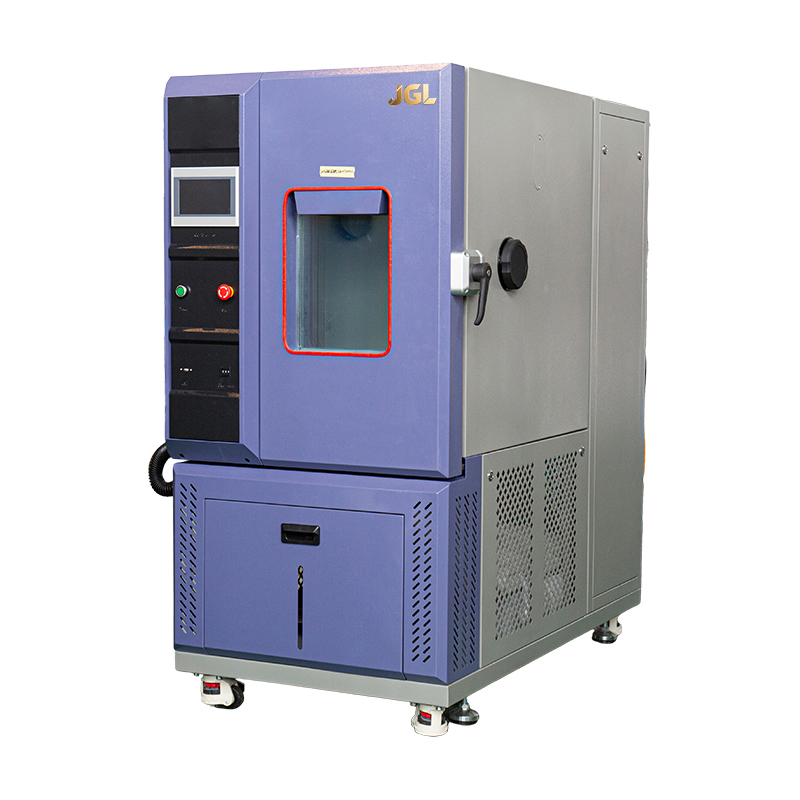
 UT-100-A High and Low Temperature Environmental Test ChamberThis chamber delivers stable, reproducible temperature control for screening product reliability in electronics, automotive, and materials testing. Its precision and energy-saving design make it a strong candidate when comparing supplier specifications.View Product →
Cold Chamber Testing, Thermal Shock, or Cryogenic Handling?
These three terms are often treated as the same thing, but they answer very different questions. Cold chamber testing holds a product at a constant low temperature and proves it works or survives in a cold operational environment. Thermal shock testing moves the product rapidly between extreme temperatures to stress interfaces rather than to sustain a cold state. Cryogenic handling operates below -80 °C and concerns sample preservation, transfer, and processing in material science work.
If a ruggedized connector must still mate correctly at -40 °C, keep it in a cold chamber and actuate it under load. If solder joint fatigue is the concern, a two-zone shock chamber produces failures that a steady cold soak cannot: a sudden transition drives large expansion mismatches between copper, solder, and the component body, particularly across a 150 °C swing.
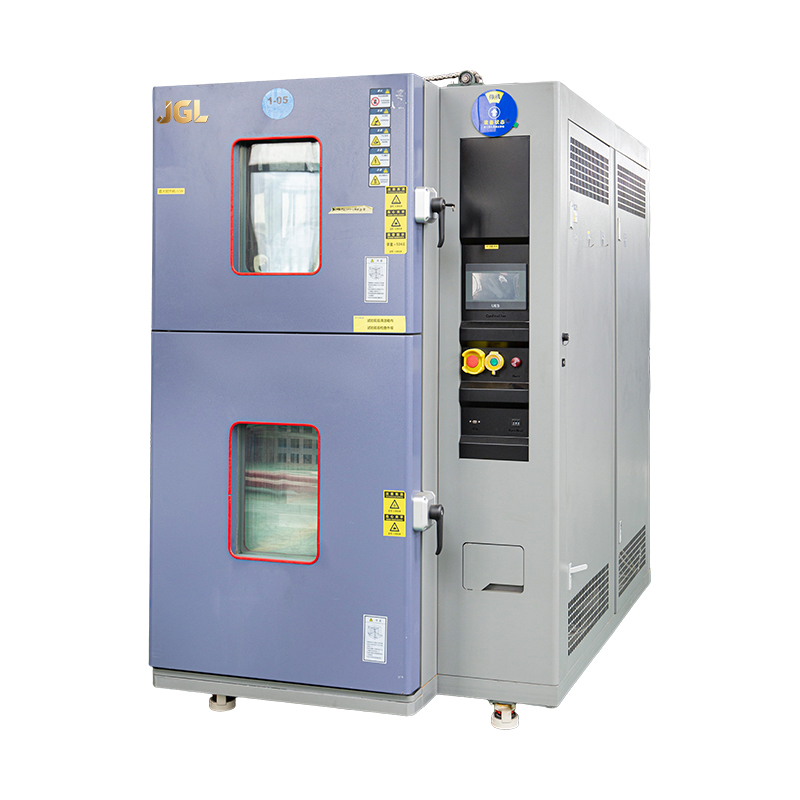
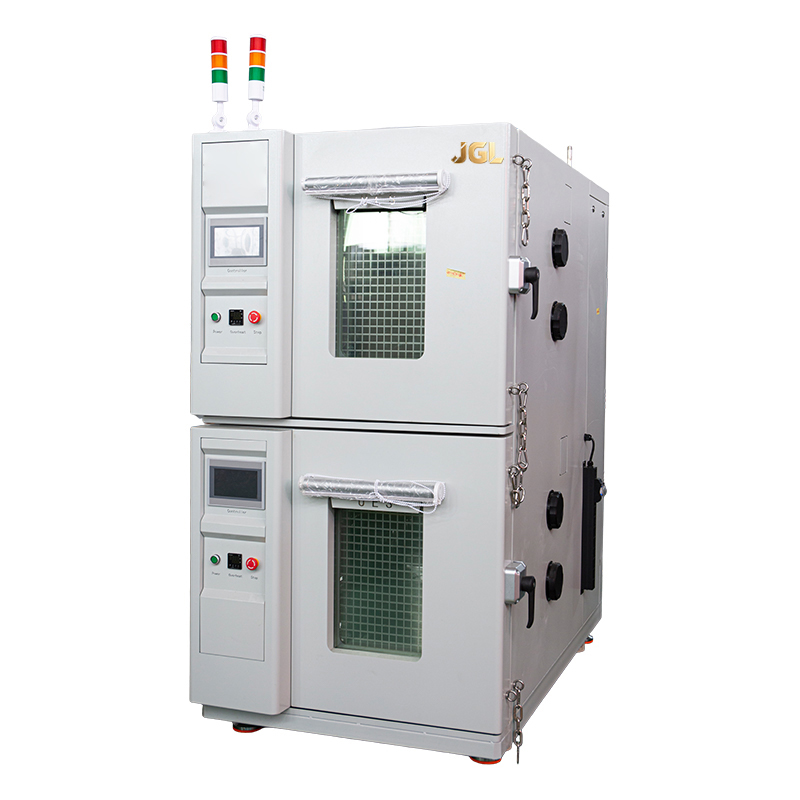
 U2S-100-A/W Two-Compartment Cold and Thermal Shock ChamberBuilt for rapid transitions between extreme temperatures, this two-zone shock chamber stresses interfaces and reveals solder joint fatigue that steady cold soaks cannot. Ideal for validating rugged components against thermal cycling failures.View Product →
For biological samples, novel materials, and cryo-electron microscopy specimens, the relevant range starts below -80 °C. Here the "product" is usually a sample rather than an end item, and the design constraint is keeping it cold while handling, moving, or processing it under vacuum. A cryogenic chamber or transfer station serves that role much better than a conventional test chamber.
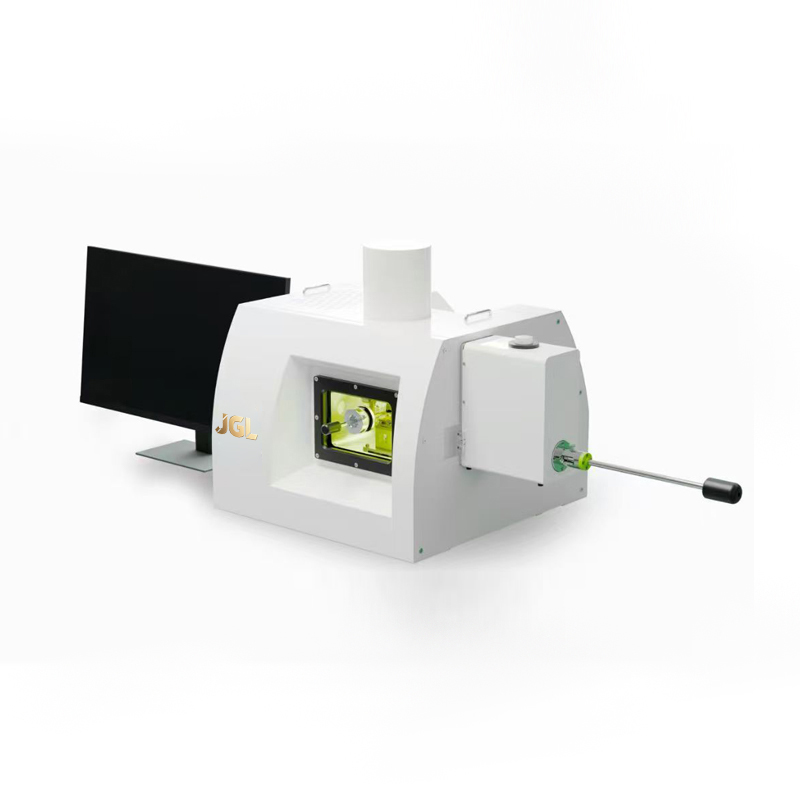
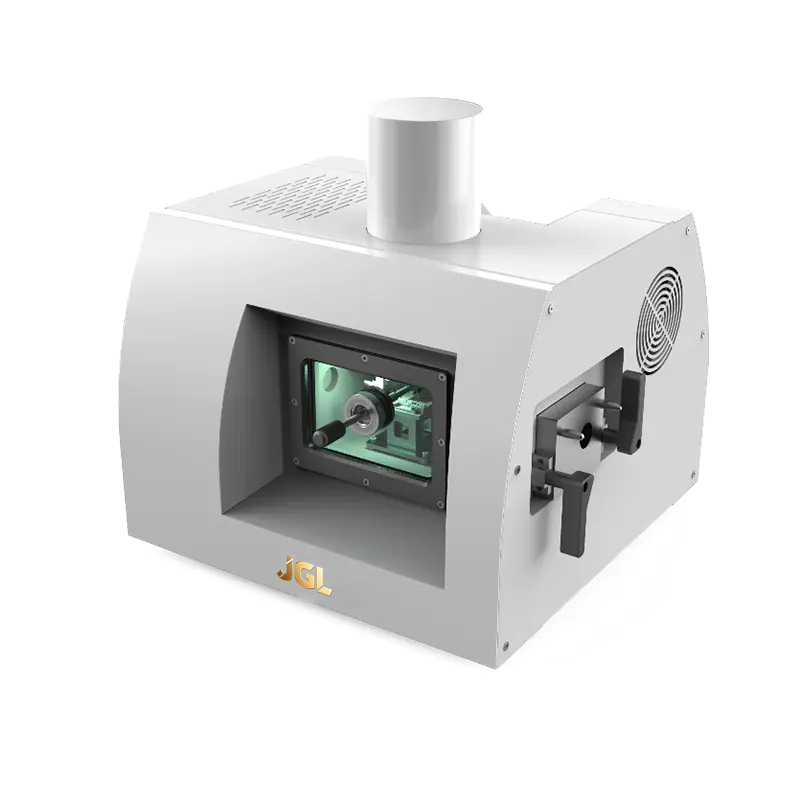 MSC310 Cryogenic Environmental Chamber for Low-Temperature Sample PreparationDesigned for below -80°C workflows, this cryogenic chamber maintains stable cold conditions, suppresses frost, and interfaces with microscopes for in-situ analysis. Essential for preserving biological samples and novel materials during preparation and observation.View Product →
In short: cold chamber testing answers operational reliability questions, thermal shock testing answers structural endurance questions, and cryogenic handling answers preservation and processing questions for samples that cannot tolerate a temperature rise.
Frequently Asked Questions
Q1: How cold do typical cold chamber tests go?
Most commercial and automotive qualifications use -20, -40, or -55 °C. The -40 °C set point is the most common because it covers cold climate operating limits and lithium battery cold-start requirements. Aerospace and military hardware often goes to -65 °C, which is also the practical cold limit of many cascade mechanical chambers.
Q2: How long should a cold soak last?
Long enough for the product core to stabilize at the set point, plus the dwell time required by the standard. Small electronics assemblies typically stabilize in 2 to 3 hours after the chamber air reaches temperature; large batteries and structural components may need 8 to 16 hours.
Q3: Can a cold chamber test replace thermal shock testing?
No. A steady cold chamber holds one low temperature, while a thermal shock chamber creates rapid transitions between hot and cold zones. If your failure mode is solder joint fatigue, seal leakage, or housing cracking from thermal mismatch, you need a shock profile rather than a constant soak.
Q4: Which safety features matter for battery cold testing?
Cold testing of lithium-based cells should use an explosion-protected chamber with pressure relief, reinforced doors, and interlocks, especially when cells are charged or discharged while cold. Damaged cells can vent or ignite even at low temperature, so the chamber structure is a safety requirement rather than an accessory.
Cold chamber testing answers an engineering question that desk calculations cannot: what really happens inside the equipment when the environment stops being comfortable? Define the temperature, the soak criterion, the acceptance limit, and the chamber specification. Then verify the product in the chamber you chose, before committing the design to cold service.
PREV:No previous article
NEXT:Dew Point From Relative Humidity: Calculation Formula and Practical Uses
NEXT:Dew Point From Relative Humidity: Calculation Formula and Practical Uses
Interested in cooperation or have questions?
Featured Products
Related products
Quick Link
Contact Information
- Tel: +86-13861043568
- E-mail: 1840784112@qq.com
- Add: Tianting District, Changzhou City, Jiangsu Province, China, No. 6 Hecircuit
Scan Code
Copyright © JIANGSU BAISHENG INDUSTRIAL CO., LTD.
All Rights Reserved. Privacy Custom Precision Laboratory Testing Equipment Manufacturers
