 English
 Español

NEWS
NEWS
NEWS
NEWS
NEWS
NEWS
NEWS
NEWS
NEWS
NEWS
NEWS
NEWS
NEWS
NEWS
NEWS
NEWS

Industry News
Home / News / Industry News / Calculating Dew Point: Practical Formulas, Examples, and Common Pitfalls
Calculating Dew Point: Practical Formulas, Examples, and Common Pitfalls
Content
- 1 What Is Dew Point and Why Does It Matter?
- 2 The Formula for Calculating Dew Point
- 3 Where Dew Point Calculation Goes Wrong
- 4 Using Dew Point in Environmental Test Chambers
- 5 How to Measure Dew Point in Real Applications
- 6 Frequently Asked Questions
- 6.0.1 Q1: What is the difference between dew point and relative humidity?
- 6.0.2 Q2: How do I calculate dew point from temperature and relative humidity?
- 6.0.3 Q3: Why does dew point matter in compressed air systems?
- 6.0.4 Q4: Can dew point be below 0°C?
- 6.0.5 Q5: What instrument is best for measuring dew point?
Imagine a 200-liter environmental test chamber running a humidity profile at 40°C and 90% relative humidity (RH). The controller computes a dew point of 37.9°C. If the measured dew point is off by just 1°C, the actual RH in the chamber shifts by roughly 5 percentage points. That kind of error can turn a valid material qualification test into a false failure. This is why calculating dew point is not a theoretical exercise. It is a practical engineering task that directly determines product reliability, system integrity, and process repeatability.
What Is Dew Point and Why Does It Matter?
Dew point is the temperature to which a given air parcel must be cooled, at constant pressure and absolute humidity, for relative humidity to reach 100%. At that temperature, water vapor condenses into liquid water or ice. In simpler terms: if you want to know exactly when moisture will start forming on a surface, the dew point gives you that temperature.
Dew point is more stable than relative humidity because it does not fluctuate with ambient temperature. RH is a ratio that depends on how much moisture the air holds versus how much it could hold at the current temperature. As the air warms, the saturation capacity rises, so RH drops even if the absolute moisture content stays constant. Dew point, in contrast, moves only when the actual water vapor content changes. For this reason, process engineers and metrology labs prefer dew point as the reference value for moisture control.
The dew point is the most reliable humidity indicator when you need to know whether condensation will occur at a specific surface temperature, whether in a pipe, a chamber, or a cold plate.
The Formula for Calculating Dew Point
The most widely used method for calculating dew point is the Magnus formula, also known as the Magnus-Tetens approximation. It is accurate enough for most industrial and laboratory applications in the range of -40°C to +50°C, and it is the basis for many online dew point calculators and PLC routines.
The formula is expressed in two steps:
- Calculate the intermediate value α:
α = (a × T) / (b + T) + ln(RH / 100)
- Calculate the dew point Td:
Td = (b × α) / (a - α)
where T is the air temperature in °C, RH is the relative humidity as a percentage, a = 17.625, and b = 243.04. Natural logarithm (ln) is used.
Let’s work through a concrete example. Suppose the air temperature is 25°C and the RH is 50%.
- α = (17.625 × 25) / (243.04 + 25) + ln(0.50) = 440.625 / 268.04 + (-0.6931) = 1.6439 - 0.6931 = 0.9508
- Td = (243.04 × 0.9508) / (17.625 - 0.9508) = 231.16 / 16.6742 = 13.87°C
The result is approximately 13.9°C, which matches the dew point values published by meteorological reference tables for this condition.
| Air Temperature (°C) | Relative Humidity (%) | Dew Point (°C) |
|---|---|---|
| 30 | 60 | 21.5 |
| 25 | 50 | 13.9 |
| 20 | 80 | 16.7 |
| 10 | 90 | 8.5 |
| -5 | 40 | -15.9 |
When you need to embed this calculation in a spreadsheet or a chamber controller, using natural logarithms is essential. The formula also works well for cyclic humidity test chambers that must maintain a defined dew point during temperature ramps.
Where Dew Point Calculation Goes Wrong
In industrial practice, several factors cause dew point calculations to deviate from true conditions. Understanding these pitfalls is essential before relying on a calculated value for a process decision.
Subzero Ice versus Liquid Water
Below 0°C, the saturation vapor pressure over ice is lower than over liquid water. This means that, at the same temperature and absolute moisture content, frost forms before liquid condensation. Many simplified formulas, including the Magnus equation, assume equilibrium over liquid water. For low-temperature applications such as freeze-drying or altitude testing, the calculated dew point can be off by 1 to 3°C if you do not switch to the ice-phase variant, often called frost point.
Pressure Correction
Dew point is pressure dependent. If you measure dew point in a compressed air line at 6 bar, then vent that air to atmospheric pressure, the dew point will drop significantly. A common rule of thumb is that an increase in pressure raises the dew point, while a decrease lowers it. For this reason, readings from a pressurized line must be converted back to atmospheric pressure before comparing them with ambient air calculations. Omitting this correction is one of the most frequent errors in industrial systems.
Sensor Drift and Calibration
Dew point sensors, especially polymer capacitive types, drift over time. A sensor that was calibrated six months ago may have shifted enough to produce an apparent 1°C error in the calculated dew point. In an environmental chamber, this translates into a meaningful RH error at high humidity levels. Regular verification against a chilled mirror reference is essential for precision humidity control chambers used in critical testing.
Supercooled Water
Below 0°C, water can remain liquid in a supercooled state. This metastable condition changes the vapor pressure relationship and can create a dew point reading that does not correspond to ice formation. Professional hygrometry implements a mathematical switch between liquid and ice phases, but not every calculator does so. Always check whether your calculation tool handles the ice-phase transition.
Using Dew Point in Environmental Test Chambers
When an environmental test chamber is set to 40°C and 90% RH, the controller is not directly measuring RH as a primary value. Instead, it measures the dry-bulb temperature and the dew point, then calculates the saturation pressure ratio. The cooling coil is chilled to a specific dew point temperature, and a steam or ultrasonic humidifier adds moisture until the measured dew point matches the setpoint. This control philosophy makes dew point accuracy a direct driver of test validity.
In a cyclic humidity chamber, the air is continuously conditioned while the temperature ramps between high and low setpoints. The controller’s dew point algorithm must respond quickly to avoid condensation on the product or over-humidification. A well-engineered chamber stabilizes the dew point within a narrow tolerance, typically ±0.5°C, which translates into an RH tolerance of roughly ±2 to ±3 percentage points at mid-range temperatures.
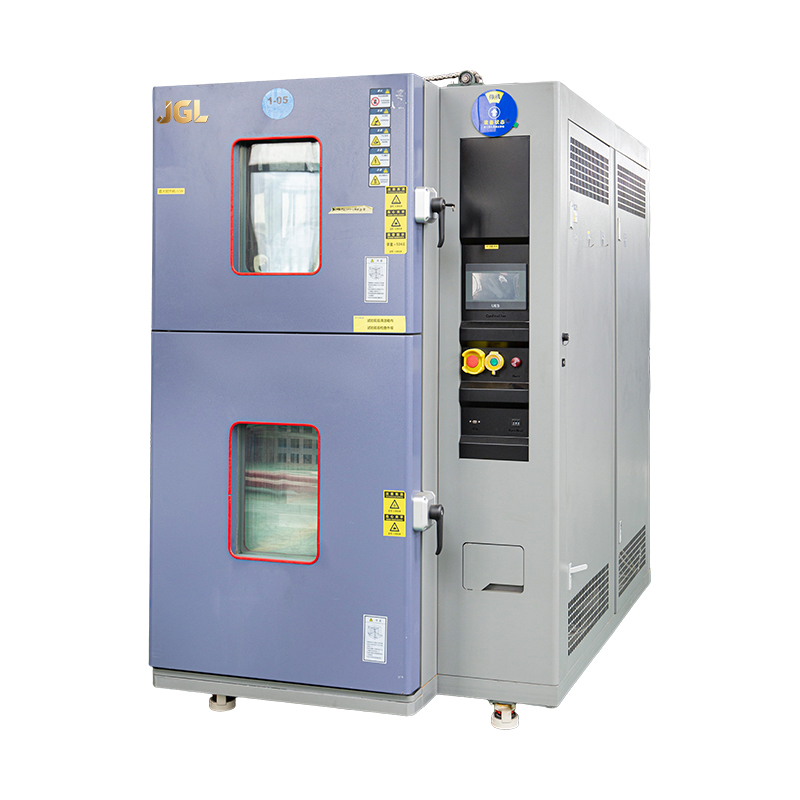
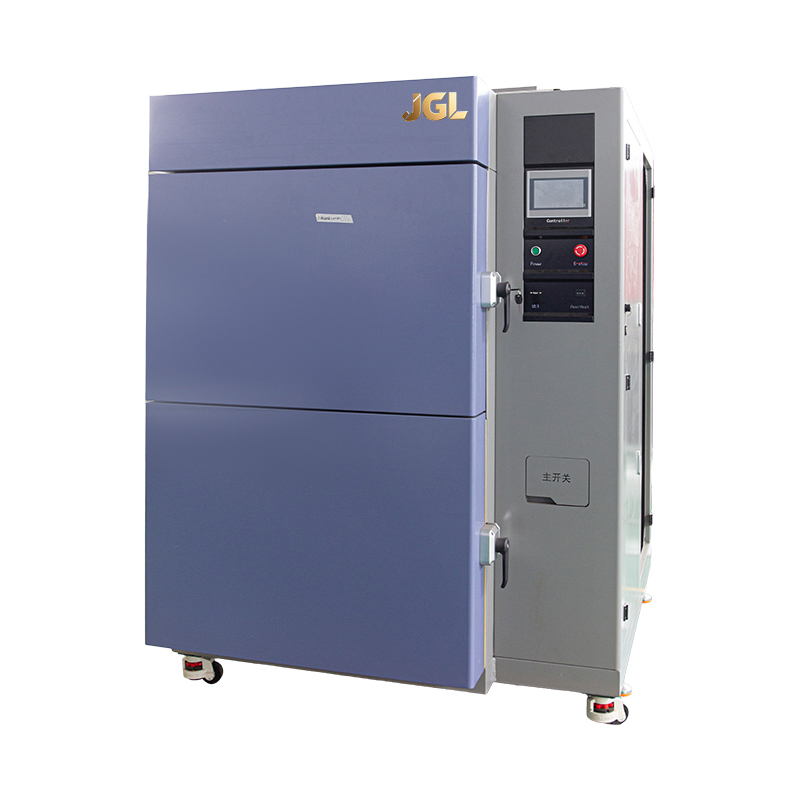
For laboratories that need tightly controlled humidity cycling, the UTH100A alternating high-low temperature humidity chamber provides a practical platform for reproducing dew point conditions during accelerated reliability testing. Its dual-stage refrigeration and steam generation system support stable humidified profiles from 20°C to 85°C. When testing requires faster thermal transitions, a U5QTH100A-W fast temperature humidity cycling chamber is better suited, because it maintains dew point control while ramping at rates beyond 5°C per minute.
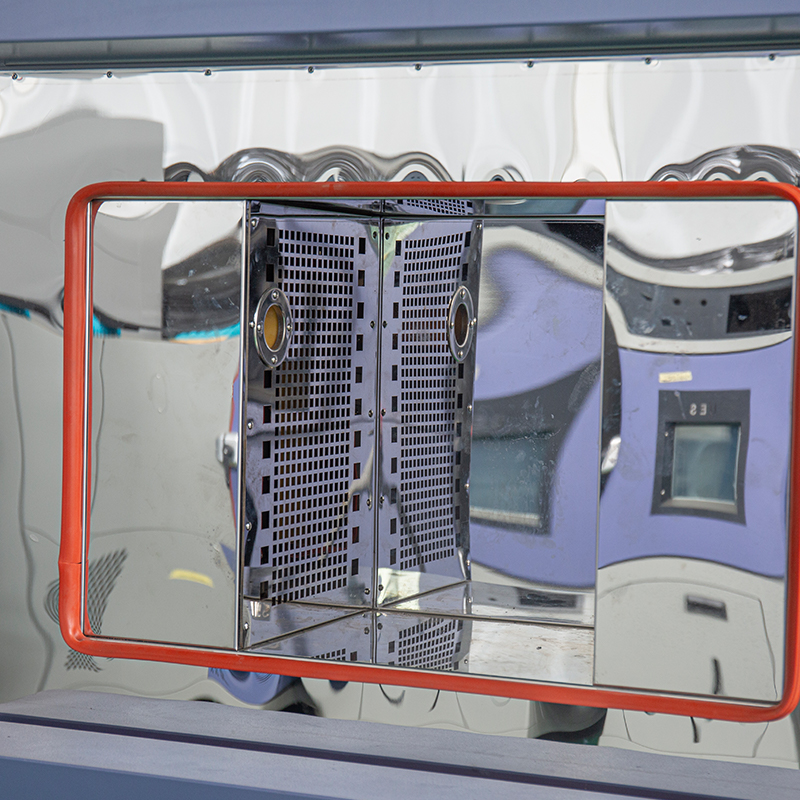 Fast Temperature and Humidity Cycling Chamber with Rapid Ramp RatesThis chamber maintains dew point control while ramping at rates exceeding 5°C per minute, with options up to 20°C/min, ideal for tests requiring faster thermal transitions without condensation issues.View Product →
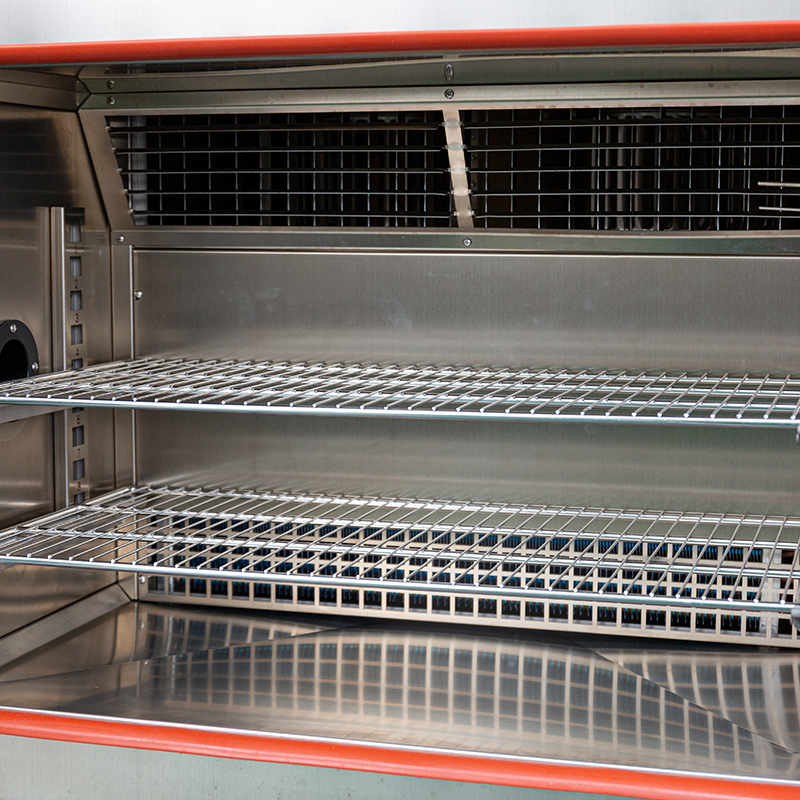 Alternating High/Low Temperature Humidity Chamber for Dew Point CyclingThis chamber offers stable humidified profiles from 20°C to 85°C with dual-stage refrigeration and steam generation, making it suitable for reproducing dew point conditions during accelerated reliability testing.View Product →
Selecting the right test platform is not simply about the humidity range. The chamber must be able to hold the desired water vapor pressure during hot/cold transitions without causing unintended condensation or ice buildup. That is why understanding dew point control mechanisms matters more than comparing RH percentages on a datasheet.
How to Measure Dew Point in Real Applications
Calculating dew point from T and RH is useful when you have reliable humidity sensor data. But in many industrial settings, direct measurement is preferable because it removes the dependency on two potentially inaccurate inputs.
Chilled Mirror Hygrometer
This is the most accurate measurement method. A mirror surface is cooled until a thin layer of condensation forms, and an optical sensor detects the change in reflection. Because this method measures the physical phase transition, it provides traceable accuracy of ±0.1°C or better. Chilled mirror instruments are the reference standard for calibrating other dew point sensors.
Capacitive and Resistive Sensors
Polymer capacitive sensor elements change their dielectric constant as they absorb water. They are inexpensive, fast responding, and widely used in environmental chambers and portable meters. However, they carry a typical uncertainty of ±2°C dew point at low values, which is acceptable for many process checks but insufficient for high-precision stability tests.
Fixed and Portable Transmitters
Inline dew point transmitters for compressed air and industrial dryers are often based on capacitive or ceramic technology. They allow the controller to calculate dew point continuously, and they can be connected to a verification system that logs values over time. When selecting a transmitter, consider the expected pressure, the lowest dew point value, and the required responsiveness.
Frequently Asked Questions
Q1: What is the difference between dew point and relative humidity?
Relative humidity is a percentage ratio of the current water vapor content to the saturation vapor content at the existing temperature. Dew point is an absolute temperature that indicates the exact point at which condensation begins. Dew point is a better indicator of the actual moisture burden in a system.
Q2: How do I calculate dew point from temperature and relative humidity?
Use the Magnus formula: Td = (b × α) / (a - α), where α = (a × T) / (b + T) + ln(RH / 100), with a = 17.625 and b = 243.04. This method works reliably from -40°C to +50°C.
Q3: Why does dew point matter in compressed air systems?
Compressed air contains water vapor that can condense in pipelines, valves, and instruments. The dew point tells you the temperature at which that condensation will occur. If the dew point is higher than the lowest ambient temperature in the system, water will form and cause corrosion, ice blockage, or contamination.
Q4: Can dew point be below 0°C?
Yes. Below freezing, a dew point value is often called a frost point, because ice forms instead of liquid water. The calculation requires an ice-phase adjustment to remain accurate, since the saturation vapor pressure over ice is lower than over liquid water.
Q5: What instrument is best for measuring dew point?
A chilled mirror hygrometer offers the best accuracy and traceability, making it the preferred choice for reference and calibration work. For continuous industrial monitoring, an inline capacitive dew point transmitter is usually the most practical and economical option.
Dew point calculation underpins humidity control in a wide range of engineering applications. Start with the Magnus formula for automatic calculations, validate the result against a chilled mirror reference when accuracy is critical, and always account for pressure and subzero conditions. With this approach, your process will stay within tolerance and your reliability data will remain trustworthy.
PREV:No previous article
NEXT:Environmental Chamber Temperature Humidity Control: Specs and Selection Guide
NEXT:Environmental Chamber Temperature Humidity Control: Specs and Selection Guide
Interested in cooperation or have questions?
Featured Products
Related products
Quick Link
Contact Information
- Tel: +86-13861043568
- E-mail: 1840784112@qq.com
- Add: Tianting District, Changzhou City, Jiangsu Province, China, No. 6 Hecircuit
Scan Code
Copyright © JIANGSU BAISHENG INDUSTRIAL CO., LTD.
All Rights Reserved. Privacy Custom Precision Laboratory Testing Equipment Manufacturers
