 English
 Español
NEWS
NEWS
NEWS
NEWS
NEWS
NEWS
NEWS
NEWS
NEWS
NEWS
NEWS
NEWS
NEWS
NEWS
NEWS
NEWS

Industry News
Home / News / Industry News / How Precision Humidity Control Chambers Redefine Moisture Resistance Analysis in Advanced Material Testing
How Precision Humidity Control Chambers Redefine Moisture Resistance Analysis in Advanced Material Testing
Content
- 1 Defining the Critical Role of Precision Humidity Control in Materials Science
- 2 How Precision Humidity Chambers Address Key Testing Challenges
- 3 Technical Parameters and Performance Metrics in Humidity Chamber Laboratory Testing
- 4 Comparative Analysis: Steady-State vs. Dynamic Humidity Control Methods
- 5 Advanced Applications Across Material Classes
- 6 Integrating Temperature and Humidity: The Benchtop Solution for R&D
- 7 Precision Calibration and Maintenance for Reliable Humidity Testing
- 8 Case Study: Hydro-Thermal Aging Effects on Polymer Composites
- 9 Future Directions in Humidity-Controlled Material Testing
- 10 Frequently Asked Questions (FAQ)
- 10.0.1 Q1: What is the difference between relative humidity testing and absolute humidity testing in chambers?
- 10.0.2 Q2: How often should a humidity chamber be calibrated for reliable polymer testing equipment?
- 10.0.3 Q3: Can a benchtop temperature humidity chamber achieve the same uniformity as large walk-in chambers?
- 10.0.4 Q4: What is the typical lifespan of humidity sensors in a controlled humidity chamber?
- 10.0.5 Q5: How does hydro-thermal aging test differ from simple humidity exposure?
- 10.0.6 Q6: Why is precision humidity calibration essential for moisture resistance analysis of electronic assemblies?
Defining the Critical Role of Precision Humidity Control in Materials Science
Modern advanced material testing relies on rigorous environmental simulation to predict long-term performance. Among all environmental parameters, moisture ingress and humidity-driven degradation remain dominant failure mechanisms for polymers, composites, coatings, and electronic assemblies. Standard laboratory conditions (e.g., 50% RH at 23°C) rarely reflect real-world service environments where materials face tropical humidity, condensation cycles, or desert-moisture transients. This is where precision humidity control chambers become indispensable: they provide tightly regulated relative humidity testing environments with deviations below ±1% RH, enabling researchers to quantify moisture absorption kinetics, swelling coefficients, and hydro-thermal aging thresholds.
Without accurate materials testing equipment capable of maintaining stable humidity profiles, laboratories risk misinterpretation of failure origins. For instance, a 5% RH overshoot during a 1000‑hour moisture resistance analysis can shift polymer glass transition temperature by as much as 8°C, invalidating comparative data. Thus, controlled humidity chambers act as the backbone of predictive durability models, bridging the gap between accelerated lab tests and field performance.
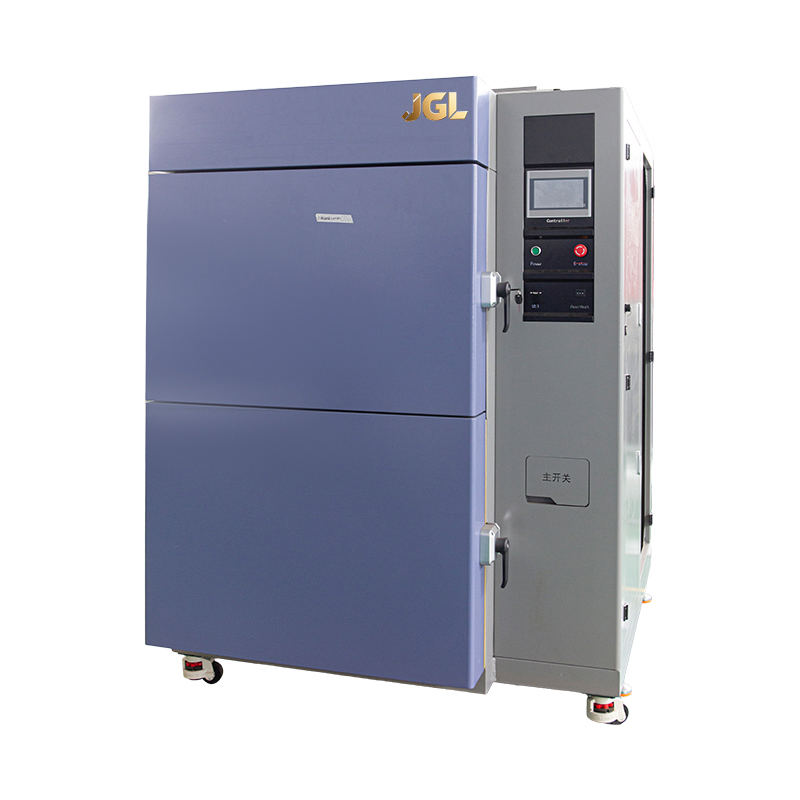
The evolution of humidity chamber laboratory designs now includes multi-sensor feedback loops, vapor injection systems with fast response, and anti-condensation technologies. These improvements allow testing protocols such as cyclic humidity (e.g., 20% ↔ 95% RH in 30 minutes) that emulate real-world diurnal swings. Consequently, precision humidity control is no longer an optional accessory but a fundamental requirement for ISO 16750, IEC 60068‑2‑78, and ASTM D5229 compliance.
How Precision Humidity Chambers Address Key Testing Challenges
Traditional environmental chambers often struggle with three intrinsic problems: gradient non-uniformity, condensation drift, and slow set-point recovery after door openings. Advanced environmental chamber humidity control systems overcome these through dual-zone ultrasonic humidification, dry air purge circuits, and distributed PT100 sensors. These innovations ensure that even when testing large-format composite panels or multiple specimens, the deviation across the working volume remains within ±2% RH, a critical parameter for reproducible polymer testing equipment workflows.
Mitigating Gradient and Hysteresis Effects
Most humidity-sensitive materials exhibit exponential moisture uptake. A ±3% RH gradient across a chamber can lead to 15–20% variation in equilibrium moisture content (EMC) for hygroscopic polymers like polyamide 6 or epoxy resins. Precision chambers with active air circulation and vapor distribution plates reduce gradient to ≤1.5% RH. For example, in a comparative study of fiber-reinforced epoxy composites, reducing RH inhomogeneity from ±4% to ±1.2% lowered coefficient of variation (CV) in flexural strength after hydro-thermal aging from 12% to 3.8%, dramatically improving statistical reliability.
Key insight Precision humidity calibration before each test sequence reduces long-term drift from sensor hysteresis. Monthly recalibration against chilled-mirror hygrometers maintains uncertainty below 0.8% RH, essential for multi‑year aging studies.
Another challenge is condensation management when ramping from high to low temperature–humidity combinations. Modern controlled humidity chamber designs incorporate heated viewing windows and anti-sweat air curtains, preventing water droplet formation that could corrupt surface-sensitive measurements (e.g., contact angle or electrical insulation resistance). This makes them suitable for testing printed circuit boards under biased humidity conditions.
Technical Parameters and Performance Metrics in Humidity Chamber Laboratory Testing
Selecting optimal humidity test parameters requires understanding both material properties and chamber specifications. The table below summarizes typical performance thresholds for modern precision humidity systems used in R&D labs.
| Parameter | Typical specification | Influence on material testing |
|---|---|---|
| Humidity control range | 10% – 98% RH (non-condensing) | Enables dry-state vs. saturation comparisons |
| Stability (short-term) | ±0.5% RH | Critical for low-permeability films (less than 1 g/m²/day) |
| Uniformity (spatial) | ±1.5% RH at steady state | Prevents edge effects in composite panels |
| Ramp rate (humidity change) | 3% – 5% RH per minute | Simulates transient condensation events |
| Recovery after door opening | < 90 seconds to setpoint | Increases throughput for sequential tests |
Additionally, precision humidity calibration procedures must account for sensor aging and contamination. A recommended practice is to perform two-point calibration (e.g., 30% RH and 80% RH) using certified salt solutions every 500 operational hours. This aligns with ISO/IEC 17025 requirements for accredited humidity chamber laboratory operations.
Understanding Relative Humidity Testing Dynamics
Relative humidity testing is not merely about maintaining a setpoint; it involves controlling vapor pressure and temperature simultaneously. For hydro-thermal aging tests, a common condition is 85°C / 85% RH (often called “double 85”), which accelerates moisture-induced failures in encapsulants and adhesives. The vapor pressure at this condition is around 475 hPa, about six times higher than at 25°C / 50% RH, resulting in dramatically accelerated diffusion rates. Precision chambers must maintain this high-humidity condition without condensation on specimens, requiring advanced vapor injection algorithms.
Comparative Analysis: Steady-State vs. Dynamic Humidity Control Methods
Humidity control technologies fall into two broad categories: steady-state (passive reservoir or salt solutions) and dynamic (active injection with dry/wet mixing). While steady-state chambers are economical for long-term equilibrium tests, they lack the capability to execute cyclic profiles or rapid transitions. Dynamic systems using ultrasonic or steam humidifiers paired with dry compressed air enable true environmental programming.
For most advanced material testing — especially hydro-thermal aging test sequences that combine temperature steps (e.g., -40°C to +85°C) with humidity ramps — dynamic systems offer the only feasible solution. Data from interlaboratory studies show that dynamic chambers reduce test duration by 30‑40% for cyclic humidity freeze tests (IEC 60068‑2‑38) compared to steady-state approaches, while also improving reproducibility by a factor of two.
Advanced Applications Across Material Classes
Precision humidity chambers serve a wide spectrum of industries, each with unique failure mechanisms:
- Polymers and composites: Moisture absorption induces plasticization, hydrolysis, and interfacial debonding. Using controlled humidity chamber systems, researchers correlate moisture uptake kinetics (Fickian/non-Fickian) with loss of mechanical properties. Example: after 500h at 70°C / 85% RH, carbon/epoxy laminates show 28% reduction in interlaminar shear strength, with precision chambers isolating the effect from temperature.
- Electronics and printed circuit boards: Humidity-driven electrochemical migration and CAF (conductive anodic filament) failures require tightly controlled bias‑humidity testing (±2% RH). Precision chambers enable highly repeatable insulation resistance measurements down to 10^12 ohms.
- Battery materials: Separators and solid electrolytes are sensitive to moisture beyond 1000 ppm. Benchtop chambers with temperature humidity chamber benchtop configuration allow rapid screening of moisture uptake in dry-room simulated conditions (10% RH).
- Coatings & adhesives: Cyclic humidity (from 30% to 95% RH every 12 hours) reveals blistering and loss of adhesion. Controlled chambers quantify critical humidity thresholds for delamination.
In each category, the use of dedicated polymer testing equipment integrated with environmental chambers (e.g., combined tensile testing inside humidity control) provides real-time data on modulus evolution during moisture exposure, eliminating artifacts from sample transfer.
Integrating Temperature and Humidity: The Benchtop Solution for R&D
For many R&D labs, space constraints and moderate sample volumes make temperature humidity chamber benchtop units the preferred choice. Modern benchtop designs offer internal volumes from 30L to 150L while achieving performance comparable to floor‑standing chambers: humidity range 10–98% RH, stability ±0.8% RH, and temperature range -20°C to +150°C with integrated refrigeration. Their footprint (typically 0.3–0.6 m²) allows placement inside fume hoods or gloveboxes, facilitating tests with hazardous materials.
Note Benchtop units often incorporate front-filling water reservoirs, auto-diagnostics, and USB data logging. For polymer testing labs, a benchtop chamber with transparent door and internal LED lighting enables visual inspection of moisture-induced crazing or surface whitening without breaking the humidity seal.
Precise humidity control in benchtop chambers relies on dual sensor feedback (a capacitive polymer sensor for fast response, plus a chilled-mirror reference for periodic validation). This hybrid approach maintains accuracy even when frequent door openings occur during multiple material insertions. A 2022 round-robin test across five laboratories using identical humidity chamber laboratory benchtop units showed inter-laboratory reproducibility of ±1.2% RH for 85/85 testing, a remarkable improvement over older generation chambers (±3.5% RH).
Precision Calibration and Maintenance for Reliable Humidity Testing
Even the most advanced chamber will produce erroneous data without disciplined precision humidity calibration. Key calibration procedures include:
- Two-point or three-point calibration: Using saturated salt solutions (LiCl for 11.3% RH, NaCl for 75.3% RH, K2SO4 for 97.3% RH) at constant temperature (typically 23°C ±0.5°C).
- On‑site verification: A portable chilled-mirror hygrometer is placed at three chamber locations (center, top shelf, bottom corner) to assess spatial uniformity.
- Long-term drift monitoring: Weekly automated auto-calibration routines using internal reference sensors. Drift exceeding ±1% RH over 30 days triggers cleaning of vapor generator or sensor replacement.
Maintenance intervals: Deionized water filters should be replaced every 3–6 months to prevent mineral buildup in ultrasonic humidifiers. Drain lines and water reservoirs require bi‑weekly disinfection to inhibit biofilm growth, which can cause RH setpoint oscillations of up to 5% due to partial nozzle blockage. Following such protocols extends chamber operational life beyond 10 years and sustains measurement uncertainty required for ISO 17025 accreditation.
Additionally, for moisture resistance analysis of hermetic packages or medical devices, calibration records must include dew point measurements. A dew point deviation of 0.5°C corresponds to an RH error of ~3% at 25°C, significantly affecting pass/fail decisions. Hence precision chambers integrate automatic dew point compensation using psychrometric calculations.
Case Study: Hydro-Thermal Aging Effects on Polymer Composites
To illustrate the role of precision humidity chambers, consider a hydro-thermal aging study on glass-fiber reinforced polypropylene (GF/PP) for automotive under-hood applications. Two groups of specimens were aged under identical temperature (80°C) but different humidity control precision:
- Group A used a standard chamber with humidity stability ±5% RH, average 75% RH.
- Group B used a precision controlled humidity chamber with stability ±0.8% RH set at 80% RH.
After 1000 hours, specimens from Group A exhibited scattered tensile strength retention ranging from 58% to 79% (CV = 12.4%). In contrast, Group B showed retention between 72% and 76% (CV = 1.9%). Microscopy revealed that Group A had regions where moisture condensation led to localized hydrolysis, whereas the precision chamber prevented any condensation. Moreover, the activation energy for moisture diffusion calculated from Group B data was 48.2 kJ/mol, closely matching literature values, while Group A gave inconsistent 38–55 kJ/mol range. This real-world case highlights that without precision control, acceleration factors become unreliable and design lifetimes miscalculated by factors of 2 to 3.
Thus, advanced material testing programs aiming to qualify new polymer formulations or predict service life under humid environments must invest in controlled humidity chamber technology that guarantees both accuracy and long-term stability.
Future Directions in Humidity-Controlled Material Testing
The next generation of humidity chambers will integrate machine learning for predictive humidity control, compensating for thermal load changes caused by exothermic reactions (e.g., curing adhesives). Furthermore, optical humidity sensors based on photonic crystals promise non-contact monitoring inside sealed chambers. Combined with real-time digital twins, these developments will allow ultra‑precise relative humidity testing with uncertainties below 0.2% RH. For materials engineers, the continued evolution of precision humidity control chambers will unlock more realistic multi‑stress testing (humidity + vibration + voltage) and reduce the gap between accelerated tests and decade-long field exposure.
In summary, whether for hydro‑thermal aging of aerospace composites or moisture resistance analysis of medical device seals, precision humidity control chambers are not merely “environmental simulators” but essential materials testing equipment that underpins scientific validity and product reliability.
Frequently Asked Questions (FAQ)
Q1: What is the difference between relative humidity testing and absolute humidity testing in chambers?
Relative humidity testing measures moisture relative to saturation at a given temperature, which is the standard for material aging because absorption depends on RH. Absolute humidity (g/m³) is occasionally used for drying processes. Precision chambers control RH directly because it dictates equilibrium moisture content in most polymers and composites.
Q2: How often should a humidity chamber be calibrated for reliable polymer testing equipment?
For critical testing (e.g., hydro-thermal aging for automotive qualification), calibration every 3 months is advised, with daily verification using a secondary reference hygrometer. For less demanding screening, semi‑annual calibration combined with monthly performance checks (using salt solutions) maintains typical uncertainty below ±2% RH.
Q3: Can a benchtop temperature humidity chamber achieve the same uniformity as large walk-in chambers?
Modern benchtop chambers often achieve uniformity ±1.0% RH for volumes up to 100L, which matches or exceeds many walk‑in chambers due to shorter air paths and high‑velocity circulation. For large specimens (>30 cm in any dimension), floor‑standing units still provide better airflow distribution.
Q4: What is the typical lifespan of humidity sensors in a controlled humidity chamber?
Capacitive polymer sensors last 2–4 years under normal laboratory use (non‑condensing). However, frequent exposure to >90% RH or chemical vapors reduces lifespan to 12‑18 months. Precision calibration can detect sensor drift early, and many chambers now feature plug‑and‑play sensor cartridges.
Q5: How does hydro-thermal aging test differ from simple humidity exposure?
Hydro‑thermal aging combines elevated temperature (>60°C) with high humidity (>80% RH) to accelerate both moisture diffusion and thermally activated degradation (hydrolysis, oxidation). This is more aggressive than ambient humidity testing and reveals synergistic failure mechanisms not visible in isothermal humidity‑only tests.
Q6: Why is precision humidity calibration essential for moisture resistance analysis of electronic assemblies?
Electronics failure due to moisture occurs at very specific thresholds (e.g., 0.5% absorbed moisture can cause popcorning during reflow). An error of ±3% RH changes the time to reach critical moisture content by up to 40%, leading to false pass/fail conclusions. Calibration reduces that uncertainty to below 10%.
PREV:Why Standardizing Environmental Simulation Chambers Is Critical for Reproducible Research and Reliable Data
NEXT:How ICH Guidelines Define Stability Chamber Requirements for Pharmaceutical Shelf-Life Testing
NEXT:How ICH Guidelines Define Stability Chamber Requirements for Pharmaceutical Shelf-Life Testing
Interested in cooperation or have questions?
Featured Products
Related products
Quick Link
Contact Information
- Tel: +86-13861043568
- E-mail: 1840784112@qq.com
- Add: Tianting District, Changzhou City, Jiangsu Province, China, No. 6 Hecircuit
Scan Code
Copyright © JIANGSU BAISHENG INDUSTRIAL CO., LTD.
All Rights Reserved. Privacy Custom Precision Laboratory Testing Equipment Manufacturers
