 English
 Español
NEWS
NEWS
NEWS
NEWS
NEWS
NEWS
NEWS
NEWS
NEWS
NEWS
NEWS
NEWS
NEWS
NEWS
NEWS
NEWS

Industry News
Home / News / Industry News / Calculating Humidity from Dew Point: Magnus Formula, Examples, and Lab Applications
Calculating Humidity from Dew Point: Magnus Formula, Examples, and Lab Applications
Content
- 1 Relative Humidity and Dew Point: The Working Relationship
- 2 The Magnus Formula for Converting Dew Point to Humidity
- 3 Worked Example: 25°C Air Temperature and 15°C Dew Point
- 4 Where This Calculation Matters in Environmental Testing
- 5 Common Errors That Skew Humidity Calculations
- 6 Frequently Asked Questions
If you have a temperature reading and a dew point reading, you can already compute relative humidity without any additional instrument. The principle is straightforward: the dew point tells you how much moisture is physically present in the air, while the air temperature tells you how much moisture the air can hold at that moment. This article explains the most practical tool for that conversion—the Magnus formula—shows a step-by-step worked example, and highlights the errors that most often distort the result in laboratory work.
Relative Humidity and Dew Point: The Working Relationship
Relative humidity (RH) is the ratio of the actual water vapor pressure in the air to the saturation vapor pressure at the same temperature, expressed as a percentage. When the temperature rises, the air can hold more water vapor, so even if the absolute moisture content stays the same, the relative humidity falls.
Dew point temperature, on the other hand, is the temperature to which air must cool at constant pressure for water vapor to reach saturation. A higher dew point means a higher absolute moisture content. Unlike relative humidity, dew point is independent of air temperature.
Together, temperature, dew point, and relative humidity form a closed set of relationships. Given any two of the three variables, the third can be calculated. In laboratory practice, temperature and dew point are usually measured directly by sensors, while relative humidity is often the value that a test standard asks you to report—which is why converting from dew point to humidity is a routine task in environmental testing.
The Magnus Formula for Converting Dew Point to Humidity
The most widely used approximation for this conversion is the August-Roche-Magnus equation. It is simple enough for spreadsheet calculations and accurate enough for most laboratory applications within a temperature range of -40°C to +50°C.
RH = 100 × [exp(17.625 × Td / (243.04 + Td))] / [exp(17.625 × T / (243.04 + T))]
In this formula:
- T = air temperature in °C
- Td = dew point temperature in °C
- exp = the natural exponential function
The terms exp(...) represent the actual vapor pressure and the saturation vapor pressure, respectively. The ratio between these two pressures is exactly the definition of relative humidity. Compared with more complex reference equations such as the Wexler or IAPWS formulations, the Magnus approximation offers sufficient precision for routine environmental testing while remaining easy to embed in an Excel spreadsheet or a controller's firmware.
Worked Example: 25°C Air Temperature and 15°C Dew Point
Assume you need to report the relative humidity in an environmental chamber where the air temperature is measured at 25°C and the dew point at 15°C. Follow these steps:
- Calculate the saturation vapor pressure: exp(17.625 × 25 / (243.04 + 25)) = exp(440.625 / 268.04) ≈ 5.178
- Calculate the actual vapor pressure: exp(17.625 × 15 / (243.04 + 15)) = exp(264.375 / 258.04) ≈ 2.786
- Divide the actual vapor pressure by the saturation pressure and multiply by 100: RH = 100 × 2.786 / 5.178 ≈ 53.8%
In this case, the relative humidity is approximately 54%. The table below gives several other combinations that are common in environmental testing and confirms the same calculation path.
| Air Temperature (°C) | Dew Point (°C) | Relative Humidity (%) |
|---|---|---|
| 25 | 18 | 65 |
| 25 | 15 | 54 |
| 20 | 10 | 52 |
| 30 | 25 | 75 |
| 40 | 20 | 32 |
| 10 | 8 | 87 |
You can copy the formulas into a spreadsheet if you need to process many measurement points. The same logic applies when converting relative humidity and temperature back to dew point—just invert the rearrangement.
Where This Calculation Matters in Environmental Testing
In many test chambers, temperature and dew point are monitored separately. Some standards, however, ask for relative humidity as a verification value, which means the equipment must maintain a reliable mathematical relationship between the two sensor readings. A chamber's humidity control performance is not just about the nominal sensor accuracy; it is also about how the control system compensates for temperature changes during the cycle.
When you need to evaluate a product under stable humidity conditions, a precision humidity control chamber gives you direct control over the dew point and the resulting RH. One laboratory-grade option is the alternating high-low temperature humidity chamber, which is designed to maintain a defined temperature-humidity profile over long cycles.
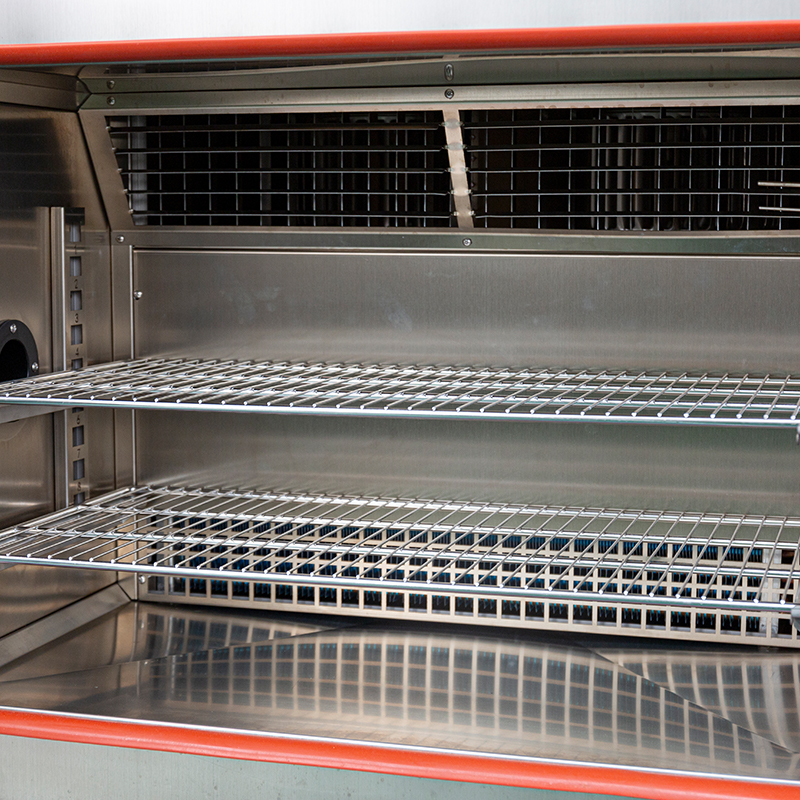 Alternating High/Low Temperature Humidity Chamber for Precision TestingThis chamber provides precise alternating temperature and humidity cycles, with PID control and vapor partial pressure regulation. Its durable construction and safety features make it suitable for long-term environmental testing of materials and components.View Product →
For accelerated stress testing, the moisture content often changes at a defined rate along with the temperature. That scenario is handled by a fast temperature humidity cycling chamber, where the dew point and temperature are changed synchronously so that the target RH is preserved throughout the ramp. Understanding the calculation behind these readings helps you interpret the chamber's performance data with more confidence.
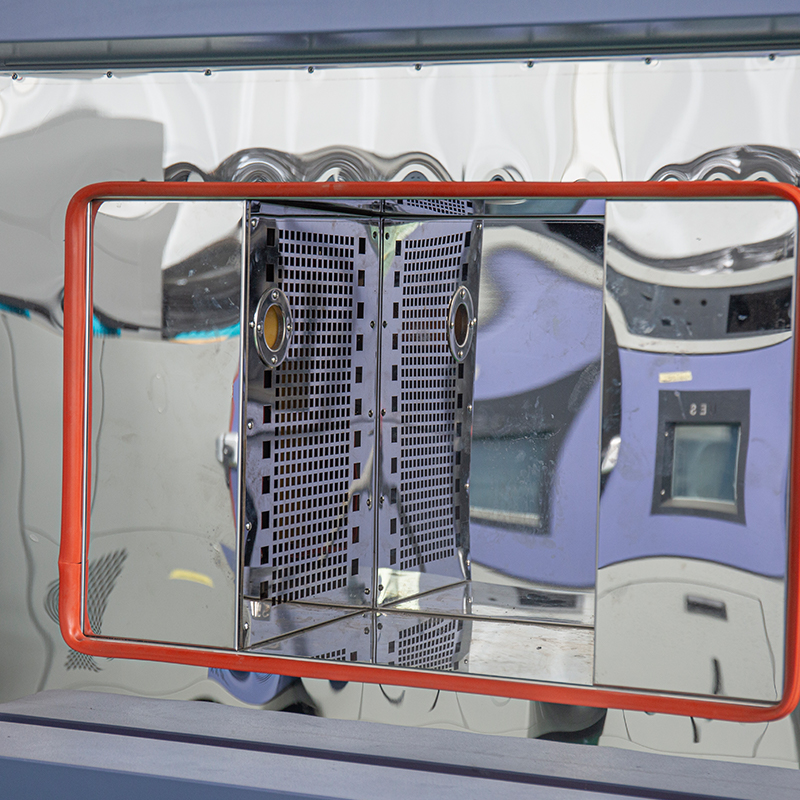 Fast Temperature and Humidity Cycling Chamber with Rapid RatesDesigned for accelerated stress testing, this chamber synchronously changes dew point and temperature to preserve relative humidity. It offers rapid rates up to 20°C/min, ensuring efficient and accurate profiling during cycling.View Product →
If you are designing a new test or selecting equipment, you should also look at how the chamber manufacturer defines humidity accuracy. The precision humidity control chambers on the market differ mainly in how their controllers handle sensor lag and thermal gradients. A well-designed chamber will use the dew point to compute the target RH and then adjust the wet/dry balance automatically.
For projects requiring a wider volume or more robust thermal construction, a high-low temperature humidity cycling chamber can provide the same calculation logic while handling larger specimens.
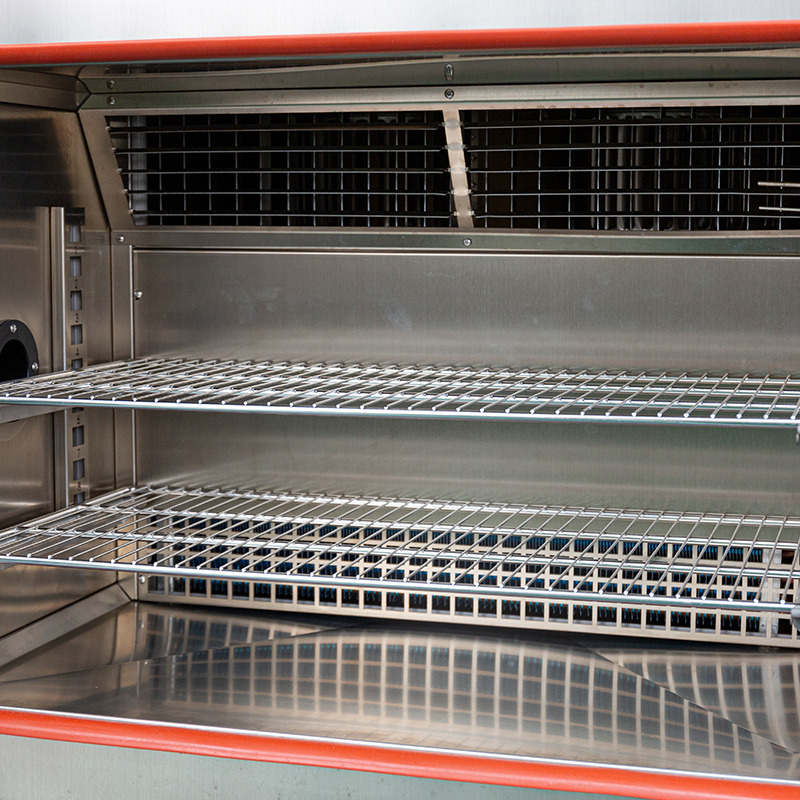 High-Low Temperature Humidity Cycling Chamber with Enhanced CapacityFor larger specimens, this chamber maintains stable humidity and temperature cycles using advanced PID control. Its robust design, energy efficiency, and durable components support reliable performance in demanding test applications.View Product →
Common Errors That Skew Humidity Calculations
The calculation itself is simple, but small mistakes in setup can produce misleading readings. The most frequent errors are:
- Mixing Fahrenheit and Celsius inputs. The Magnus formula requires Celsius. Entering Fahrenheit values without conversion can shift the result by tens of percentage points.
- Measuring temperature and dew point at different locations. If the air temperature probe and the dew point sensor are not in the same airstream, a temperature gradient in the chamber can make the two readings inconsistent.
- Ignoring atmospheric pressure. The formula assumes standard atmospheric pressure. At significantly higher or lower pressures, the calculated RH will not match observed conditions.
- Sensor drift. Even high-quality dew point sensors and temperature probes need regular calibration. A small offset of 1°C in the dew point can change the RH result by roughly 5 to 10 percentage points, depending on the operating point.
Frequently Asked Questions
What is the practical difference between dew point and relative humidity?
Dew point is an absolute measure of the water vapor content in the air. It does not change when the air temperature changes. Relative humidity is a relative measure that compares current vapor pressure to the saturation pressure, so it changes with temperature even if the moisture content stays constant.
Can the Magnus formula be used below freezing?
Yes, but with some caution. Below -40°C the accuracy falls off noticeably. In addition, when the dew point is below 0°C, the standard formula uses saturation vapor pressure over liquid water. If your application involves frost point conditions, you should switch to the saturation pressure over ice.
How accurate is the Magnus approximation in practice?
For the temperature range commonly used in environmental testing, which is roughly -20°C to +50°C, the Magnus formula is accurate to within about 0.4 percentage points relative to more rigorous equations. For research-grade work that requires the highest precision, the Wexler or IAPWS formulations are a safer choice.
Which humidity condition is more important for product reliability—dew point or relative humidity?
That depends on the failure mode you are studying. Dew point is the better indicator when you want to know if condensation will occur, because condensation begins when the surface temperature reaches the dew point. Relative humidity is more important when the test standard specifies moisture resistance, oxidation, or corrosion behavior, because these processes respond to the vapor-pressure ratio rather than the absolute moisture amount.
Calculating humidity from dew point is not a difficult task when you understand the physical relationship behind it. The Magnus formula provides a fast and accurate route for most laboratory applications, and the key to getting reliable results is to keep your sensor placement consistent, check your units, and remember the limitations at extreme temperatures. When you are comparing environmental test chambers, paying attention to how the controller handles the dew-point-to-humidity conversion tells you more about the equipment's real performance than any single spec sheet value.
PREV:No previous article
NEXT:Battery Safety Testing: Abuse Tests, Standards, and Equipment Selection Guide
NEXT:Battery Safety Testing: Abuse Tests, Standards, and Equipment Selection Guide
Interested in cooperation or have questions?
Featured Products
Related products
Quick Link
Contact Information
- Tel: +86-13861043568
- E-mail: 1840784112@qq.com
- Add: Tianting District, Changzhou City, Jiangsu Province, China, No. 6 Hecircuit
Scan Code
Copyright © JIANGSU BAISHENG INDUSTRIAL CO., LTD.
All Rights Reserved. Privacy Custom Precision Laboratory Testing Equipment Manufacturers
