 English
 Español

NEWS
NEWS
NEWS
NEWS
NEWS
NEWS
NEWS
NEWS
NEWS
NEWS
NEWS
NEWS
NEWS
NEWS
NEWS
NEWS

Industry News
Home / News / Industry News / Chamber Temperature in Environmental Test Chambers: Key Selection Factors
Chamber Temperature in Environmental Test Chambers: Key Selection Factors
Content
- 1 What Is Chamber Temperature and Why Does It Matter?
- 2 Key Temperature Ranges for Environmental Test Chambers
- 3 Temperature Uniformity and Stability: What the Specs Really Mean
- 4 How Fast Do You Need the Chamber to Change Temperature?
- 5 Thermal Shock vs. Rapid Rate: Which One Matches the Failure Mode?
- 6 Chamber Temperature and Humidity: How They Interact
- 7 Practical Tips for Specifying Chamber Temperature
- 8 Frequently Asked Questions about Chamber Temperature
If you are selecting an environmental test chamber, chamber temperature is the specification that determines whether your test gives you useful data or misleading data. A chamber that cannot hold its setpoint or cannot reach the required low end will turn a week of testing into a week of wasted samples. Here is how to think about chamber temperature before you buy.
What Is Chamber Temperature and Why Does It Matter?
Chamber temperature is the controlled air temperature inside the closed test volume of an environmental test chamber. It is the variable you program to simulate the conditions that your product will face in storage, operation, or transport.
The reason it matters is repeatability. If the temperature at one corner of the workspace differs from the opposite corner by several degrees, the same batch of products can pass on one shelf and fail on another. That is why standards such as IEC 60068 separate three aspects: temperature range, temperature uniformity, and temperature fluctuation. A chamber that claims -40 C to +150 C is only useful if it can hold that temperature within a defined tolerance at the actual test location.
Key Temperature Ranges for Environmental Test Chambers
Most commercially available chambers offer a standard range of approximately -40 C to +150 C, while more capable systems extend to -70 C or -80 C and up to +180 C. The exact range you need is driven by the test standard and the material you are evaluating.
The table below gives a quick reference for common temperature ranges and their typical applications.
| Temperature Range | Typical Application |
|---|---|
| -40 C to +125 C | Consumer electronics, automotive modules, and battery packs |
| -70 C to +150 C | MIL-STD-810 testing, aerospace materials, and high-temperature polymers |
| -85 C to +180 C | Semiconductor reliability, advanced alloys, and space hardware |
| +5 C to +60 C | Temperature-sensitive sample storage and handling |
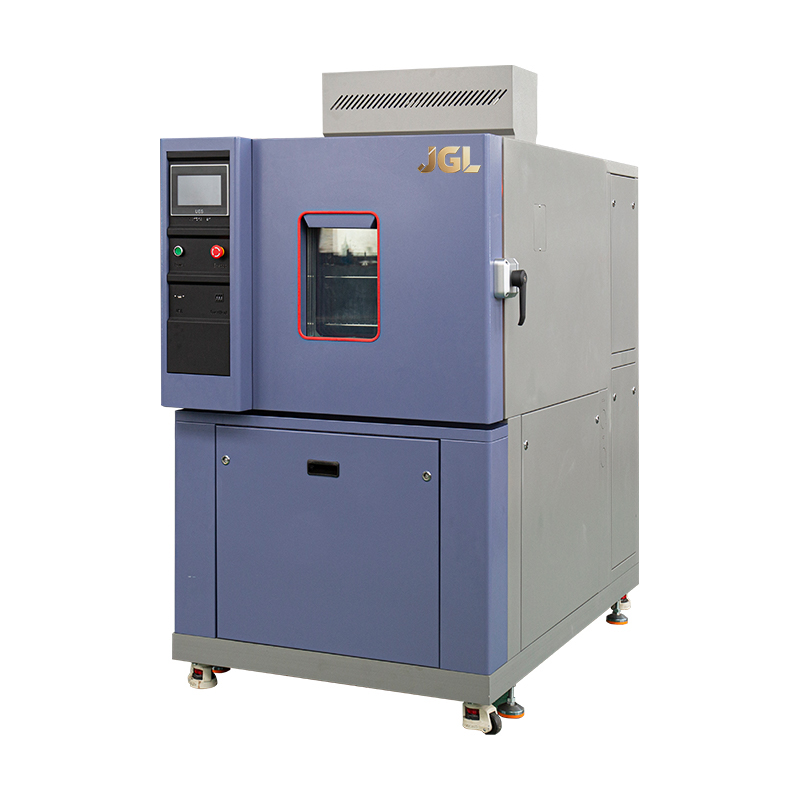
If your test plan stays inside the standard range, a UT100A high and low temperature environmental test chamber provides a dependable platform for high-low temperature cycling without requiring extreme cryogenic refrigeration. Matching the range to your actual standard avoids paying for cooling capacity you will never use.
 UT-100-A High and Low Temperature Environmental Test Chamber for Reliable CyclingThe UT-100-A provides a dependable platform for high-low temperature cycling within standard ranges, eliminating the need for extreme cryogenic refrigeration. It features precise PID control and energy-efficient operation for stable, reproducible testing conditions.View Product →
Temperature Uniformity and Stability: What the Specs Really Mean
Two metrics are often confused when reading a chamber datasheet. Uniformity describes how evenly the temperature is distributed across the workspace at one moment. Stability describes how little the temperature changes over time at a single point.
For a well-built chamber, uniformity of +/-1 C to +/-2 C and stability of +/-0.5 C are common. But the numbers change when you load the chamber with a product that has significant thermal mass. The actual temperature at the sample surface may be different from the air temperature near the return duct. Always ask the manufacturer for uniformity data at the setpoint and load you intend to use.
How Fast Do You Need the Chamber to Change Temperature?
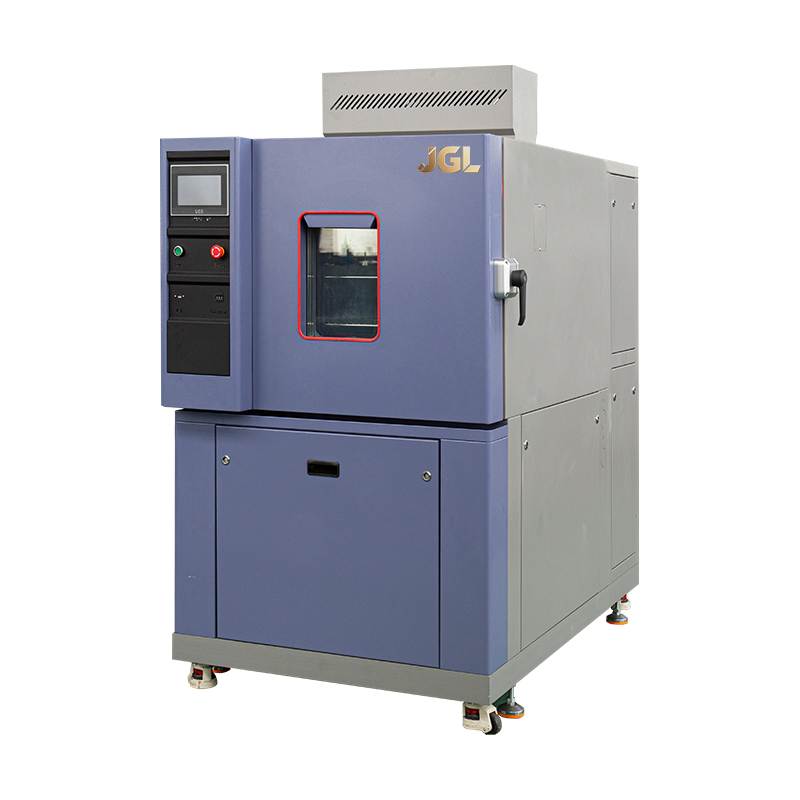
The transition speed of a chamber is a major cost driver. Slow ramp rates, around 1 C/min to 3 C/min, are typical for simple high-low temperature tests. Fast ramp rates, such as 5 C/min to 15 C/min, require more powerful refrigeration and heating systems. For screening electronic components or validating thermal cycling endurance, a U5QTH100A-W fast temperature humidity cycling chamber is engineered to provide controlled heating and cooling rates while also managing humidity, which is often part of the same qualification profile.
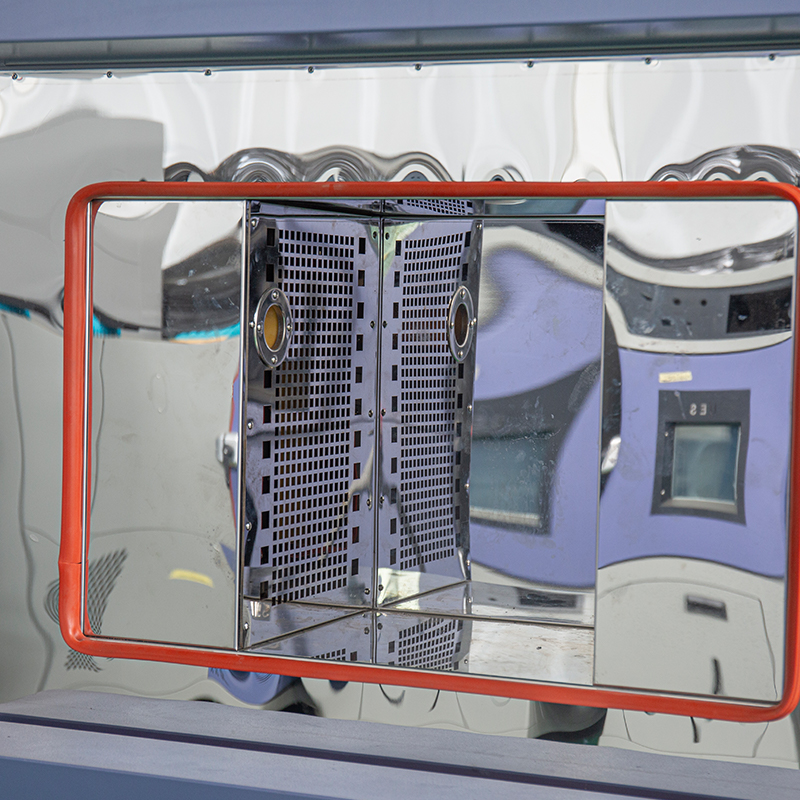 U5QTH-100-A/W Fast Temperature and Humidity Cycling Chamber for Rapid ScreeningThis chamber supports fast heating and cooling rates of 5°C/min or more, while managing humidity. It suits screening electronic components and thermal cycling endurance tests that require both rapid transitions and controlled moisture levels.View Product →
If your requirement is only a slow transition, choosing a fast ramp chamber may be unnecessary. The key is to match the chamber performance to the test standard, not to the supplier's maximum capability.
Thermal Shock vs. Rapid Rate: Which One Matches the Failure Mode?
Rapid rate and thermal shock are sometimes confused because both involve large temperature changes. But the physics is different. A rapid rate chamber changes the temperature of the entire air mass at a controlled pace. A thermal shock chamber moves the sample between two pre-conditioned zones, creating a much faster transition at the sample itself.
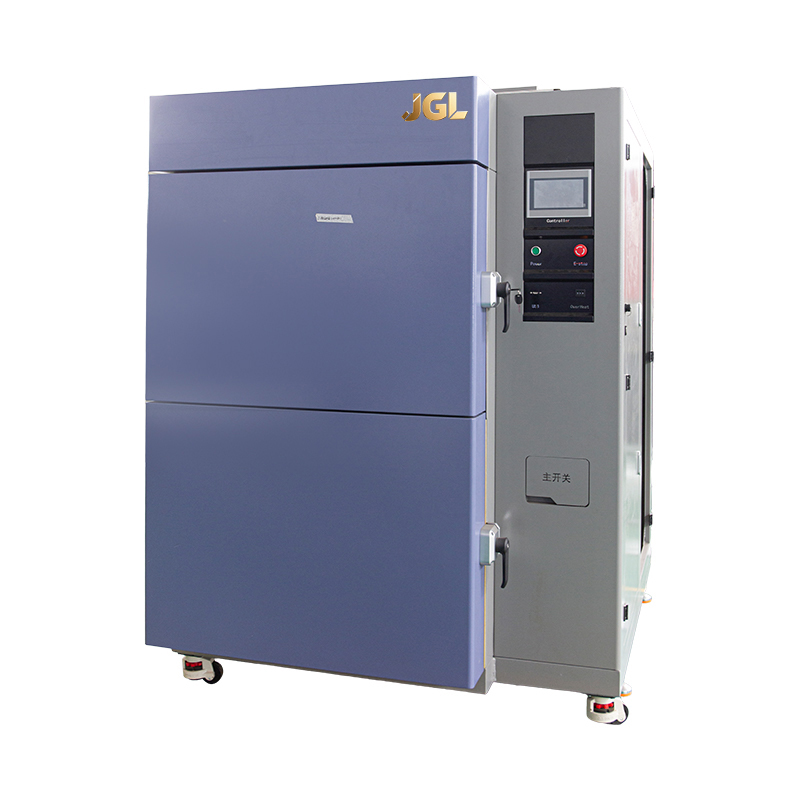
If you are trying to expose solder joint fatigue, delamination, or brittle material fractures, thermal shock is the appropriate test. The U2S100A-W two-compartment cold and thermal shock chamber is designed for this scenario, giving you the abrupt temperature swings that a normal ramp-rate chamber cannot deliver.
 U2S-100-A/W Two-Compartment Thermal Shock Chamber for Abrupt Temperature SwingsThe U2S-100-A/W delivers abrupt temperature changes by moving a basket between hot and cold zones, ideal for exposing solder joint fatigue, delamination, or brittle fractures that normal ramp-rate chambers cannot achieve.View Product →
Chamber Temperature and Humidity: How They Interact
Humidity testing depends on temperature more than most engineers realize. When the chamber air temperature changes, the amount of water vapor the air can hold changes with it. A small temperature drift causes a noticeable change in relative humidity, even if the humidity controller is stable.
For cyclic humidity tests, the chamber must cool down and warm up in a controlled pattern so that condensation forms on the sample exactly as intended. A chamber that ramps too quickly can create condensation on the specimen that alters the failure mechanism. A chamber that ramps too slowly may never reach the stress level required by the standard. This is why cyclic temperature humidity chambers use synchronized control algorithms for both temperature and humidity.
Practical Tips for Specifying Chamber Temperature
When you compare quotes, look at the details that affect actual test results. Here are four points to check.
- Set the range based on the standard. If the standard only requires -40 C, do not buy a -80 C chamber. Extra refrigeration equipment increases maintenance and energy costs.
- Verify the ramp rate under load. The data sheet may list the ramp rate with an empty chamber. Your actual sample mass will slow it down. Ask for the ramp rate at your expected load.
- Insist on uniformity at the sample location. A chamber can have good uniformity in the center and still be off at the corners. Make sure the calibration test points include the area where your product sits.
- Plan for sensor calibration. Temperature sensors drift. Establish a calibration schedule for the chamber sensors and, if possible, use an independent reference sensor for critical tests.
For a deeper understanding of how military standards use chamber temperature to simulate field conditions, see our article on how MIL-STD-810 environmental test chambers turn climatic stress into actionable data.
Frequently Asked Questions about Chamber Temperature
Q1: What is the lowest temperature a typical chamber can reach?
With mechanical refrigeration, standard chambers often reach -40 C. Cascade refrigeration extends that to -70 C or -80 C. Some systems using liquid nitrogen or liquid CO2 can reach much lower values, but those add complexity and operating cost.
Q2: How long does it take for a chamber to stabilize at a new setpoint?
Stabilization time depends on the chamber's power, insulation, and thermal mass. As a general guideline, a well-designed chamber should stabilize within 15 to 30 minutes after a moderate step change. Large sample loads can double that time.
Q3: Does chamber temperature affect the humidity reading?
Yes. Relative humidity is a function of both moisture content and temperature. If the chamber temperature is not stable, the relative humidity reading will drift even when the moisture content is constant.
Chamber temperature is the baseline of every environmental reliability test. It tells you what conditions your product can survive, how consistent those conditions are, and how quickly they can change. Understand your standard, validate the specification against your real sample, and you will get test data you can trust.
PREV:Environmental Chamber Temperature Humidity Control: Specs and Selection Guide
NEXT:Calculating Humidity from Dew Point: Magnus Formula, Examples, and Lab Applications
NEXT:Calculating Humidity from Dew Point: Magnus Formula, Examples, and Lab Applications
Interested in cooperation or have questions?
Featured Products
Related products
Quick Link
Contact Information
- Tel: +86-13861043568
- E-mail: 1840784112@qq.com
- Add: Tianting District, Changzhou City, Jiangsu Province, China, No. 6 Hecircuit
Scan Code
Copyright © JIANGSU BAISHENG INDUSTRIAL CO., LTD.
All Rights Reserved. Privacy Custom Precision Laboratory Testing Equipment Manufacturers
