 English
 Español
NEWS
NEWS
NEWS
NEWS
NEWS
NEWS
NEWS
NEWS
NEWS
NEWS
NEWS
NEWS
NEWS
NEWS
NEWS
NEWS

Industry News
Home / News / Industry News / Battery Safety Testing: Abuse Tests, Standards, and Equipment Selection Guide
Battery Safety Testing: Abuse Tests, Standards, and Equipment Selection Guide
Content
- 1 The Three Pillars of Battery Abuse Testing
- 2 Standards That Define Battery Safety Testing
- 3 Equipment Considerations for Thermal and Environmental Abuse
- 4 Electrical Safety Testing and Battery Integrity
- 5 Common Failure Modes and How to Interpret Results
- 6 Practical Procurement Guidance for Battery Safety Testing
- 7 FAQ
- 7.0.1 Q1: What is battery safety testing?
- 7.0.2 Q2: What is the difference between thermal runaway and thermal abuse testing?
- 7.0.3 Q3: Can a standard environmental chamber be used for battery abuse testing?
- 7.0.4 Q4: How do I choose between a rapid temperature change chamber and a thermal shock chamber?
- 7.0.5 Q5: What standards should I reference for battery safety testing?
When you place a lithium-ion cell into a chamber and ramp it toward 150 °C, the reading on the screen can turn from a routine validation curve into a safety decision in less than a minute. Battery safety testing is not a compliance checkbox; it is the only practical way to know how much abuse a cell or pack can tolerate before it releases energy. The conclusion after years of field failures is consistent: the most expensive test setup is the one that misses a root cause because it used equipment that could not reproduce the failure condition. This article explains the core scope of battery safety testing, the standards that govern it, and the equipment choices that can make a lab's abuse program both safer and more repeatable.
Battery safety testing is about finding the boundary between normal operation and catastrophic failure before that boundary enters a real product.
The Three Pillars of Battery Abuse Testing
Battery abuse testing is traditionally divided into three categories. Each category stresses the cell or pack in a different way and requires a different set of instruments and safety measures.
Thermal Abuse Testing
Thermal abuse exposes cells to temperatures beyond the allowed operating window. Typical profiles include:
- High-temperature exposure at 130 °C to 150 °C for a defined dwell time.
- Thermal shock between -40 °C and +150 °C with transfer times starting at 5 minutes.
- Rapid temperature cycling at rates from 5 °C/min to 15 °C/min to check solder joints, seals, and BMS components.
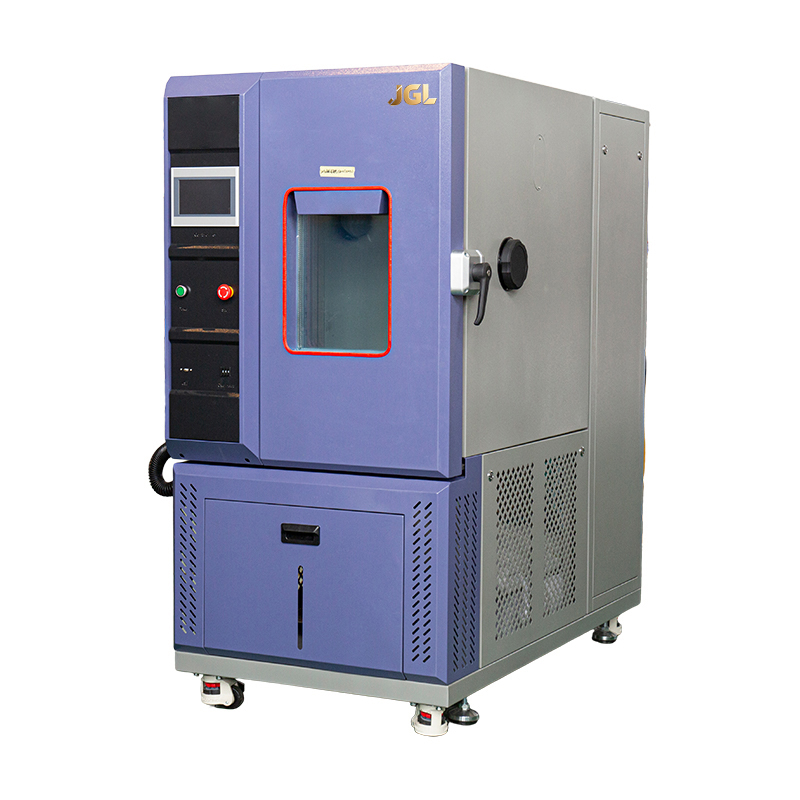
Heating can trigger separator collapse, electrolyte decomposition, and internal short circuits. The chamber must not only reach the target temperature but also provide a controlled rate and a safe vent path if a cell goes into thermal runaway. For rapid-rate cycling, a fast-rate temperature and humidity cycling chamber gives you the dynamic ramp control you need to reproduce those conditions reliably.
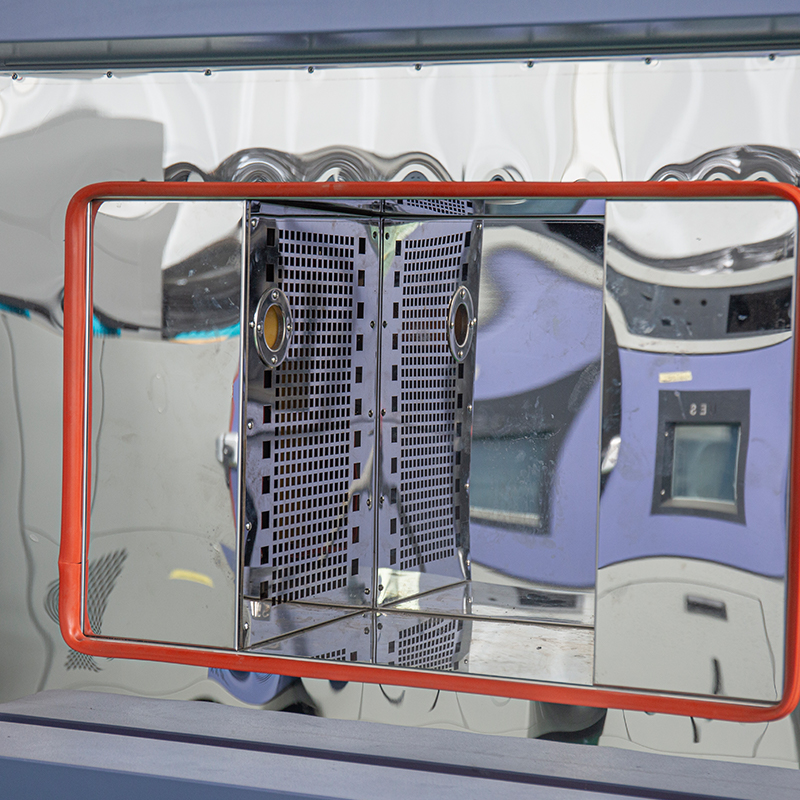 Fast Temperature and Humidity Cycling Chamber for Battery Safety TestingThis chamber offers dynamic ramp control and high precision, making it suitable for reproducing thermal conditions in battery testing. It features adjustable rapid rates up to 20℃/min and a robust design for reliability.View Product →
Electrical Abuse Testing
Electrical abuse includes overcharge, over-discharge, forced discharge, external short circuit, and reverse charging. The practical concern is that the test instrument has enough accuracy and dynamic range to control current and voltage with tight tolerance. In addition, hipot and insulation resistance tests verify that the insulating layers between high-voltage circuits and the chassis remain intact under stress. An AC/DC withstanding voltage and insulation resistance tester is a common tool for these measurements in battery pack validation.
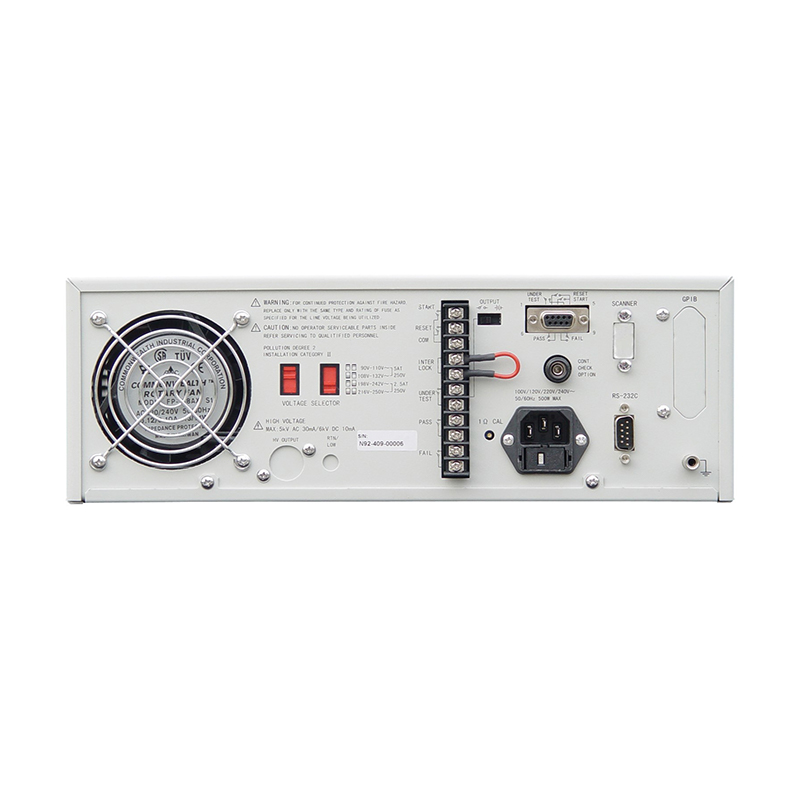 AC/DC/IR Withstand Voltage Hipot Tester for Electrical Safety ValidationThis tester provides AC/DC withstand voltage, insulation resistance, and arc detection with an 8-channel scanner. It helps verify insulation integrity under electrical abuse conditions.View Product →
Mechanical Abuse Testing
Mechanical abuse includes crush, penetration, drop, vibration, and shock. These conditions are often combined with thermal or electrical loading to simulate realistic misuse scenarios. Although they fall outside the scope of a temperature chamber, they are part of a complete battery safety test plan.
| Category | Typical Condition | Equipment Focus |
|---|---|---|
| Thermal | High-temperature exposure, thermal shock, rapid cycling | Temperature chambers, thermal shock chambers |
| Electrical | Overcharge, short circuit, insulation stress | Programmable power supplies, hipot and insulation testers |
| Mechanical | Crush, penetration, vibration, drop | Crush rigs, drop testers, vibration systems |
Standards That Define Battery Safety Testing
Standards provide a common language. They specify how many cells to test, what conditioning to apply, and whether a failure is acceptable. But the landscape is fragmented.
- UN 38.3 applies to the transport of lithium batteries and includes altitude, temperature cycling, vibration, shock, external short circuit, impact/crush, overcharge, and forced discharge tests.
- IEC 62133 covers safety requirements for portable sealed secondary cells and batteries.
- UL 1642 and UL 2054 are used for consumer Li-ion cells and battery packs in North America.
- SAE J2464 provides a list of abuse tests for electric vehicle battery systems.
- GB 38031 is a Chinese national standard for electric vehicle traction batteries, with strict thermal propagation and thermal runaway requirements.
Standards are not static. Recent revisions have added stricter transport conditions for large battery packs and clearer thermal propagation criteria for EV batteries. Before selecting a chamber, check whether the equipment can accommodate the latest temperature range, ramp rate, and holding time that your target standard requires. You can learn more about the explosion-proof test chamber safety classifications in our related article.
Equipment Considerations for Thermal and Environmental Abuse
The temperature chamber is the workhorse of battery safety testing. It needs a few specific capabilities beyond simple heating and cooling.
- Wide temperature range: Typical battery tests run from -40 °C to +150 °C, and some abuse protocols reach +200 °C. The chamber must hold temperature uniformity while your cell generates its own heat.
- Controlled ramp rate: For rapid-rate cycling, 5 °C/min on an empty chamber is not the same as 5 °C/min on a pack with high thermal mass. Understand the loaded ramp rate, not just the advertised value.
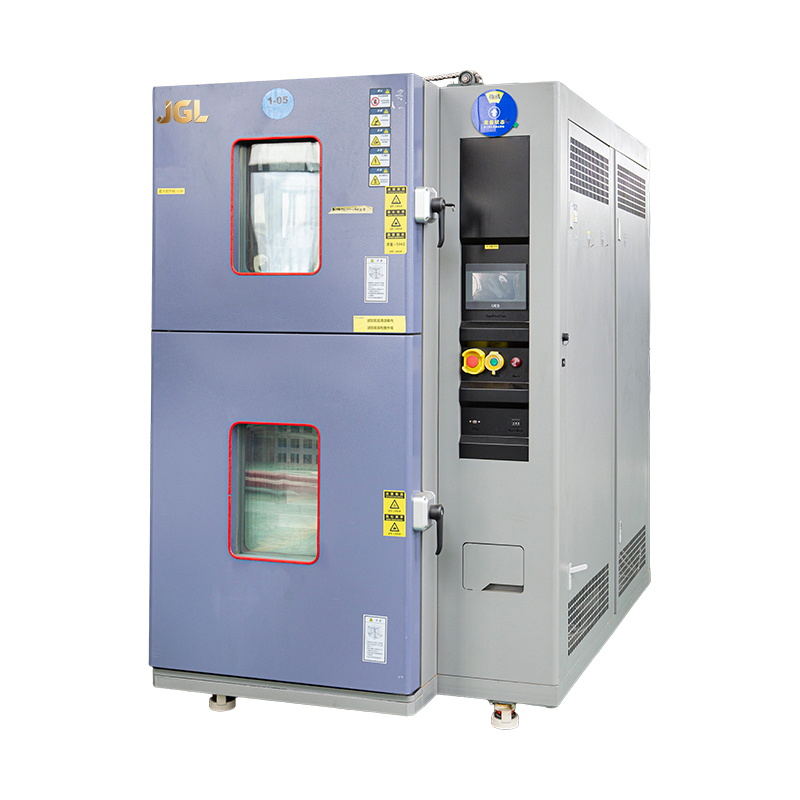
- Explosion-proof design: Since a cell may vent or burst during a test, the chamber needs sealed electrical pass-throughs, pressure relief, and a robust door locking mechanism. A dual-layer explosion-proof thermal test chamber
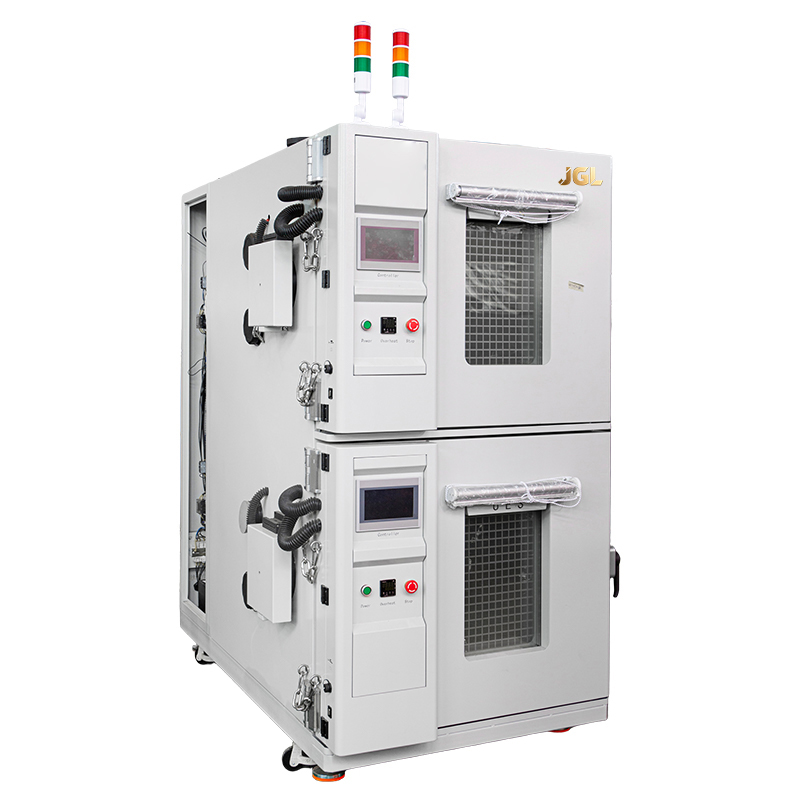 Dual-Layer Explosion-Proof Thermal Test Chamber for Battery Abuse TestingThe chamber includes explosion-proof design, automatic fire suppression, and rapid water injection. It allows simultaneous high and low temperature tests while ensuring safety during thermal runaway scenarios.View Product → combines temperature control with hardened construction for abusive testing.
 - Humidity control: Combined temperature-humidity cycling is important for evaluating storage life, corrosion, and moisture ingress in battery enclosures.
Electrical Safety Testing and Battery Integrity
Battery packs and modules require more than just a chamber. Electrical safety testing ensures that the insulation between the high-voltage bus and the chassis is sufficient, that the ground continuity path is solid, and that no latent manufacturing defect will turn into an arc fault during field use.
A hipot test applies a high AC or DC voltage between separated circuits and measures leakage current. An insulation resistance test measures the resistance that prevents unexpected current flow. For battery systems, these tests are especially sensitive because the test voltage must not damage sensitive electronics while still exposing contamination or degraded insulation. If the leakage current rises above a set limit, the pack should be rejected before it enters service.
Common Failure Modes and How to Interpret Results
Thermal runaway is the central concern. It begins with a trigger, then self-sustaining heating occurs when the exothermic reactions release more heat than the cell can dissipate. The signs include:
- A sudden voltage drop that coincides with an internal short circuit.
- A rapid temperature rise exceeding 1 °C/s in some cell chemistries.
- Pressure relief valve opening followed by visible venting or smoke.
- Mass loss due to electrolyte evaporation and gas generation.
State of charge strongly influences results. A fully charged cell stores more energy and may have a longer or more violent venting event. When interpreting test data, compare the trigger temperature and the maximum surface temperature across all test cells. If the chamber's safety system logs these events with timestamps, you can correlate thermal and electrical signals and identify the true root cause instead of only the symptom.
Practical Procurement Guidance for Battery Safety Testing
Before you buy any equipment, work backward from the product and the failure mode you expect. It is usually a mistake to start with a chamber's brochure because the battery's heat generation and abuse profile determine the real requirements.
- Define your product: If you test EV packs, you likely need fast rate change and explosion-proof geometry. If you test small portable cells, a thermal shock chamber and electrical safety tester may be enough.
- Know your loaded ramp rate: Ask the supplier for the ramp rate with a representative battery mass inside, not the empty-chamber value.
- Think about safety integration: Look for pressure relief, smoke detection, fire suppression interfaces, remote power disconnect, and a control system that can abort a test automatically.
- Plan for calibration and standard updates: Test equipment that cannot be upgraded to a new temperature range or ramp rate will have to be replaced when a standard changes.
- Check chamber services: A battery safety test can generate corrosive gases. Confirm that the chamber's inner surfaces, door seals, and vent ports can handle them.
FAQ
Q1: What is battery safety testing?
Battery safety testing is a set of standardized abuse tests that evaluate how a battery cell, module, or pack behaves when exposed to conditions beyond its normal operating limits. The goal is to identify failure thresholds and verify safe behavior under abuse.
Q2: What is the difference between thermal runaway and thermal abuse testing?
Thermal runaway is the failure phenomenon itself. Thermal abuse testing is the practice of applying heat or temperature cycling to induce or evaluate that phenomenon. Thermal abuse testing is a method; thermal runaway is the outcome you are trying to characterize.
Q3: Can a standard environmental chamber be used for battery abuse testing?
Some standard chambers can handle certain thermal cycling tests, but abuse testing that may involve venting, fire, or explosion requires explosion-proof design and active safety controls. If your cells are fully sealed and expected to pass without venting, a standard chamber may work, but the risk of a cell entering thermal runaway during an overcharge test makes a hardened chamber the safer choice.
Q4: How do I choose between a rapid temperature change chamber and a thermal shock chamber?
Rapid temperature change chambers are designed to cycle at controlled ramp rates between temperature setpoints. Thermal shock chambers transfer the sample between two distinct temperature zones to create a sudden step change. Use a rapid rate chamber for sustained cycling with controlled slope; use a thermal shock chamber for the sharp transitions specified in standards like JESD22-A104.
Q5: What standards should I reference for battery safety testing?
UN 38.3 for transport, IEC 62133 for portable batteries, UL 1642 and UL 2054 for consumer cells, SAE J2464 for EV abuse tests, and GB 38031 for EV battery thermal safety.
PREV:No previous article
NEXT:How to Calculate Relative Humidity and Dew Point: Formulas, Examples, and Applications
NEXT:How to Calculate Relative Humidity and Dew Point: Formulas, Examples, and Applications
Interested in cooperation or have questions?
Featured Products
Related products
Quick Link
Contact Information
- Tel: +86-13861043568
- E-mail: 1840784112@qq.com
- Add: Tianting District, Changzhou City, Jiangsu Province, China, No. 6 Hecircuit
Scan Code
Copyright © JIANGSU BAISHENG INDUSTRIAL CO., LTD.
All Rights Reserved. Privacy Custom Precision Laboratory Testing Equipment Manufacturers
