 English
 Español
NEWS
NEWS
NEWS
NEWS
NEWS
NEWS
NEWS
NEWS
NEWS
NEWS
NEWS
NEWS
NEWS
NEWS
NEWS
NEWS

Industry News
Home / News / Industry News / How to Calculate Relative Humidity and Dew Point: Formulas, Examples, and Applications
How to Calculate Relative Humidity and Dew Point: Formulas, Examples, and Applications
Content
You are standing in front of a stability chamber, and the controller reads 25.0 °C with a dew point of 15.0 °C. The recipe calls for 50% RH at that temperature. Is the chamber performing as expected? Before you can answer that, you need to turn those two numbers into a relative humidity value — and that requires a reliable calculation method.
The good news: once you understand the relationship between air temperature and dew point, calculating relative humidity is straightforward. The Magnus formula provides an accurate, easy-to-use approximation for most practical engineering and laboratory work, and the same equation can be inverted to solve for dew point when you only know temperature and relative humidity.
What Is Relative Humidity and Dew Point?
Relative humidity (RH) is the ratio of the actual water vapor pressure present in air to the saturation vapor pressure at the same temperature, expressed as a percentage. It tells you how close the air is to holding as much moisture as it possibly can at that temperature.
Dew point is the temperature to which air must cool at constant pressure for water vapor to start condensing into liquid. When the air temperature reaches the dew point, the relative humidity is 100%.
In practical terms, dew point is an absolute moisture indicator, while relative humidity is temperature-dependent. A room at 20 °C with 60% RH and a room at 30 °C with 60% RH have very different amounts of water vapor in the air, even though the RH number is identical.
The Standard Formulas for Calculating Relative Humidity and Dew Point
Several equations exist to approximate saturation vapor pressure. The most widely used for laboratory and HVAC work is the August–Roche–Magnus approximation because it is accurate enough over the typical temperature range of -40 °C to +50 °C and is simple to compute.
The Magnus Approximation for Relative Humidity
Given air temperature T (in °C) and dew point Td (in °C), the relative humidity is calculated as:
RH = 100 × [exp(17.625 × Td / (243.04 + Td)) / exp(17.625 × T / (243.04 + T))]
In this equation, exp is the natural exponential function. The constants 17.625 and 243.04 are derived from empirical fits to the saturation vapor pressure curve and are suitable for most engineering purposes.
Calculating Dew Point from Temperature and Relative Humidity
If you already know the air temperature and relative humidity and want the dew point, rearrange the equation:
γ = ln(RH / 100) + (17.625 × T) / (243.04 + T)
Td = (243.04 × γ) / (17.625 - γ)
Here ln is the natural logarithm. This inverted form is especially useful in environmental testing when you need to know whether a condensation event will occur at a particular surface temperature.
Step-by-Step Calculation Examples
The table below shows three worked examples using the Magnus formulas. All temperatures are in degrees Celsius.
| Known inputs | Calculation | Result |
|---|---|---|
| T = 25 °C, Td = 15 °C | RH = 100 × exp(17.625×15/258.04) / exp(17.625×25/268.04) | RH ≈ 53.8% |
| T = 30 °C, RH = 50% | γ = ln(0.5) + (17.625×30/273.04); Td = 243.04×γ / (17.625-γ) | Td ≈ 18.4 °C |
| T = 20 °C, RH = 80% | γ = ln(0.8) + (17.625×20/263.04); Td = 243.04×γ / (17.625-γ) | Td ≈ 16.5 °C |
Notice how the dew point is always lower than the air temperature unless the air is fully saturated. The gap between the two temperatures is directly proportional to how dry the air is.
Practical Applications in Environmental Testing and Lab Instrumentation
In controlled-environment work, these calculations are not just academic exercises. When you program a humidity chamber, you are essentially setting a target for the actual water vapor content. The controller often measures both dry-bulb temperature and relative humidity, but the physical process that governs condensation inside the chamber depends on the dew point.
For example, a cyclic temperature and humidity chamber such as the UTH100A alternating high and low temperature humidity chamber must be able to hold a stable dew point while the temperature ramps. If the dew point becomes too close to the coil temperature, moisture will condense where you do not want it.
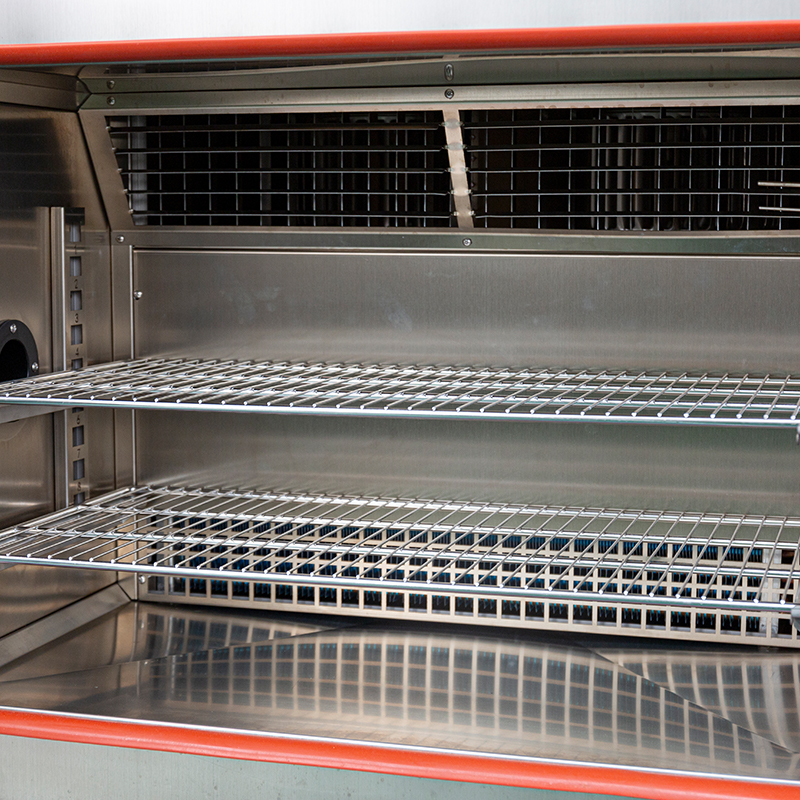 Alternating High and Low Temperature Humidity Chamber for Thermal CyclingThis test chamber offers precise temperature and humidity control with dynamic PID and vapor partial pressure regulation. Its stable dew point handling supports reliable cycling in varying conditions, making it suitable for environmental testing applications that demand accuracy.View Product →
Similarly, a rapid-rate humidity cycling system like the U5QTH100A-W fast temperature humidity cycling chamber needs continuous calculation to avoid unwanted frosting or condensation during fast transitions. Understanding the RH-dew point relationship helps you set realistic ramp rates and avoid damaging samples.
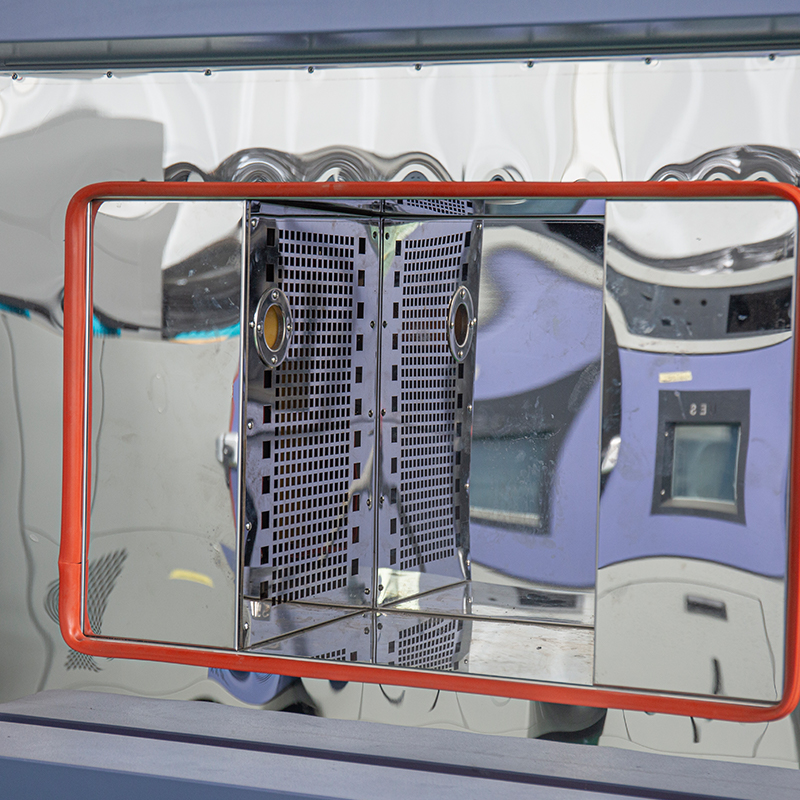 Fast Temperature and Humidity Cycling Chamber with Rapid Ramp RatesDesigned for rapid thermal cycling, this chamber features optional ramp rates up to 20°C/min and precise humidity control. It helps prevent frosting or condensation during fast transitions, ensuring sample integrity in accelerated environmental tests.View Product →
For more background on how precision humidity control influences product testing, see how precision humidity control chambers redefine moisture resistance analysis.
When Simplified Formulas Are Not Enough
The Magnus approximation is convenient, but it is not a physical law. At very low temperatures (below -40 °C), at high pressures, or when extreme accuracy is required for calibration work, the simplified equation can introduce errors of up to a few tenths of a degree Celsius in dew point.
In those cases, standard references such as the World Meteorological Organization formulas, IAPWS industrial formulations, or lookup tables derived from Goff-Gratch equations are preferred. For most laboratory and industrial test chambers, however, the difference falls well within the tolerance of common humidity sensors.
- Always use degrees Celsius for T and Td in the Magnus equation.
- Ensure your humidity sensor is calibrated to a reference standard.
- Monitor dew point separately when running temperature-change profiles.
Important: Independent of the formula you choose, the result is only as good as the input measurements. A humidity sensor with ±2% RH accuracy can cause a dew point calculation to shift by roughly ±0.5 °C at typical room conditions.
Frequently Asked Questions
Q1: How do I calculate relative humidity with temperature and dew point?
Use the Magnus equation: RH = 100 × [exp(17.625×Td/243.04+Td) / exp(17.625×T/243.04+T)]. Enter the air temperature for T and the dew point for Td, using the same unit of degrees Celsius.
Q2: What does 100% relative humidity mean?
It means the actual water vapor pressure equals the saturation vapor pressure at that temperature. The air cannot hold more moisture, so condensation begins on any surface cooler than the air temperature.
Q3: Why is dew point sometimes a better moisture indicator than relative humidity?
Relative humidity is temperature-dependent, so it changes as the air warms or cools even if the actual moisture content stays the same. Dew point is an absolute measure of vapor content, which makes it easier to understand the actual moisture load and the risk of condensation.
Q4: Which is more accurate, the Magnus formula or the WMO formula?
The WMO formula and other full saturation vapor pressure formulations deliver higher accuracy at extreme temperatures and pressures. The Magnus approximation is accurate within about ±0.4% RH over the common range, which is sufficient for most environmental test chambers.
PREV:Battery Safety Testing: Abuse Tests, Standards, and Equipment Selection Guide
NEXT:Dew Point Temperature Equation: Formula, Worked Example, and Applications in Testing
NEXT:Dew Point Temperature Equation: Formula, Worked Example, and Applications in Testing
Interested in cooperation or have questions?
Featured Products
Related products
Quick Link
Contact Information
- Tel: +86-13861043568
- E-mail: 1840784112@qq.com
- Add: Tianting District, Changzhou City, Jiangsu Province, China, No. 6 Hecircuit
Scan Code
Copyright © JIANGSU BAISHENG INDUSTRIAL CO., LTD.
All Rights Reserved. Privacy Custom Precision Laboratory Testing Equipment Manufacturers
