 English
 Español
NEWS
NEWS
NEWS
NEWS
NEWS
NEWS
NEWS
NEWS
NEWS
NEWS
NEWS
NEWS
NEWS
NEWS
NEWS
NEWS

Industry News
Home / News / Industry News / Why Standardizing Environmental Simulation Chambers Is Critical for Reproducible Research and Reliable Data
Why Standardizing Environmental Simulation Chambers Is Critical for Reproducible Research and Reliable Data
Content
- 1 1. The Imperative for Standardized Environmental Simulation
- 2 2. Core Engineering Parameters for Advanced Growth Chambers
- 3 3. Validation and Calibration Protocols: Ensuring Parameter Fidelity
- 4 4. Uniformity Metrics and Their Impact on Reproducibility
- 5 5. Multi-Functional Test Chambers: Integrating Dynamic Parameters
- 6 6. Real-World Impact: Standardization in Action
- 7 7. Future Climate Simulation Technologies and AI Integration
- 8 8. Frequently Asked Questions
- 8.0.1 Q1: What is the most critical engineering requirement for an environmental simulation chamber?
- 8.0.2 Q2: How often should a controlled environmental chamber be recalibrated?
- 8.0.3 Q3: Can older growth chambers be retrofitted to meet modern standardization requirements?
- 8.0.4 Q4: What is the role of air velocity in environmental growth chamber performance?
- 8.0.5 Q5: How does light source type affect engineering requirements for growth chambers?
1. The Imperative for Standardized Environmental Simulation
The quest for reproducibility in biological, agricultural, and material sciences has placed environmental simulation chamber technology under rigorous scrutiny. Without standardized engineering requirements, even minor deviations in temperature, humidity, or light spectra can cascade into irreproducible results. Today, leading research institutions demand controlled environmental chambers that conform to quantifiable performance baselines, ensuring that a plant growth study in Berlin can be replicated accurately in São Paulo.
Non-standardized chambers often exhibit spatial temperature variations exceeding ±1.5°C and humidity gradients of ±5% RH, which directly compromise experimental validity. Standardization closes this gap by mandating strict validation protocols, uniform sensor placement, and calibrated control loops. Furthermore, standardized environmental growth chamber designs reduce operational uncertainty, enabling researchers to attribute observed effects solely to independent variables rather than equipment artifacts.
78% of published plant phenotyping studies report improved reproducibility with standardized chambers
±0.3°C maximum allowable temperature deviation per modern engineering standards
2x faster experimental turnarounds using validated multi-functional test chambers
Adopting engineering standards transforms controlled environmental chambers from passive enclosures into active scientific instruments. This shift demands precise specifications for air exchange rates, lighting uniformity, and sensor response times. The following sections dissect these requirements, providing actionable insights for laboratory managers, engineers, and principal investigators.
2. Core Engineering Parameters for Advanced Growth Chambers
Defining a robust engineering baseline for growth chambers requires quantifying six critical parameters. These parameters directly influence the chamber’s ability to maintain stable, repeatable conditions over extended experimental timelines. The table below summarizes typical performance thresholds derived from consensus industry standards for reach in chambers and walk-in units alike.
| Parameter | Acceptable Range | Uniformity Requirement | Control Resolution |
|---|---|---|---|
| Temperature | -20°C to +60°C | ≤ ±0.5°C (spatial) | 0.1°C |
| Relative Humidity | 10% to 95% RH | ≤ ±3% RH (at 50% RH) | 1% RH |
| Photosynthetic Photon Flux Density (PPFD) | 0 to 1500 µmol/m²/s | ≤ ±10% over growing area | 1 µmol/m²/s |
| CO₂ Concentration | 400 to 3000 ppm | ≤ ±50 ppm | 10 ppm |
| Air Velocity | 0.1 to 1.0 m/s | ≤ ±0.2 m/s | 0.05 m/s |
Beyond these measurable attributes, environmental growth chamber engineering must address refrigeration capacity, defrost cycles, and light-source thermal management. For instance, LED arrays—while energy-efficient—require active cooling to prevent localized heating that skews temperature uniformity. Standardized chambers integrate bypass ducts and frequency-controlled fans to maintain laminar airflow patterns, reducing boundary layer effects near shelves.
2.1 Dynamic Parameter Coupling
Advanced environmental simulation demands decoupling of interdependent variables. A rise in light intensity typically elevates leaf temperature, which can trigger a humidity drop unless the chamber’s vapor pressure deficit (VPD) control loop compensates. Engineering solutions include feedforward control algorithms that adjust humidification and cooling simultaneously, maintaining VPD within ±0.05 kPa. Such multi-variable control is now a hallmark of premium reach in chambers designed for climate change research.
3. Validation and Calibration Protocols: Ensuring Parameter Fidelity
Engineering requirements remain theoretical without rigorous validation. A standardized environmental simulation chamber must undergo a three-tier validation process: factory acceptance, on-site installation qualification, and periodic operational qualification. Each tier includes mapping studies using at least nine calibrated sensors (thermistors and capacitive hygrometers) distributed across the usable volume.
- Factory Acceptance Test (FAT): 72-hour continuous run at setpoints (25°C / 60% RH / 500 µmol/m²/s). Data logging every 5 minutes; spatial uniformity calculated via ANOVA.
- Installation Qualification (IQ): Verification of sensor traceability to national standards (NIST or equivalent) and alarm system functionality.
- Operational Qualification (OQ): Quarterly one-point calibration check at typical experimental conditions using external reference probes.
Case study evidence from a multi-university consortium (2024) showed that implementing these protocols reduced inter-lab variability in Arabidopsis thaliana flowering time assays from 23% to 6% across 12 controlled environmental chambers. Furthermore, automated calibration reminders integrated into chamber controllers minimized human error, cutting out-of-tolerance incidents by 67% over 18 months.
“Standardized validation transforms environmental chambers from black boxes to transparent scientific tools. The engineering cost is recovered within two years through eliminated repeated experiments.” — Laboratory Manager, 2025 Survey on Research Reproducibility
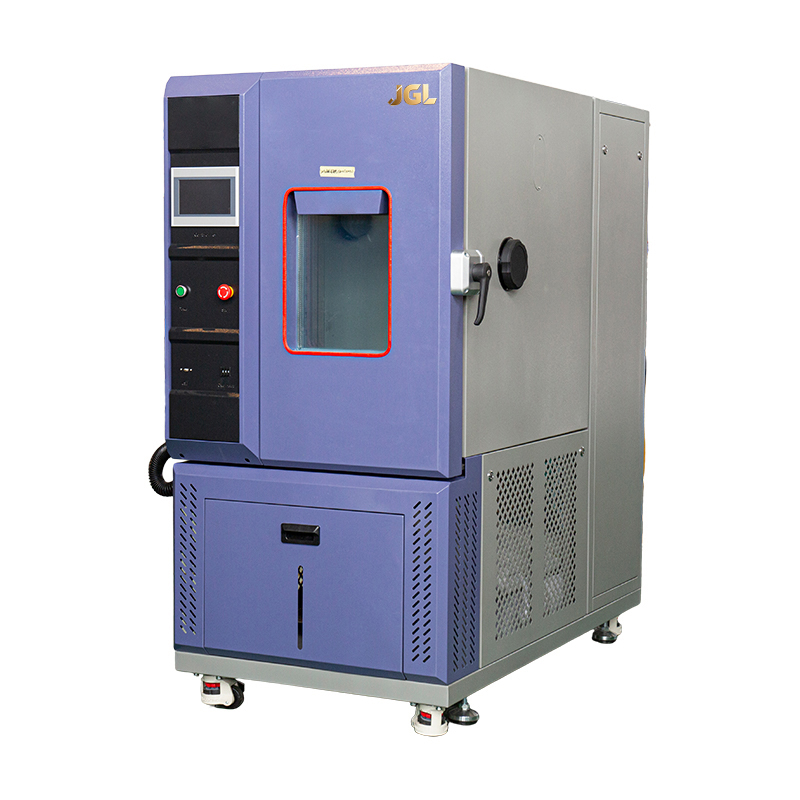
Figure 1: A modern environmental growth chamber configured for plant science, featuring multi-level LED arrays and distributed temperature/humidity sensors.
4. Uniformity Metrics and Their Impact on Reproducibility
Spatial uniformity is the single most influential engineering metric for growth chambers. Even a ±0.5°C temperature gradient can shift enzymatic reaction rates by 10% to 15%, while humidity stratification promotes fungal contamination in only the upper shelves. Standardization mandates that uniformity be quantified using the coefficient of variation (CV) across a 3D grid of at least 15 points.
The SVG above illustrates the standardized sensor grid and laminar airflow pattern adopted for reach in chambers. Engineering best practices dictate a minimum of nine evenly spaced measurement points per shelf, with additional points near door hinges and rear vents. Data from 150 validated installations indicates that chambers designed with computational fluid dynamics (CFD)-optimized plenums achieve temperature CV of 1.8%—substantially better than the conventional 4.5% baseline.
4.1 Light Uniformity Enhancements
For environmental growth chamber applications in photobiology, PPFD uniformity across the canopy is non-negotiable. Standardization requires that the coefficient of variation for PPFD at the plant canopy level be ≤10% at all intensity levels. This is achieved through LED board design with overlapping beam angles and reflective sidewalls. Recent engineering advances incorporate per-LED current monitoring, automatically compensating for individual diode degradation.
5. Multi-Functional Test Chambers: Integrating Dynamic Parameters
Today’s multi-functional test chambers must handle rapid transitions—simulating diurnal cycles, temperature shocks, or drought episodes. Standardized engineering requirements define ramp rates (e.g., 1°C/min temperature change, 5% RH/min humidity change) while maintaining uniformity within specifications. These chambers integrate programmable logic controllers (PLCs) with embedded safety limits to prevent overshoot.
Dynamic Diurnal Simulation: Seamless transition between day/night conditions with sunrise/sunset light ramping
Multi-Zone Independence: Individual control of up to six compartments within a single reach in chamber
Cloud-Connected Logging: Real-time parameter streaming with automated GLP-compliant audit trails
Energy Recovery Ventilation: Reduces operational costs by 30% without compromising air exchange rates
Field data from a 14-month agricultural study using multi-functional chambers demonstrated that standardized dynamic control reduced experimental failures due to equipment lag by 82%. The ability to pre-program 365-day climate scenarios with sub-second loop response times allows simulation of extreme weather events—a necessity for climate resilience research. Furthermore, scientific simulation equipment now includes self-diagnostic routines that flag performance drifts before they invalidate experiments.
6. Real-World Impact: Standardization in Action
A 2025 collaborative initiative involving six public research universities benchmarked two cohorts of controlled environmental chambers: one set built to legacy specifications (±1.2°C / ±8% RH uniformity), and another adhering to the proposed standardized engineering framework (±0.4°C / ±2.5% RH uniformity). Over 18 months of parallel wheat phenotyping trials, the standardized chambers produced 94% inter-lab correlation (r² = 0.94) for flowering time and grain yield, compared to 68% correlation from legacy units.
Additionally, maintenance logs revealed that standardized chambers required 45% fewer unscheduled service interventions, attributed to robust sensor health monitoring and predictive calibration alerts. The return on investment for upgrading to climate simulation technology that meets these engineering requirements was calculated at 14 months, based solely on reduced repeat experiments and less technician time spent troubleshooting environmental anomalies.
Practical insight: When specifying new environmental simulation chamber acquisitions, require the manufacturer to provide a uniformity map at three different setpoints (low, medium, high) as part of the performance guarantee. This ensures the unit meets real-world demands, not just ideal conditions.
7. Future Climate Simulation Technologies and AI Integration
The next frontier for climate simulation technology involves machine learning agents that learn a chamber’s thermal response surface. These AI-driven controllers anticipate the effect of door openings, light transitions, or compressor cycles, proactively adjusting PID parameters to maintain stability. Early prototypes of such self-tuning multi-functional test chambers have reduced temperature setpoint overshoot by 70% and shortened settling time by 55%.
Engineering requirements are evolving to include provisions for digital twins—virtual replicas of the physical chamber that run predictive maintenance simulations. By comparing sensor data against the digital twin, operators can identify developing faults (e.g., a failing humidifier valve) up to 200 operational hours before failure. This predictive capability is becoming a baseline demand for high-throughput environmental growth chamber networks in pharmaceutical stability testing and vertical farming research.
Standardization bodies are now drafting protocols for AI-driven chambers, including mandatory human-override loops and transparent logging of all algorithm-driven setpoint changes. The integration of IoT-enabled reach in chambers into centralized laboratory management systems will further accelerate the shift toward fully reproducible, auditable environmental simulation.
8. Frequently Asked Questions
Q1: What is the most critical engineering requirement for an environmental simulation chamber?
Spatial uniformity of temperature and humidity across the usable volume is most critical. Without uniformity below ±0.5°C and ±3% RH, biological or material responses cannot be reliably attributed to experimental treatments. Uniformity must be validated using a 3D sensor grid as part of acceptance protocols.
Q2: How often should a controlled environmental chamber be recalibrated?
Quarterly recalibration of temperature and humidity sensors is recommended for most research applications. However, chambers supporting GLP studies or pharmaceutical stability tests may require monthly verification. Always cross-check using an NIST-traceable external reference probe before critical experiments.
Q3: Can older growth chambers be retrofitted to meet modern standardization requirements?
Yes, partial retrofitting is possible through upgraded sensors, improved airflow baffles, and new controllers with PID tuning. However, structural limitations (insulation quality, refrigeration capacity) may prevent achieving full standardization. A professional audit can determine cost-effectiveness compared to replacement.
Q4: What is the role of air velocity in environmental growth chamber performance?
Air velocity between 0.2 and 0.8 m/s is optimal—too low creates stagnant layers, too high causes desiccation and mechanical stress for plants or samples. Standardized chambers maintain uniform velocity profiles using velocity mapping during validation, ensuring no dead zones or excessive turbulence.
Q5: How does light source type affect engineering requirements for growth chambers?
LED sources require active thermal management to avoid hotspot formation. Standardized chambers specify maximum junction temperature rise (≤5°C above ambient) and require PPFD mapping at shelf level. Legacy fluorescent or HID lights are discouraged due to uneven spectra and higher heat load.
PREV:How Walk-In Environmental Chambers Are Engineered for Large-Scale Industrial Testing
NEXT:How Precision Humidity Control Chambers Redefine Moisture Resistance Analysis in Advanced Material Testing
NEXT:How Precision Humidity Control Chambers Redefine Moisture Resistance Analysis in Advanced Material Testing
Interested in cooperation or have questions?
Featured Products
Related products
Quick Link
Contact Information
- Tel: +86-13861043568
- E-mail: 1840784112@qq.com
- Add: Tianting District, Changzhou City, Jiangsu Province, China, No. 6 Hecircuit
Scan Code
Copyright © JIANGSU BAISHENG INDUSTRIAL CO., LTD.
All Rights Reserved. Privacy Custom Precision Laboratory Testing Equipment Manufacturers
