 English
 Español
NEWS
NEWS
NEWS
NEWS
NEWS
NEWS
NEWS
NEWS
NEWS
NEWS
NEWS
NEWS
NEWS
NEWS
NEWS
NEWS

Industry News
Home / News / Industry News / What Is HAST Testing Under JESD22-A110 and How Does It Predict Semiconductor Field Failures?
What Is HAST Testing Under JESD22-A110 and How Does It Predict Semiconductor Field Failures?
Content
- 1 Understanding Highly Accelerated Stress Testing in Semiconductor Qualification
- 2 What JESD22-A110 Actually Specifies
- 3 HAST Versus Traditional Temperature Humidity Testing
- 4 Chamber and Equipment Requirements for Reliable HAST Results
- 5 Failure Mechanisms HAST Is Designed to Reveal
- 6 Typical HAST Qualification Workflow
- 7 Interpreting Results and Setting Pass or Fail Criteria
- 8 Practical Recommendations for Consistent HAST Programs
- 9 Frequently Asked Questions
- 9.0.1 Q1: What is HAST testing used for?
- 9.0.2 Q2: How does HAST differ from an unbiased humidity test?
- 9.0.3 Q3: Is bias always required during HAST exposure?
- 9.0.4 Q4: How long does a typical HAST test run under JESD22-A110?
- 9.0.5 Q5: What equipment is needed to support a full HAST qualification program?
Understanding Highly Accelerated Stress Testing in Semiconductor Qualification
Moisture-induced failure remains one of the most persistent reliability risks in packaged semiconductor devices. Water vapor that penetrates a plastic package can trigger corrosion of metal interconnects, delamination between the mold compound and die surface, or dendritic growth that eventually shorts adjacent bond pads. Because these mechanisms can take years to appear under normal field conditions, engineers rely on accelerated laboratory methods to compress that timeline into days or weeks.
Highly Accelerated Stress Test, commonly abbreviated HAST, is the industry method defined under the JESD22-A110 standard published by JEDEC. It exposes components to elevated temperature and humidity, often combined with an applied bias voltage, to accelerate moisture ingress and electrochemical degradation. The goal is not to simulate a single field scenario but to compress the cumulative stress of years of humid-climate exposure into a controlled, repeatable test window.
Unlike open-vessel humidity tests that operate near atmospheric boiling conditions, HAST uses a sealed pressure vessel to reach saturated steam conditions above 100 degrees, which is what allows the test duration to shrink dramatically compared to older 85 degree, 85 percent relative humidity testing.
What JESD22-A110 Actually Specifies
JESD22-A110 defines the test setup, chamber tolerances, sample preparation, bias application, and failure criteria for HAST evaluation of solid-state surface-mounted devices. The standard recognizes several accepted test conditions, each pairing a specific temperature and relative humidity level with an expected duration range.
| Condition Designation | Temperature | Relative Humidity | Typical Duration | Common Use Case |
|---|---|---|---|---|
| Condition A | 130 degrees C | 85 percent RH | 96 to 264 hours | Standard qualification screening |
| Condition B | 110 degrees C | 85 percent RH | 264 to 528 hours | Moisture-sensitive package validation |
| Condition C | 120 degrees C | 85 percent RH | 96 to 168 hours | Fast-turnaround screening |
Beyond the temperature-humidity pairing, the standard also specifies bias HAST, where a direct current voltage is applied across the device pins during exposure. This more closely represents an energized field condition and is particularly relevant for evaluating electrochemical migration risk between conductors that carry a voltage differential in actual use.
HAST Versus Traditional Temperature Humidity Testing
Before HAST became widely adopted, reliability labs relied heavily on unbiased 85 degree, 85 percent RH testing, sometimes lasting over 1,000 hours to reach a meaningful failure signal. HAST does not replace every one of those tests, but it does address the practical problem of qualification cycle time.
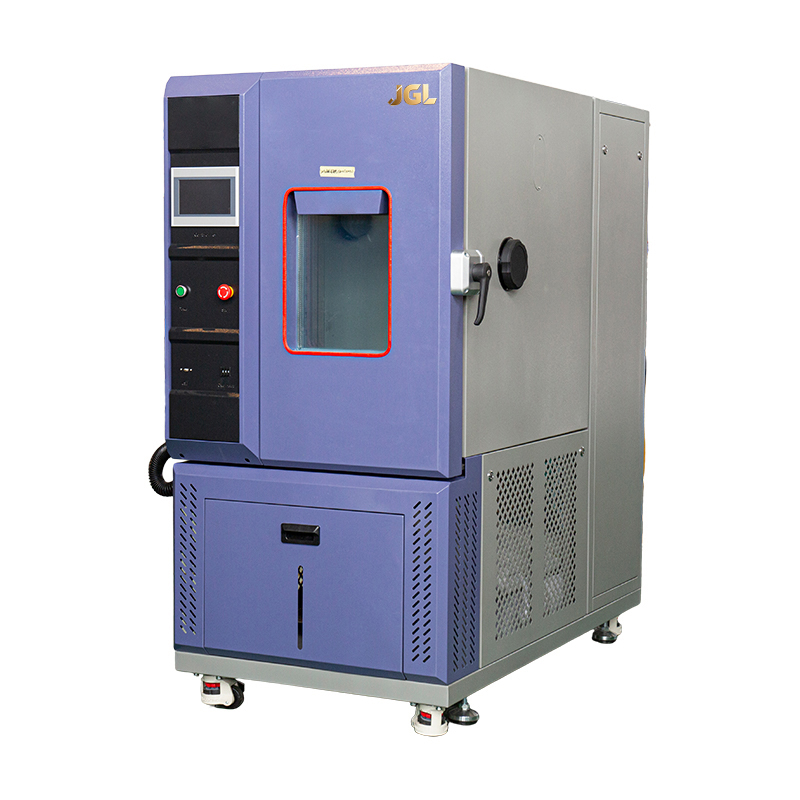
Equipment used for thermal cycling ahead of moisture stress evaluation
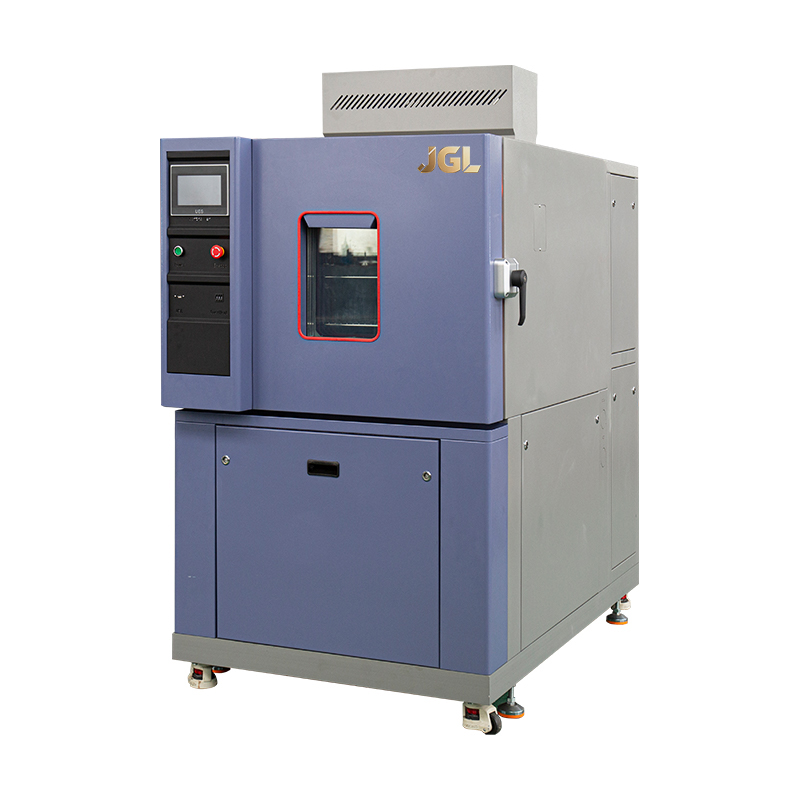
Chamber configuration supporting combined humidity and thermal cycling profiles
| Attribute | Traditional 85/85 Test | HAST per JESD22-A110 |
|---|---|---|
| Operating pressure | Atmospheric | Above atmospheric, sealed vessel |
| Maximum practical temperature | 85 degrees C | 110 to 130 degrees C |
| Typical test duration | 500 to 1,000 plus hours | 96 to 528 hours |
| Bias application | Optional, less common | Frequently applied for corrosion sensitivity |
The shorter cycle does not mean the test is less rigorous. Because the vessel operates under pressure, saturated conditions can be maintained precisely at higher temperatures without the water simply evaporating off the sample surface, which is the practical ceiling that limits open-chamber humidity testing.
Chamber and Equipment Requirements for Reliable HAST Results
Test data is only as trustworthy as the equipment producing it. JESD22-A110 places specific tolerances on temperature uniformity, humidity control, and pressure stability inside the test vessel, and equipment selection has a direct effect on repeatability between labs.
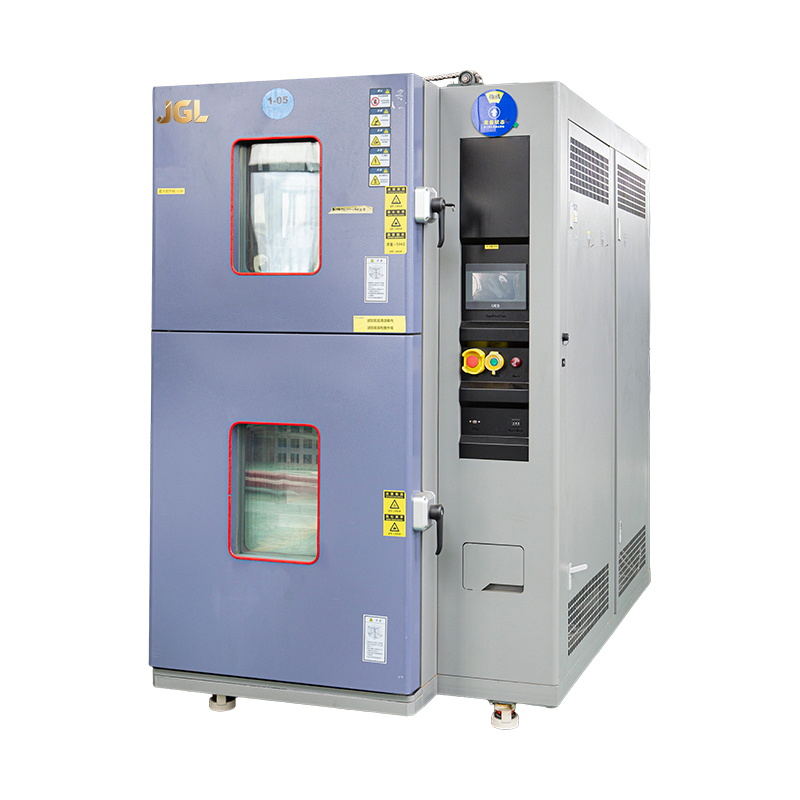
A properly equipped lab typically pairs a dedicated HAST vessel with supporting environmental equipment used earlier in the qualification sequence. For example, a high and low temperature test chamber is commonly used to pre-condition samples through thermal cycling before moisture exposure, helping reveal whether thermal fatigue has already compromised the package prior to the humidity stress stage.
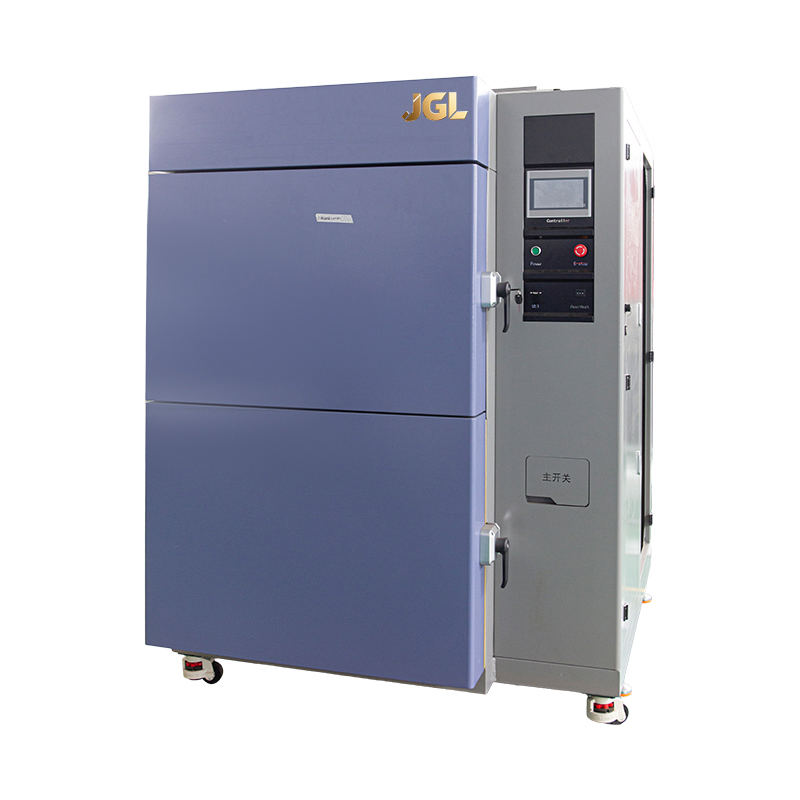
Where a program requires alternating exposure profiles rather than a fixed steady-state condition, a cyclic high and low temperature humidity test chamber allows engineers to combine ramped temperature transitions with controlled humidity segments in a single automated sequence, which is useful for correlating cyclic field conditions with HAST outcomes.
- Temperature uniformity within the working chamber should remain within the tolerance band specified by the standard across all monitored zones.
- Humidity sensors require periodic calibration since drift at elevated pressure can silently shift the effective test condition.
- Bias fixtures must maintain stable contact resistance throughout the full exposure duration to avoid false pass results caused by an open circuit rather than a surviving device.
- Pressure relief and safety interlocks are mandatory given the sealed, superheated operating environment.
Failure Mechanisms HAST Is Designed to Reveal
HAST is effective because it targets a defined set of moisture-driven degradation modes rather than acting as a generic stress test. Understanding what each mechanism looks like helps engineers interpret failure data correctly instead of treating every rejected unit the same way.
| Mechanism | Typical Root Cause | Detection Method |
|---|---|---|
| Electrochemical migration | Metal ion transport under bias in the presence of moisture | Electrical leakage or short measurement |
| Package delamination | Weak adhesion between mold compound and die or lead frame | Acoustic scanning after exposure |
| Bond pad corrosion | Moisture reaching exposed aluminum or copper pads | Cross-section or decapsulation inspection |
| Popcorn cracking | Trapped moisture vaporizing during subsequent reflow | Visual and acoustic inspection post-reflow |
Bias HAST in particular is sensitive to electrochemical migration because an applied voltage accelerates ion movement along any moisture film that bridges two conductors held at different potentials. This is a common failure path in devices with fine pitch spacing, where even a small amount of dendritic growth can bridge the gap between adjacent traces.
Typical HAST Qualification Workflow
A production-grade HAST qualification sequence generally follows a consistent order of operations, moving from sample preparation through post-stress verification. The diagram below outlines a representative flow.
Interval readings at fixed points during the exposure window allow engineers to plot a failure trend rather than waiting until the full duration ends to discover the outcome. This is particularly useful when the failure rate needs to be compared against a lifetime model for a specific field humidity profile.
Interpreting Results and Setting Pass or Fail Criteria
A HAST result is rarely a single binary outcome. Engineers typically evaluate three categories of data before declaring a device family qualified.
- Electrical parametric drift measured at each readout interval against the original datasheet limits.
- Catastrophic failure count, meaning devices that no longer function at all, tracked as a percentage of the sample population.
- Physical failure analysis on a subset of failed units to confirm the root cause matches an expected moisture-related mechanism rather than an unrelated defect such as a handling crack.
A device family is generally considered to pass when zero catastrophic failures occur across the full sample set for the selected duration, and any parametric drift remains within the predefined acceptance window. Because sample sizes in accelerated testing are often limited, statistical confidence intervals are commonly reported alongside the raw pass count so that a decision is not based on a single marginal unit.
Practical Recommendations for Consistent HAST Programs
- Fix the moisture sensitivity level classification of the package before selecting a HAST condition, since preconditioning steps differ by classification.
- Log chamber temperature, humidity, and pressure continuously rather than relying only on the setpoint, since transient excursions during door openings or recovery cycles can invalidate an otherwise passing run.
- Rotate sample positions within the vessel across repeat qualification runs to average out any minor spatial non-uniformity in the chamber.
- Retain a portion of untested control samples from the same lot for baseline electrical comparison.
- Document bias fixture contact resistance before and after exposure to separate fixture-related anomalies from genuine device failures.
Programs that treat HAST as a routine checkbox rather than a diagnostic tool tend to miss early warning signs. A marginal drift trend that stays within limits during qualification can still indicate a design margin issue worth investigating before high-volume production begins.
Frequently Asked Questions
Q1: What is HAST testing used for?
HAST testing is used to evaluate how well a semiconductor package resists moisture-related degradation, including corrosion and electrochemical migration, by compressing years of field humidity exposure into a shorter, controlled laboratory cycle.
Q2: How does HAST differ from an unbiased humidity test?
HAST operates inside a sealed, pressurized vessel that allows temperatures above 100 degrees while maintaining saturated humidity, whereas traditional open-chamber humidity testing is limited to atmospheric conditions and generally requires much longer exposure times to reach comparable stress levels.
Q3: Is bias always required during HAST exposure?
Bias is not mandatory for every test plan, but applying a bias voltage is common when the failure mechanism of interest involves electrochemical migration between conductors that are energized during normal device operation.
Q4: How long does a typical HAST test run under JESD22-A110?
Duration depends on the selected condition, but common qualification windows range from about 96 hours for faster screening conditions up to 528 hours for the more conservative 110 degree condition.
Q5: What equipment is needed to support a full HAST qualification program?
Beyond the HAST vessel itself, labs typically use supporting equipment for preconditioning and cyclic profiling, since moisture sensitivity and thermal fatigue often need to be evaluated together rather than in isolation.
PREV:How ECSS-Q-ST-70-02C Outgassing Testing Separates Space-Worthy Materials From the Rest
NEXT:How Walk-In Environmental Chambers Are Engineered for Large-Scale Industrial Testing
NEXT:How Walk-In Environmental Chambers Are Engineered for Large-Scale Industrial Testing
Interested in cooperation or have questions?
Featured Products
Related products
Quick Link
Contact Information
- Tel: +86-13861043568
- E-mail: 1840784112@qq.com
- Add: Tianting District, Changzhou City, Jiangsu Province, China, No. 6 Hecircuit
Scan Code
Copyright © JIANGSU BAISHENG INDUSTRIAL CO., LTD.
All Rights Reserved. Privacy Custom Precision Laboratory Testing Equipment Manufacturers
