 English
 Español
NEWS
NEWS
NEWS
NEWS
NEWS
NEWS
NEWS
NEWS
NEWS
NEWS
NEWS
NEWS
NEWS
NEWS
NEWS
NEWS

Industry News
What is an environmental test chamber used for?
Content
- 1 Understanding Environmental Test Chambers: A Comprehensive Industry Guide
- 2 Introduction to Environmental Test Chambers
- 3 Primary Functions and Applications of Environmental Test Chambers
- 4 Key Features and Technical Capabilities
- 5 Industry Applications and Real-World Testing Scenarios
- 6 Standards and Testing Protocols
- 7 Advantages and Benefits of Environmental Testing
- 8 Selection Considerations for Environmental Test Chambers
- 9 Future Trends in Environmental Testing Technology
- 10 Critical Importance in Modern Manufacturing
- 11 Frequently Asked Questions
- 11.0.1 Q1: What is the typical temperature range of an environmental test chamber?
- 11.0.2 Q2: How long does environmental testing typically take?
- 11.0.3 Q3: Are environmental test chambers required by regulation?
- 11.0.4 Q4: Can environmental chambers test multiple products simultaneously?
- 11.0.5 Q5: How often must environmental test chambers be calibrated?
- 11.0.6 Q6: What is the difference between temperature cycling and thermal shock testing?
- 11.0.7 Q7: Can environmental chambers simulate altitude or pressure changes?
- 11.0.8 Q8: What is environmental stress screening, and how does it benefit manufacturing?
- 11.0.9 Q9: How do manufacturers use accelerated life testing to predict long-term reliability?
- 11.0.10 Q10: What industries most commonly use environmental test chambers?
Understanding Environmental Test Chambers: A Comprehensive Industry Guide
Introduction to Environmental Test Chambers
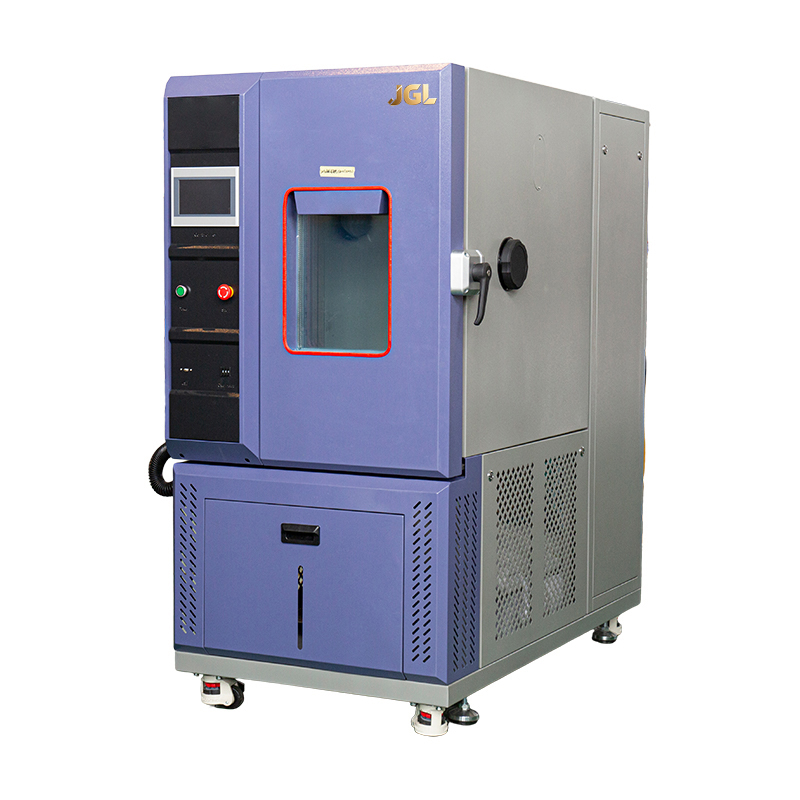
Environmental test chambers represent one of the most critical tools in modern manufacturing, quality assurance, and product development. These sophisticated pieces of equipment are designed to simulate a wide range of environmental conditions—temperature extremes, humidity fluctuations, pressure variations, and other atmospheric factors—in a controlled laboratory setting. The primary purpose of an environmental test chamber is to evaluate how products, materials, and components perform when exposed to conditions they may encounter during manufacturing, storage, transportation, or actual use.
The significance of environmental testing extends far beyond simple quality control. In industries ranging from pharmaceuticals and electronics to automotive and aerospace, the ability to predict product behavior under stress is essential for ensuring safety, reliability, and compliance with regulatory standards. Environmental test chambers bridge the gap between theoretical product design and real-world performance, providing manufacturers with empirical data that validates their engineering assumptions and identifies potential weaknesses before products reach consumers.
The evolution of environmental testing technology has transformed how companies approach product development. What once required expensive, time-consuming field testing can now be accelerated and controlled within a chamber, reducing development timelines and costs. Modern environmental chambers offer programmable controls, precise environmental monitoring, and the ability to replicate complex, multi-factor environmental scenarios that would be difficult or impossible to achieve through traditional testing methods.
Primary Functions and Applications of Environmental Test Chambers
Temperature and Humidity Testing
One of the most fundamental applications of environmental test chambers is the evaluation of product performance across varying temperature and humidity ranges. Temperature cycling—the process of exposing a product to repeated cycles of temperature extremes—can reveal material brittleness, solder joint failures, component degradation, and other temperature-related defects. Electronic components, in particular, are highly sensitive to thermal stress, and manufacturers rely on temperature cycling tests to ensure their devices will function reliably in environments ranging from Arctic conditions to desert heat.
Humidity testing addresses corrosion, moisture ingress, and material swelling or shrinkage caused by moisture absorption. Products designed for use in coastal environments, tropical climates, or high-humidity industrial settings must be validated to resist salt-air corrosion and moisture-related degradation. Environmental chambers can maintain precise humidity levels—often as low as 10% relative humidity or as high as 95%—while simultaneously controlling temperature, creating conditions that would take months or years to occur naturally.
Accelerated Life Testing and Reliability Validation
Accelerated life testing (ALT) is a methodology that compresses the typical lifespan of a product into a much shorter testing window by exposing it to intensified environmental conditions. This approach allows manufacturers to identify failure modes and estimate product reliability without waiting years for natural degradation to occur. A product that might fail after five years of normal use can be tested to failure in weeks or months when placed in an environmental chamber with elevated temperatures, humidity, and thermal cycling.
The practical implications of accelerated testing are profound. Manufacturers can make informed design decisions, select superior materials and components, and refine manufacturing processes based on early failure data. This approach has become standard practice in industries where product failure carries significant financial, safety, or reputational risks.
Regulatory Compliance and Standards Testing
Many industries are governed by strict regulatory standards that mandate specific environmental testing protocols. Medical device manufacturers must comply with standards that specify temperature ranges, humidity levels, and duration of exposure. Automotive components must meet standards requiring testing at extreme temperatures. Electronics manufacturers must validate products against standards addressing electrostatic discharge, thermal cycling, and environmental stress screening.
Environmental test chambers are essential tools for demonstrating compliance with these regulations. Test data generated within chambers provides the documented evidence that products meet or exceed regulatory requirements, which is often a prerequisite for market approval or certification. Without proper environmental testing and documentation, products cannot be legally marketed in many regulated industries.
Storage and Transportation Condition Simulation
Products often experience significant environmental stress during storage and transportation before reaching end-users. Long-term storage in warehouses with temperature fluctuations, exposure to sea-air during shipping, or placement in cargo containers with condensation can all contribute to product degradation. Environmental chambers replicate these conditions, allowing manufacturers to determine if their packaging is adequate and their products will survive supply chain exposure.
Key Features and Technical Capabilities
Temperature Control and Range
Modern environmental test chambers offer impressive temperature ranges, typically spanning from approximately negative 70 degrees Celsius to positive 180 degrees Celsius, depending on the chamber design and manufacturer specifications. This range covers most real-world environmental scenarios products might encounter. The temperature control system maintains stability within tight tolerances—often plus or minus 2 degrees Celsius or better—ensuring repeatable and reliable test results.
Temperature ramp rates—the speed at which a chamber can change temperature—vary by design. Some chambers can achieve rapid temperature transitions, while others are optimized for slower, more gradual changes. The choice of chamber depends on whether the testing protocol requires simulating sudden thermal shocks or gradual seasonal temperature changes.
Humidity Management Systems
Humidity control in environmental chambers is achieved through dedicated systems that either introduce or remove moisture from the chamber interior. Some chambers use water spray or ultrasonic humidifiers to raise humidity, while drying systems (often involving refrigerated coils or desiccant materials) reduce humidity. Advanced chambers can maintain humidity within plus or minus 3% of a setpoint across a wide temperature range—a technically challenging requirement because the relationship between temperature and humidity saturation is complex.
Programmable Control Systems
Contemporary environmental test chambers feature sophisticated programmable controllers that allow operators to define multi-step test profiles. These profiles can specify sequences of temperature and humidity setpoints with defined hold times, ramp rates, and dwell periods. Some chambers can store hundreds of pre-programmed profiles, enabling quick setup for repeated tests. Data logging capabilities record actual chamber conditions throughout a test, providing documentation that the chamber performed as specified and the product was tested under the correct environmental conditions.
Chamber Capacity and Product Compatibility
Environmental chambers range dramatically in internal volume—from benchtop models with just a few liters of capacity to large walk-in chambers accommodating multiple cubic meters. The choice of chamber size depends on the products being tested. Electronics manufacturers might use compact chambers for testing individual components, while automotive manufacturers require larger chambers to test complete subassemblies or systems.
Product placement and airflow within the chamber significantly impacts test validity. Chambers must provide uniform temperature and humidity distribution throughout the internal space to ensure that all areas of a test product experience the same conditions. This typically requires internal air circulation systems and careful chamber design to minimize hot or cold spots.
Industry Applications and Real-World Testing Scenarios
Electronics and Semiconductor Manufacturing
The electronics industry has been among the earliest and most extensive adopters of environmental testing technology. Semiconductors, printed circuit boards, and electronic assemblies must function reliably across temperature extremes and in the presence of moisture. Manufacturers use environmental chambers to conduct thermal cycling tests, humidity stress tests, and combined temperature-humidity aging tests. These tests validate that solder joints will not crack from thermal cycling, that electronic components will not degrade from moisture absorption, and that materials will not undergo unexpected property changes in the target operating environment.
Environmental stress screening—a manufacturing process that exposes every unit to accelerated environmental conditions to eliminate early failures—has become standard practice. Products that might fail after months in customer hands can be identified and removed before shipment by subjecting them to combined temperature-humidity cycling in environmental chambers.
Pharmaceutical and Medical Device Testing
Pharmaceutical products, medical devices, and diagnostic equipment must maintain efficacy and safety across the temperature and humidity ranges they might encounter during storage, transportation, and use. Regulatory agencies require stability testing—long-term exposure to specified temperature and humidity conditions—to establish product shelf life. Environmental chambers are used to conduct these tests at accelerated conditions, allowing manufacturers to extrapolate long-term stability data without waiting years for natural aging to occur.
Medical devices like diagnostic instruments, monitoring equipment, and implantable devices must be rigorously tested to ensure they will not fail or degrade in patient care settings. Environmental chambers validate that device materials, electrical components, and mechanical systems will function reliably in hospital environments and across the patient population's geographical distribution.
Automotive Component and Material Testing
Automotive manufacturers face extreme demands for environmental durability. Vehicle components must function reliably from arctic climates to desert heat, and must withstand exposure to road salt, moisture, ultraviolet light, and thermal cycling. Environmental chambers are used to validate that materials will not become brittle at low temperatures, that lubricants will not thicken excessively in cold conditions, that electrical connections will not corrode in humid environments, and that plastic and rubber components will not crack or degrade from thermal cycling.
The automotive industry's emphasis on long-term reliability drives extensive use of accelerated life testing. A component expected to function for ten years must be validated through environmental testing—manufacturers cannot wait a decade to discover design flaws.
Materials Science and Product Development Research
Beyond manufacturing quality control, environmental chambers serve important research and development functions. Materials scientists use chambers to understand how new materials respond to environmental stress. Product designers use chambers to evaluate design changes before committing to production tooling. Research institutions use chambers to study aging mechanisms, corrosion processes, and material degradation pathways that might otherwise take years to observe naturally.
Standards and Testing Protocols
International Testing Standards
Environmental testing is governed by numerous international standards that specify test temperatures, humidity ranges, duration, and acceptance criteria. These standards ensure that testing is consistent, repeatable, and comparable across manufacturers and laboratories. Major standards organizations have developed protocols addressing temperature cycling, thermal shock, humidity aging, salt spray exposure, and combined environmental conditions.
Compliance with these standards is often mandatory in regulated industries and is increasingly expected in consumer product manufacturing. Standards exist for electronics, automotive components, aerospace materials, medical devices, and countless other product categories. Environmental test chambers must be capable of executing the specific test profiles defined by these standards, which is why chamber specifications are often defined in reference to applicable standards.
Test Documentation and Validation
Environmental testing documentation is critical for regulatory compliance and for defending product reliability claims. Test reports must document the chamber specifications, actual chamber conditions throughout the test (often recorded electronically), product identification, test duration, acceptance criteria, and results. Some standards require that chambers be periodically calibrated and that calibration certificates be maintained, demonstrating that the chamber is actually delivering the environmental conditions specified in the test profile.
Third-party testing laboratories often perform environmental testing for manufacturers who do not have in-house chamber capacity. These laboratories maintain accreditation to specific standards, demonstrating their competence in conducting tests according to established protocols and maintaining proper documentation.
Advantages and Benefits of Environmental Testing
Risk Mitigation and Failure Prevention
The foremost benefit of environmental testing is the identification and elimination of product failures before market introduction. By conducting comprehensive environmental testing during development and manufacturing, companies dramatically reduce the risk of field failures, product recalls, warranty claims, and reputational damage. A product failure discovered during testing represents an opportunity for improvement; the same failure discovered by customers represents a business crisis.
Cost Reduction and Time Compression
While environmental test chambers represent significant capital investment, they deliver substantial economic benefits through accelerated testing. A company can obtain ten years' worth of reliability data in weeks through environmental chamber testing, compared to waiting a decade for field experience. This time compression reduces development cycles, enables faster market introduction, and allows manufacturers to identify design flaws while changes are still economically feasible.
Cost savings extend beyond development. Eliminating field failures prevents the substantial expenses associated with product recalls, customer returns, warranty service, and litigation. Preventing even a single major recall typically justifies the annual operating costs of environmental test equipment.
Design Optimization and Material Selection
Environmental testing provides empirical data that informs design decisions. Engineers can compare different material selections, component vendors, manufacturing processes, or design approaches by testing samples in controlled environmental conditions. This data-driven approach eliminates guesswork from engineering decisions and results in more robust, reliable products.
Competitive Advantage and Customer Confidence
Products that have been rigorously tested in environmental chambers gain competitive advantages. Manufacturers can confidently claim superior reliability, longer service life, or greater environmental tolerance than competitors. Customers—especially in industries where failure carries high consequences—increasingly demand evidence of thorough environmental testing before committing to large purchases or long-term relationships.
Selection Considerations for Environmental Test Chambers
Defining Test Requirements
Selecting an appropriate environmental test chamber requires clearly defining test requirements before evaluating specific models. Key questions include: What temperature range is needed? What humidity range is required? How large are products being tested? How quickly must temperature change? What test profiles must be programmed and executed? What production volume requires testing—will a single chamber suffice, or will multiple units be needed?
Chamber specifications should align with applicable testing standards relevant to the industry. Specifications should anticipate future testing needs, as chamber capacity is a major capital investment. Undersized chambers become bottlenecks as product lines expand or testing scope increases.
Control System Sophistication and Usability
Modern chambers feature touchscreen interfaces and networked control systems that significantly enhance usability. The ability to program complex test profiles, monitor real-time chamber conditions remotely, and download test data electronically reduces operator training requirements and minimizes human error. User-friendly control systems also facilitate documentation for regulatory compliance.
Maintenance and Operating Costs
Environmental chambers incur operating costs beyond initial purchase price. Humidity control requires water or desiccant materials. Temperature control requires energy. Chambers require periodic maintenance and calibration. Total cost of ownership over five to ten years should influence chamber selection, as more efficient designs may reduce long-term operating expenses despite higher initial capital requirements.
Vendor Support and Service
Environmental chambers are complex instruments requiring occasional service and repair. Selecting vendors who provide responsive technical support, maintain adequate spare parts inventory, and offer training programs ensures that chambers remain productive throughout their operational life. Service contracts should be evaluated based on response time and coverage scope.
Future Trends in Environmental Testing Technology
Advanced Environmental Simulation Capabilities
Next-generation environmental test chambers are increasingly capable of simulating complex, multi-factor environmental scenarios that previous generations could not replicate. Modern chambers can combine temperature, humidity, pressure, vibration, and other stressors simultaneously, more accurately reflecting real-world conditions products encounter. Some advanced systems can even simulate altitude effects, ultraviolet exposure, and chemical atmospheres in addition to temperature and humidity.
Data Analytics and Predictive Modeling
Environmental test chambers now generate vast quantities of data—continuous measurements of temperature, humidity, pressure, and product performance metrics. Advanced data analytics software can identify patterns, correlate chamber conditions with product performance, and enable predictive modeling of long-term reliability. Artificial intelligence and machine learning technologies are beginning to enhance the ability to identify failure modes and predict product lifespans based on accelerated test data.
Sustainability and Energy Efficiency Improvements
Environmental test chambers consume substantial energy, particularly when operating at extreme temperatures or when cycling rapidly through temperature ranges. Future designs increasingly emphasize energy efficiency through improved insulation, more efficient heating and cooling systems, and optimized control strategies that minimize energy waste. As sustainability becomes more important to manufacturers and regulatory bodies, energy-efficient test equipment will become increasingly valued.
Critical Importance in Modern Manufacturing
Environmental test chambers have become indispensable tools in modern manufacturing and product development. As products become more complex, materials science advances create new failure mechanisms, and customer expectations for reliability increase, the role of environmental testing becomes more critical. Industries from pharmaceuticals to aerospace depend on environmental chambers to validate product reliability and ensure regulatory compliance.
The investment in environmental testing infrastructure represents a commitment to quality, reliability, and customer satisfaction. Companies that embrace comprehensive environmental testing gain competitive advantages through superior product reliability, reduced field failure rates, and faster time-to-market for new products. For manufacturers operating in regulated industries, environmental testing is not optional—it is a prerequisite for legal market access and a fundamental component of quality assurance systems.
The future of product development will likely see even greater reliance on environmental testing technology. As environmental conditions become more extreme due to climate variations, as products are deployed to more challenging geographical regions, and as consumer expectations for durability continue to increase, environmental test chambers will play an increasingly central role in ensuring products meet the demands placed upon them.
Frequently Asked Questions
Q1: What is the typical temperature range of an environmental test chamber?
Most standard environmental test chambers operate within a range of approximately negative 70 degrees Celsius to positive 180 degrees Celsius. However, specialized chambers designed for extreme testing may achieve even more extreme ranges. The specific temperature range should align with the products being tested and applicable industry standards.
Q2: How long does environmental testing typically take?
Testing duration varies dramatically depending on the test protocol and industry requirements. Simple temperature cycling tests might require days or weeks, while stability testing for pharmaceutical products might extend for months or years. Accelerated testing compresses timelines significantly by using intensified conditions, allowing manufacturers to obtain years' worth of reliability data in weeks or months.
Q3: Are environmental test chambers required by regulation?
In many industries, environmental testing is either directly required by regulation or is necessary to demonstrate compliance with regulatory standards. Pharmaceutical manufacturers must conduct stability testing. Medical device manufacturers must validate product reliability under specified environmental conditions. Automotive manufacturers must demonstrate compliance with environmental standards. However, requirements vary by industry and geography.
Q4: Can environmental chambers test multiple products simultaneously?
Yes, environmental chambers are often designed to test multiple products or product samples simultaneously, provided they fit within the chamber's internal volume and the test conditions are identical for all samples. This efficiency allows manufacturers to accelerate testing of multiple design variations or manufacturing batches.
Q5: How often must environmental test chambers be calibrated?
Calibration frequency depends on the specific standards applicable to your industry, the chamber's usage intensity, and manufacturer recommendations. Many standards require annual calibration, while some require more frequent validation. Proper calibration documentation is essential for demonstrating that testing was conducted under specified conditions and for regulatory compliance.
Q6: What is the difference between temperature cycling and thermal shock testing?
Temperature cycling involves gradual transitions between temperature extremes with defined ramp rates, while thermal shock testing exposes products to rapid temperature changes. Temperature cycling stresses materials through expansion and contraction, while thermal shock tests resistance to sudden, extreme temperature changes. Different test protocols serve different purposes depending on the failure modes engineers want to evaluate.
Q7: Can environmental chambers simulate altitude or pressure changes?
Advanced environmental test chambers can incorporate altitude or pressure simulation capabilities. Some specialized chambers can reduce internal pressure to simulate high-altitude conditions or increase pressure for specialized applications. These capabilities are typically found in chambers designed for aerospace or specialized industrial applications.
Q8: What is environmental stress screening, and how does it benefit manufacturing?
Environmental stress screening is a manufacturing process where every unit or a representative sample undergoes accelerated environmental cycling to expose early failures. This process, conducted in environmental chambers, eliminates defective units before customer shipment, dramatically reducing field failure rates and warranty costs while improving customer satisfaction.
Q9: How do manufacturers use accelerated life testing to predict long-term reliability?
Accelerated life testing uses elevated environmental stress to compress product aging into shorter timeframes. By testing products under intensified temperature, humidity, or other conditions, engineers can observe failure modes that would take years to manifest naturally. Statistical models then extrapolate this accelerated data to predict failures under normal operating conditions.
Q10: What industries most commonly use environmental test chambers?
Environmental test chambers are widely used across industries including electronics and semiconductors, pharmaceutical and medical devices, automotive components, aerospace and defense, telecommunications, industrial equipment manufacturing, and consumer electronics. Any industry where product reliability is critical or where environmental durability is important typically employs environmental testing.
PREV:What are the safety classifications for explosion-proof test chambers?
NEXT:How Does Vacuum Cryogenic Transport Technology Enable Ultra-Low Temperature Transport?
NEXT:How Does Vacuum Cryogenic Transport Technology Enable Ultra-Low Temperature Transport?
Interested in cooperation or have questions?
Featured Products
Related products
Quick Link
Contact Information
- Tel: +86-13861043568
- E-mail: 1840784112@qq.com
- Add: Tianting District, Changzhou City, Jiangsu Province, China, No. 6 Hecircuit
Scan Code
Copyright © JIANGSU BAISHENG INDUSTRIAL CO., LTD.
All Rights Reserved. Privacy Custom Precision Laboratory Testing Equipment Manufacturers
