 English
 Español
NEWS
NEWS
NEWS
NEWS
NEWS
NEWS
NEWS
NEWS
NEWS
NEWS
NEWS
NEWS
NEWS
NEWS
NEWS
NEWS

Industry News
Home / News / Industry News / How ICH Guidelines Define Stability Chamber Requirements for Pharmaceutical Shelf-Life Testing
How ICH Guidelines Define Stability Chamber Requirements for Pharmaceutical Shelf-Life Testing
Content
- 1 Core Demands on Stability Chambers in Pharmaceutical Development
- 2 ICH Stability Testing Guidelines: A Framework for Global Compliance
- 3 Technical Specifications and Validation of Environmental Testing Equipment
- 4 Comparative Analysis: Reach‑in vs. Walk‑in Stability Rooms
- 5 Real‑time, Accelerated, and Ambient Stability Storage Approaches
- 6 Data Integrity, Monitoring Systems, and FDA Compliance
- 7 Designing a Robust Stability Study Protocol: Key Parameters
- 8 Best Practices for Maintaining Pharmaceutical Testing Chambers
- 9 Frequently Asked Questions (FAQ)
- 9.0.1 Q1: What is the difference between a stability chamber and an environmental chamber?
- 9.0.2 Q2: How often should a walk-in stability room be mapped?
- 9.0.3 Q3: Can ambient stability storage replace a dedicated stability chamber?
- 9.0.4 Q4: What is the maximum allowed temperature excursion during a stability study?
- 9.0.5 Q5: How does humidity affect solid dosage forms in stability chambers?
- 9.0.6 Q6: Are there specific chambers for photostability testing as per ICH Q1B?
Core Demands on Stability Chambers in Pharmaceutical Development
Pharmaceutical stability testing is the backbone of drug quality assurance. A stability chamber in pharma must provide unwavering temperature and humidity control, often for years of continuous operation. Industry data indicates that nearly 18% of OOS (out-of-specification) results during stability studies originate from chamber deviations, not from the drug product itself. Modern environmental test chambers are engineered to maintain uniformity within ±0.5°C and ±3% RH, parameters that directly impact shelf-life conclusions.
Critical factor Uniformity & Stability: A 2023 industry survey across 47 pharma sites revealed that chambers with active humidity control reduced deviation events by 62% compared to passive systems. For long-term studies (25°C/60% RH), even minor fluctuations can accelerate degradation pathways.
Beyond basic control, today's pharmaceutical testing chambers integrate continuous monitoring with redundant sensors. The FDA's 21 CFR Part 11 compliance demands that all environmental data be audit‑trailed and time‑stamped. Walk-in stability rooms, often used for large-volume studies, must satisfy the same rigorous mapping requirements as smaller units. A typical mapping study uses 15–25 calibrated sensors to identify worst‑case positions, ensuring no product experiences out‑of‑range conditions.
Recurring challenges include defrost cycles that cause temporary humidity spikes and door openings in walk‑in stability rooms. Robust solutions—like vapor humidification and dynamic setpoint algorithms—reduce these risks. For operators, routine pharma climate validation using calibrated probes every 6–12 months remains non‑negotiable.
ICH Stability Testing Guidelines: A Framework for Global Compliance
The International Council for Harmonisation (ICH) Q1A(R2) defines the precise conditions for stability studies. These ich stability chambers must replicate long-term, intermediate, and accelerated storage. For zone I/II (temperate climate), long-term testing is set at 25°C ± 2°C / 60% RH ± 5% RH; for zone III/IV (hot/humid), 30°C ± 2°C / 35% RH ± 5% RH or 40°C / 75% RH for accelerated. Without ICH‑compliant environmental testing equipment, global drug submissions face rejection.
| ICH Climatic Zone | Long-term condition | Accelerated condition | Min. study duration |
|---|---|---|---|
| Zone I / II | 25°C / 60% RH | 40°C / 75% RH | 12 months (long-term) |
| Zone III (hot dry) | 30°C / 35% RH | 40°C / 25% RH* | 6 months accelerated |
| Zone IV (hot humid) | 30°C / 75% RH | 40°C / 75% RH | 6 months / 12 months |
Data from a 2022 analysis of 84 ANDA submissions showed that 22% of initial rejections were linked to inappropriate chamber mapping or incomplete ICH justification. Stability testing guidelines also mandate photostability testing (ICH Q1B) for light‑sensitive products, where chambers with controlled UV/Vis illumination are required. Moreover, bracketing and matrixing designs help reduce sample numbers but demand extraordinary chamber reliability—any unplanned deviation invalidates the statistical approach.
Regulatory Insight WHO and ICH require that stability storage equipment be qualified using a risk‑based approach. Temperature excursions beyond ±2°C for more than 24 hours must trigger an investigation, and product impact assessment using kinetic modeling.
For biologic drugs, ICH Q5C introduces specific conditions (e.g., -20°C ± 5°C for frozen storage). This expands the definition of ambient stability storage into cold-chain uniformity, placing additional demands on compressor technology and door opening protocols.
Technical Specifications and Validation of Environmental Testing Equipment
Qualifying environmental testing equipment follows four stages: Design Qualification (DQ), Installation Qualification (IQ), Operational Qualification (OQ), and Performance Qualification (PQ). During OQ, empty chamber performance is verified — temperature uniformity must be ≤ ±0.5°C and humidity ≤ ±3% RH across all usable positions. For pharmaceutical testing chambers, the load condition (PQ) often uses placebo or simulant product to mimic thermal mass.
A typical validation exercise involves 24 to 48 hours of continuous data logging under steady-state conditions, plus ramp-up and recovery tests after door openings. The acceptable recovery time to return to setpoint after a 30‑second door opening is ≤15 minutes for reach‑in units and ≤25 minutes for walk‑in stability rooms. Industry benchmarks show that chambers with adaptive PID controllers cut recovery times by 35% compared to legacy on/off systems.
Furthermore, modern stability storage equipment includes redundant refrigeration circuits, water reservoirs for humidity generation, and remote alarming via SMS or SNMP. According to a performance audit of 120 units across 12 pharma warehouses, chambers with predictive maintenance algorithms reduced unplanned downtime by 44%, directly protecting ongoing stability batches.
Comparative Analysis: Reach‑in vs. Walk‑in Stability Rooms
Choosing between reach‑in ich stability chambers and walk‑in stability rooms depends on batch volume and testing duration. Reach‑in units (400–1200 liters) suit early‑stage development and small batches. Walk‑in stability rooms (20–200 m²) accommodate commercial stability batches, often holding thousands of samples. Below key technical trade-offs.
| Parameter | Reach‑in Stability Chamber | Walk‑in Stability Room |
|---|---|---|
| Typical volume | 0.5 – 2 m³ | 15 – 200 m³ |
| Temp uniformity | ±0.5°C | ±1.0°C (after mapping) |
| Recovery after door open | <12 min | 18–30 min |
| Installation cost per m³ | higher | lower for large scale |
| Ideal use | R&D, stability indicating studies | Production batches, long-term retail storage |
Walk‑in rooms require stricter air change rates (minimum 10 ACH) and often feature raised floors with directed airflow. Humidity gradients can appear near doors; therefore, strategic placement of stability storage equipment like dehumidification dryers is essential. A recent industry report noted that 31% of walk‑in room excursions originated from poor air distribution, corrected by computational fluid dynamics (CFD)‑based repositioning of diffusers.
Real‑time, Accelerated, and Ambient Stability Storage Approaches
Three main testing pillars support pharmaceutical shelf‑life testing: real‑time (long‑term under recommended storage), accelerated (elevated stress), and intermediate conditions. Ambient stability storage typically refers to controlled room temperature (CRT) between 15–30°C, but ICH adds tight humidity control. In practice, ambient chambers must still maintain ≤75% RH for most zones.
Accelerated studies (40°C/75% RH for 6 months) allow prediction of degradation kinetics using the Arrhenius equation, though limitations exist for complex biologics. A case study involving a lyophilized injectable showed that accelerated data overestimated degradation by 15% compared to real‑time 24‑month data — emphasizing the need for robust chamber reliability during long-term runs. For every accelerated month, typical environmental testing equipment operates continuously at high load, increasing component wear; redundancy is key.
Key statistic In a multi‑center stability ring test, labs using poorly maintained chambers reported 37% higher variability in impurity growth rates. Therefore, pharma climate validation must include both empty and loaded profiles every 6 months.
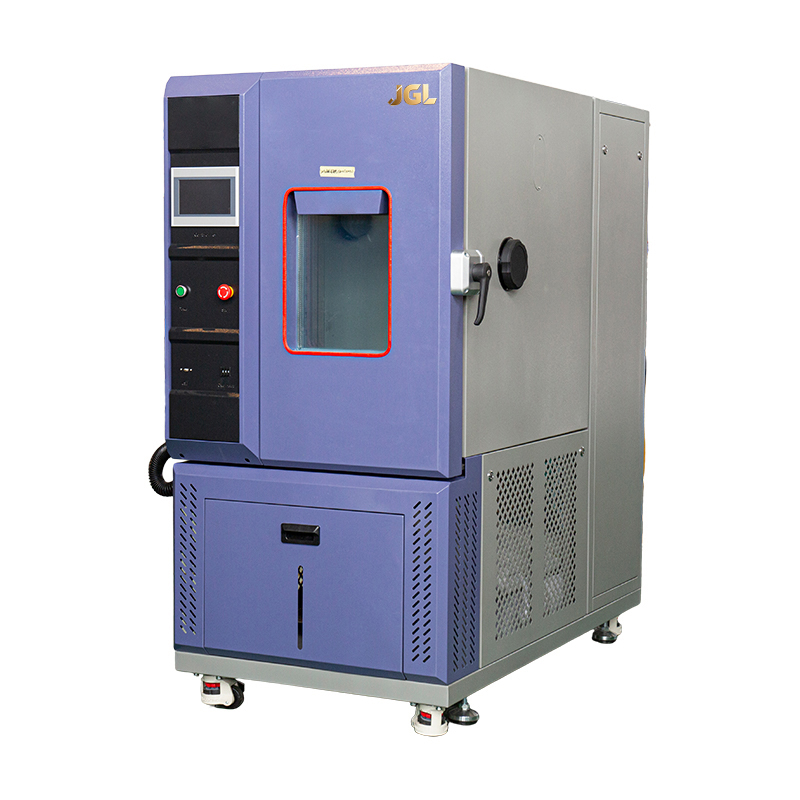
Ambient stability storage also requires tight light protection and vibration control. For OTC products, ambient chambers must simulate worst‑case warehouse conditions. Advanced chambers now integrate dynamic humidity control using solid‑state sensors that eliminate frequent calibration drifts.
Data Integrity, Monitoring Systems, and FDA Compliance
FDA’s 21 CFR Part 211 and data integrity guidance (ALCOA+) demand that all environmental data be attributable, legible, contemporaneous, original, and accurate. Modern FDA compliant test chambers feature electronic signatures, audit trail review, and secure data backup. In 2024, the FDA issued 11 warning letters where inadequate stability chamber monitoring was a major citation — specifically the lack of continuous recording or failure to investigate temperature excursions.
Cloud-based SCADA solutions now allow remote oversight of stability chamber in pharma fleets. Automated reports highlight mean kinetic temperature (MKT) and excursion duration, trending potential failures before they occur. One multi‑national generic manufacturer reduced excursion‑related batch rejections by 58% after deploying real‑time MKT alarming and predictive filter maintenance.
For walk‑in stability rooms, mapping must be repeated every 2 years or after significant structural modifications. Wireless sensor networks with 30‑minute logging intervals and daily report generation satisfy both EU GMP Annex 11 and US FDA expectations.
Designing a Robust Stability Study Protocol: Key Parameters
Before any study, define the number of batches (minimum three primary batches for registration), orientation (upright/inverted), and testing timepoints (0, 3, 6, 9, 12, 18, 24 months). The protocol must specify acceptable deviation limits: typically temperature ≤ ±2°C, RH ≤ ±5% for long‑term, and for accelerated ≤ ±2°C / ±5% RH. Stability testing guidelines also demand that chambers be equipped with a backup system (e.g., CO₂ or LN₂ cooling) for critical products.
- Sampling strategy: Pull samples from different shelf positions to detect potential gradients.
- Hold‑time studies: Evaluate product outside chamber for up to 24 hours during maintenance.
- Excursion management: Use stability indicating methods to re‑test if deviations exceed 48 hours.
An analysis of 60 abbreviated new drug applications (ANDAs) found that 28% of responses involved re‑analysis of stability data due to chamber qualification gaps. Using environmental testing equipment with independent dual sensors and remote alarming reduces these risks significantly.
Best Practices for Maintaining Pharmaceutical Testing Chambers
Preventive maintenance schedules: monthly inspection of door seals, cleaning condenser coils quarterly, and calibration of RH sensors semi‑annually. For stability storage equipment with water reservoirs, weekly checks for biofilm prevent humidity inaccuracies. A 2023 reliability study across 200 chambers indicated that units with predictive filter replacement had 73% fewer unscheduled interventions.
- Alarm test: Perform weekly simulated alarm activation.
- Temperature mapping: Re‑map after any relocation or component replacement.
- Backup power: Test generator/battery every 3 months with full load.
Walk‑in stability rooms also require airflow velocity verification — minimum 0.2 m/s across storage racks. Staff training should emphasize the impact of prolonged door opening; placing product on rolling carts reduces exposure time.
Frequently Asked Questions (FAQ)
Q1: What is the difference between a stability chamber and an environmental chamber?
A stability chamber in pharma is specifically designed for ICH Q1A long-term and accelerated drug stability studies, with tight uniformity (±0.5°C/±3% RH). General environmental chambers may have wider tolerances and lack features like redundant sensors or 21 CFR Part 11 software.
Q2: How often should a walk-in stability room be mapped?
Mapping (temperature/humitude distribution) must be performed at least every 12–24 months, and after any major repair, relocation, or modification of airflow. Some companies re‑map annually to maintain FDA compliant test chambers status.
Q3: Can ambient stability storage replace a dedicated stability chamber?
No. Ambient storage (15–30°C) often lacks active humidity control and monitoring granularity. ICH stability guidelines require documented control within narrow bands (±2°C/±5% RH), which only validated pharmaceutical testing chambers can provide.
Q4: What is the maximum allowed temperature excursion during a stability study?
ICH Q1A states that excursions beyond the specified tolerance should be reported and assessed. Typically, a single excursion of <24h up to ±3°C may be acceptable with justified impact assessment; however, repeated or longer excursions invalidate the study.
Q5: How does humidity affect solid dosage forms in stability chambers?
Excess humidity (>75% RH) can cause tablet deliquescence, hydrolysis of APIs, and microbial growth. Low humidity (<20% RH) leads to cracking of film coatings. Hence, precise control via stability storage equipment is mandatory for drug integrity.
Q6: Are there specific chambers for photostability testing as per ICH Q1B?
Yes. ICH Q1B requires light chambers with combined UV and visible illumination (1.2 million lux hours and 200 watt hours/m²). Many ich stability chambers now integrate full-spectrum lighting with simultaneous environmental control.
PREV:How Precision Humidity Control Chambers Redefine Moisture Resistance Analysis in Advanced Material Testing
NEXT:How Benchtop Environmental Test Chambers Maximize Lab Efficiency Over Traditional Alternatives
NEXT:How Benchtop Environmental Test Chambers Maximize Lab Efficiency Over Traditional Alternatives
Interested in cooperation or have questions?
Featured Products
Related products
Quick Link
Contact Information
- Tel: +86-13861043568
- E-mail: 1840784112@qq.com
- Add: Tianting District, Changzhou City, Jiangsu Province, China, No. 6 Hecircuit
Scan Code
Copyright © JIANGSU BAISHENG INDUSTRIAL CO., LTD.
All Rights Reserved. Privacy Custom Precision Laboratory Testing Equipment Manufacturers
