 English
 Español
NEWS
NEWS
NEWS
NEWS
NEWS
NEWS
NEWS
NEWS
NEWS
NEWS
NEWS
NEWS
NEWS
NEWS
NEWS
NEWS

Industry News
Home / News / Industry News / How MIL-STD-810 Environmental Test Chambers Turn Climatic Stress Into a Reliability Signal
How MIL-STD-810 Environmental Test Chambers Turn Climatic Stress Into a Reliability Signal
Content
- 1 Why Environmental Stress Screening Still Defines Product Reliability Programs
- 2 How MIL-STD-810 Shapes Chamber Requirements
- 3 Chamber Specifications That Actually Matter
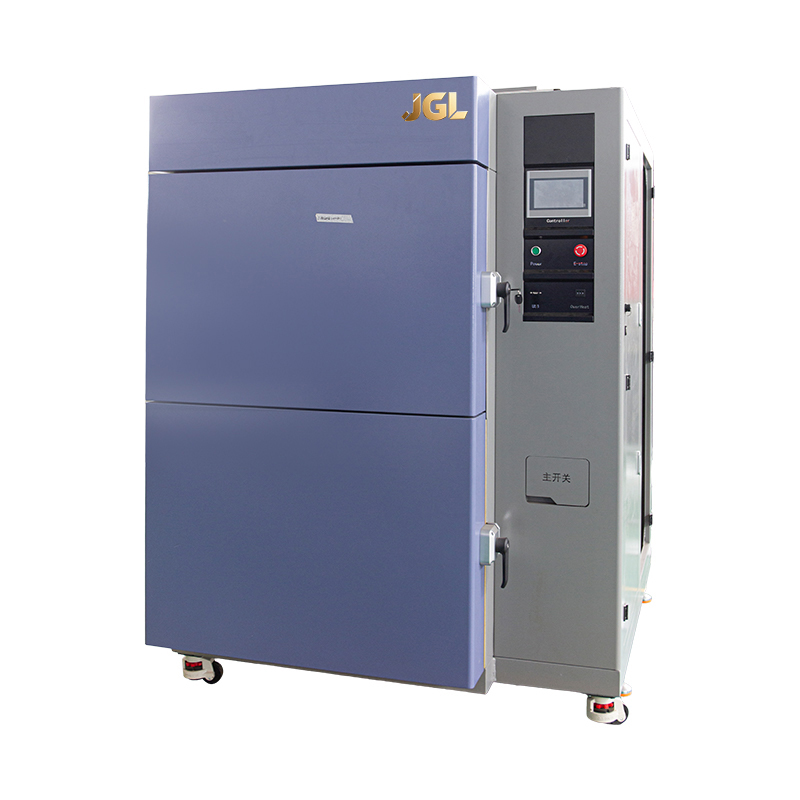
- 4 Standard Thermal Chambers vs Rapid Temperature Change Humidity Chambers
- 5 Designing a Realistic Stress Screening Cycle
- 6 Typical Parameter Ranges Seen in Defense-Grade Screening Programs
- 7 Where ESS Chambers Get Used Beyond the Lab Bench
- 8 Frequently Asked Questions
- 8.0.1 Q1: What is the difference between ESS and environmental qualification testing?
- 8.0.2 Q2: How is ramp rate measured accurately during chamber qualification?
- 8.0.3 Q3: Why does humidity control get harder at temperature extremes?
- 8.0.4 Q4: How many cycles should a stress screening program run?
- 8.0.5 Q5: Can one chamber handle both MIL-STD-810 testing and general QA screening?
- 8.0.6 Q6: How often should chamber calibration be verified once it is in regular use?
Why Environmental Stress Screening Still Defines Product Reliability Programs
Environmental Stress Screening, commonly shortened to ESS, is the practice of exposing a product to controlled thermal and humidity extremes so that latent defects surface before a unit ever reaches a customer. Instead of waiting for field failures, engineering teams compress years of climatic exposure into a matter of hours or days inside environmental test chambers. The logic is straightforward: a weak solder joint, a marginal fastener, or a poorly bonded seal will usually fail faster under repeated thermal cycling than it would sitting quietly on a shelf.
What makes ESS different from ordinary qualification testing is intent. Qualification testing asks whether a design meets a specification. ESS asks whether a specific unit, as built, has a manufacturing flaw. That distinction shapes chamber selection, cycle design, and how test data gets interpreted by a quality team.
The economic case for ESS is straightforward once a program has experienced even one costly field failure. A screening cycle that runs for a few hours and consumes a modest amount of chamber time is inexpensive compared with a warranty claim, a returned shipment, or a mission delay caused by a unit that failed in service. Reliability engineers often describe ESS as buying confidence at wholesale prices, since the cost of finding a defect on the bench is a fraction of the cost of finding it after deployment.
A second reason ESS has remained relevant even as manufacturing quality has generally improved is that modern assemblies pack more components into smaller enclosures, which raises thermal density and reduces the margin for a marginal joint or connector to hide. Compact power supplies, densely populated circuit boards, and multi-material enclosures used in rotomolded transport equipment all respond differently to rapid thermal transitions than a simple, sparsely populated assembly would have decades ago. Screening profiles have had to keep pace with that added complexity.
How MIL-STD-810 Shapes Chamber Requirements
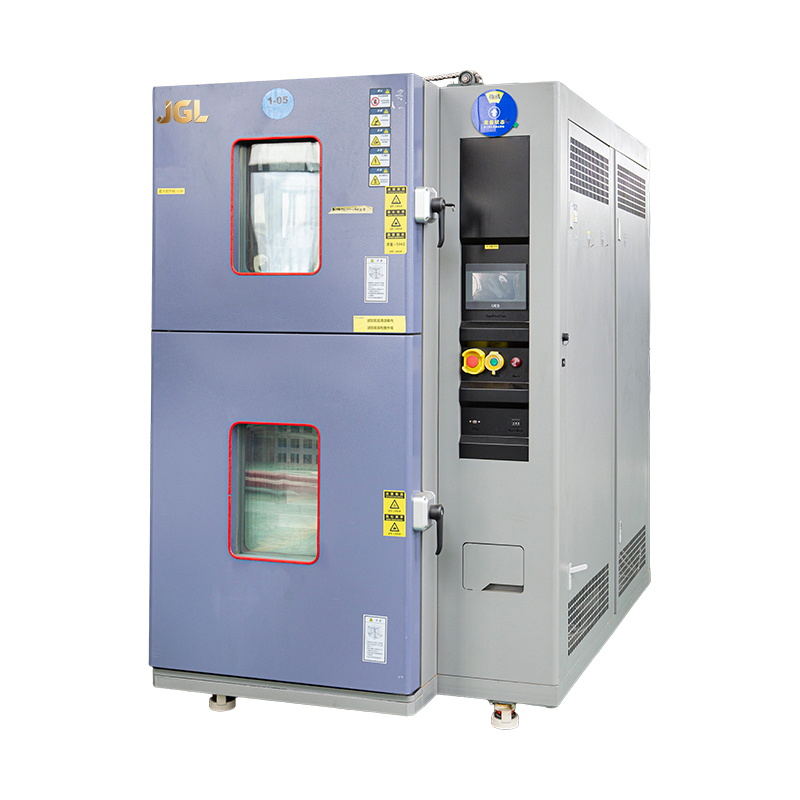
Military and aerospace programs rarely accept a chamber on marketing claims alone. Instead, they reference MIL-STD-810 test methods, which describe how equipment should behave across temperature extremes, humidity cycles, altitude changes, vibration, and shock. A chamber does not become compliant simply by reaching a stated temperature; it must sustain a specified rate of change, hold tolerance across the working volume, and log data in a way that supports an audit trail.
Core Method Groups Referenced in Climatic Testing
- Method 501 and 502 cover high and low temperature storage and operation limits.
- Method 507 addresses humidity cycling, often paired with condensation and dwell phases.
- Method 503 defines temperature shock, where a unit moves between two extremes with minimal transition time.
- Method 520 combines temperature, humidity, altitude, and vibration into a single composite profile.
Because these methods specify behavior rather than a single brand of equipment, procurement teams typically request a data package showing ramp rate curves, uniformity mapping, and calibration certificates traceable to a recognized standard. A chamber that cannot produce this documentation is difficult to defend during a program audit, regardless of how it performs in casual use.
It is worth noting that MIL-STD-810 is deliberately written as a tailoring guide rather than a rigid checklist. Program managers are expected to select the specific methods and procedures relevant to a product's actual life cycle profile, based on where it will be stored, transported, and operated. Applying every method at maximum severity regardless of application is a common misstep among teams new to the standard, and it tends to produce screening results that do not correlate well with actual field experience. A tailored profile, informed by real deployment conditions, gives quality teams a far more meaningful pass or fail threshold.
Documentation requirements extend beyond the chamber itself. Fixtures used to hold a unit under test, the thermocouple placement plan, and the criteria used to judge a functional pass or fail all need to be recorded alongside the raw temperature and humidity trace. Auditors reviewing a completed test report will typically ask for all of these elements together, since a beautifully uniform chamber profile means little if the unit under test was not instrumented correctly.
Chamber Specifications That Actually Matter
Buyers new to climatic testing often over-index on the temperature range printed on a datasheet and under-index on the variables that determine whether a chamber can run a realistic MIL-STD-810 profile day after day. Four specifications deserve close attention.
Ramp Rate and Recovery Time
Ramp rate describes how quickly the chamber moves between temperature setpoints, usually expressed in degrees per minute. A chamber advertised with an impressive average rate may still struggle during recovery after the door opens for load insertion, or during the final ten percent of a large temperature swing where compressors and heaters must work against a shrinking thermal gradient. Requesting a recovery time curve, not just a headline ramp rate, avoids an unpleasant surprise once a test schedule is locked to a delivery date.
Uniformity and Load Effect
A chamber that holds tight tolerance with an empty test volume can behave very differently once a dense metal fixture or a densely packed cold chain container is loaded inside. Airflow shadowing behind large fixtures is a common source of localized hot or cold spots, which is why uniformity mapping should always be performed with a representative load, not an empty chamber.
Humidity Control at Temperature Extremes
Maintaining humidity accuracy near freezing or above eighty degrees Celsius is considerably harder than holding it at room temperature, since the amount of moisture air can carry changes sharply with temperature. This is precisely why a dedicated rapid temperature change humidity test chamber is specified separately from a general purpose thermal chamber, since it needs a humidity generation system engineered to track fast-moving setpoints without lag.
Data Logging and Traceability
Programs governed by military or aerospace quality requirements need continuous data logging with time-stamped setpoint deviation records, not a summary printout at the end of a run. This becomes the paper trail that supports later root-cause analysis if a fielded unit fails and the investigation needs to confirm the original screening profile.
Construction Quality and Insulation
Cabinet construction rarely gets the attention it deserves during procurement discussions, yet it directly determines how consistently a chamber can hit its published specifications over years of continuous use. Panel insulation thickness, door seal design, and the placement of viewing windows all influence how much thermal load the refrigeration and heating systems must fight against just to maintain a steady setpoint. A chamber with thin insulation or a poorly sealed door may pass an acceptance test when new, then drift out of tolerance within a year as seals age and gaskets compress unevenly.
Maintenance access is another practical consideration that is easy to overlook until a compressor needs service in the middle of a test campaign. Chambers designed with awkward access panels or tightly packed mechanical compartments tend to generate longer downtime during routine maintenance, which matters a great deal when a program has a fixed number of test days booked against a delivery schedule.
Standard Thermal Chambers vs Rapid Temperature Change Humidity Chambers
Not every climatic test calls for the same equipment class. The table below summarizes where each chamber type earns its keep on a typical stress screening program.
| Characteristic | Standard Environmental Chamber | Rapid Change Humidity Chamber |
|---|---|---|
| Typical ramp rate | 3 to 5 degrees C per minute | 10 to 15 degrees C per minute |
| Humidity control range | Moderate, often 20 to 90 percent RH | Wide, with tight tracking near extremes |
| Best suited for | Storage and steady-state testing | Thermal shock and combined cycling |
| Typical test methods | 501, 502 | 503, 507, 520 |
| Common industries | Consumer electronics, general QA | Aerospace, defense, cold chain logistics |
A program that only needs steady soak testing rarely benefits from paying for the fastest available ramp rate. Conversely, a composite MIL-STD-810 Method 520 profile is nearly impossible to run correctly on equipment that cannot change temperature and humidity together within a tight window.
Cost and duty cycle should also factor into this decision. Rapid change chambers generally carry a higher capital cost and consume more energy per cycle, since faster temperature transitions require larger compressor capacity and heater output. For a facility running combined cycling profiles daily, that additional cost is quickly justified by throughput. For a facility that occasionally needs a shock test but mostly performs steady humidity or storage testing, renting time on a shared rapid change chamber, or outsourcing that specific test method, is often more economical than purchasing dedicated equipment that sits idle most of the year.
Designing a Realistic Stress Screening Cycle
A well designed ESS cycle mirrors the failure mechanisms a product is likely to encounter, rather than simply chasing the widest possible temperature swing. Overly aggressive profiles waste chamber time and can induce failure modes that would never occur in the field, muddying the quality signal instead of clarifying it.
Each dwell period should be long enough for the core of the unit under test, not just its surface, to reach the setpoint. A common mistake is basing dwell time on chamber air temperature alone, which can indicate stabilization well before an internal assembly with high thermal mass has actually equalized.
Practical Cycle Parameters Worth Documenting
- Number of cycles and total elapsed test time.
- Dwell time at each temperature extreme, tied to thermocouple data on the unit itself.
- Transition time between extremes and whether it matches the qualification profile.
- Humidity setpoints during any combined cycle segments.
- Functional test checkpoints, including which parameters are monitored live versus checked only at cycle completion.
Another practical detail often missed during early planning is fixture design inside the chamber itself. Fixtures need to hold a unit securely without blocking airflow paths that the chamber relies on to maintain uniformity. A fixture built from a material with very different thermal mass than the unit under test can also distort the recorded chamber temperature relative to the actual internal temperature of the product, leading to a dwell time that looks adequate on paper but is not representative of what the unit experienced. Reviewing fixture design alongside the cycle profile, rather than treating them as separate concerns, tends to produce more repeatable results across test campaigns.
Typical Parameter Ranges Seen in Defense-Grade Screening Programs
The figures below are representative ranges drawn from common defense and cold chain screening practice rather than a single mandated specification. They are useful as a sanity check when reviewing a proposed test plan, since a profile that falls far outside these ranges in either direction usually warrants a second look before test time is committed.
Temperature Range
Programs commonly specify continuous operation from minus 55 to plus 125 degrees Celsius, with storage extremes pushed slightly wider than operational limits.
Ramp Rate Target
Fast transition profiles frequently call for average rates in the 10 to 15 degree per minute band across the full working chamber volume, not just at the center point.
Humidity Tolerance
Combined cycling profiles often require humidity accuracy within plus or minus 5 percent relative humidity even while temperature is actively changing.
Cycle Count
Screening programs for cold chain and rotomolded transport equipment frequently run between 10 and 20 full cycles before a unit is considered to have passed stress screening.
A chamber that meets a headline specification in isolation does not guarantee a valid test. Uniformity, recovery time, and load effect together determine whether the recorded profile matches what the standard actually requires.
Where ESS Chambers Get Used Beyond the Lab Bench
Climatic stress screening extends well past aerospace and defense electronics. Cold chain packaging, including rotomolded transport containers, undergoes similar cycling to confirm insulation performance holds up after repeated thermal shock rather than only on day one. Automotive electronics modules, industrial sensors destined for outdoor installation, and telecom equipment bound for uncontrolled rooftop cabinets all rely on comparable test philosophy, even when the governing specification differs from MIL-STD-810.
| Sector | Primary Concern | Typical Test Emphasis |
|---|---|---|
| Aerospace and defense | Mission-critical reliability | Full MIL-STD-810 method suite |
| Cold chain logistics | Insulation and seal integrity | Repeated thermal shock cycling |
| Automotive electronics | Under-hood and cabin extremes | Combined temperature and vibration |
| Outdoor telecom equipment | Uncontrolled field exposure | Humidity cycling and condensation |
Across every one of these sectors, the underlying question is identical: will this unit still function correctly after the climate has had a chance to find its weakest point.
Foldable warehouse storage equipment and rotomolded cold chain containers illustrate this well, since both rely on structural joints, latches, and seals that behave differently in cold, brittle conditions than they do at room temperature. A hinge that folds smoothly during a warehouse floor demonstration can become stiff or crack after repeated exposure to sub-zero storage, which is exactly the kind of failure mode that a properly designed thermal cycling profile is meant to catch before the equipment ships in volume. The same reasoning applies to gasket materials used on cold chain containers, where a seal that performs well at moderate temperature may lose compliance and allow thermal leakage once it has been cycled through a realistic transport profile several times.
Frequently Asked Questions
Q1: What is the difference between ESS and environmental qualification testing?
ESS is a screening step applied to production units to catch manufacturing defects, while qualification testing validates that a design itself meets a specification. ESS profiles are typically shorter and repeated on every unit or a defined sample rate, whereas qualification testing is usually a one-time design validation.
Q2: How is ramp rate measured accurately during chamber qualification?
Ramp rate is measured using calibrated thermocouples placed throughout the working volume, not only near the sensor used for chamber control. Data is logged continuously and the rate is calculated across the steepest linear portion of the transition, since early and late segments of a ramp are naturally slower.
Q3: Why does humidity control get harder at temperature extremes?
Air holds far less moisture as temperature drops, so achieving a stable relative humidity reading near freezing requires very precise control of a very small amount of water vapor. Near high temperature extremes, the opposite challenge appears, since the system must add moisture quickly enough to keep pace with rapidly rising air temperature.
Q4: How many cycles should a stress screening program run?
There is no universal number, since cycle count depends on the failure mechanisms of concern and the reliability target of the program. Many defense and cold chain programs settle in the 10 to 20 cycle range after correlating chamber results with field failure data over time.
Q5: Can one chamber handle both MIL-STD-810 testing and general QA screening?
Some chambers are versatile enough to cover both roles if their ramp rate, uniformity, and humidity control specifications meet the stricter of the two requirements. In practice, many facilities still separate equipment by duty cycle, since a chamber running continuous rapid cycling wears differently than one used mostly for steady-state storage tests.
Q6: How often should chamber calibration be verified once it is in regular use?
Most quality systems call for calibration verification at least annually, though facilities running continuous high-cycle screening programs often schedule interim checks every few months. Any time a chamber has undergone major maintenance, such as compressor replacement or door seal work, a fresh calibration check is generally advisable before resuming formal test campaigns, since even a well intentioned repair can shift uniformity or ramp performance slightly from its previous baseline.
PREV:How Two-Zone Thermal Shock Testing Exposes Solder Joint Fatigue That Slow Ramp Cycling Misses
NEXT:How ECSS-Q-ST-70-02C Outgassing Testing Separates Space-Worthy Materials From the Rest
NEXT:How ECSS-Q-ST-70-02C Outgassing Testing Separates Space-Worthy Materials From the Rest
Interested in cooperation or have questions?
Featured Products
Related products
Quick Link
Contact Information
- Tel: +86-13861043568
- E-mail: 1840784112@qq.com
- Add: Tianting District, Changzhou City, Jiangsu Province, China, No. 6 Hecircuit
Scan Code
Copyright © JIANGSU BAISHENG INDUSTRIAL CO., LTD.
All Rights Reserved. Privacy Custom Precision Laboratory Testing Equipment Manufacturers
