 English
 Español
Introduction to Electrical Insulation Testing
Electrical safety verification relies on two fundamental yet distinct high-voltage methods: the hipot test (dielectric withstand test) and insulation resistance testing. While both assess insulation integrity, their principles, voltage characteristics, measured parameters, and failure interpretations differ substantially. Engineers often confuse these two tests, leading to inappropriate test selection or misdiagnosis of insulation defects. This article provides a comprehensive technical comparison, clarifying when to apply each method, how to interpret results, and common pitfalls to avoid.
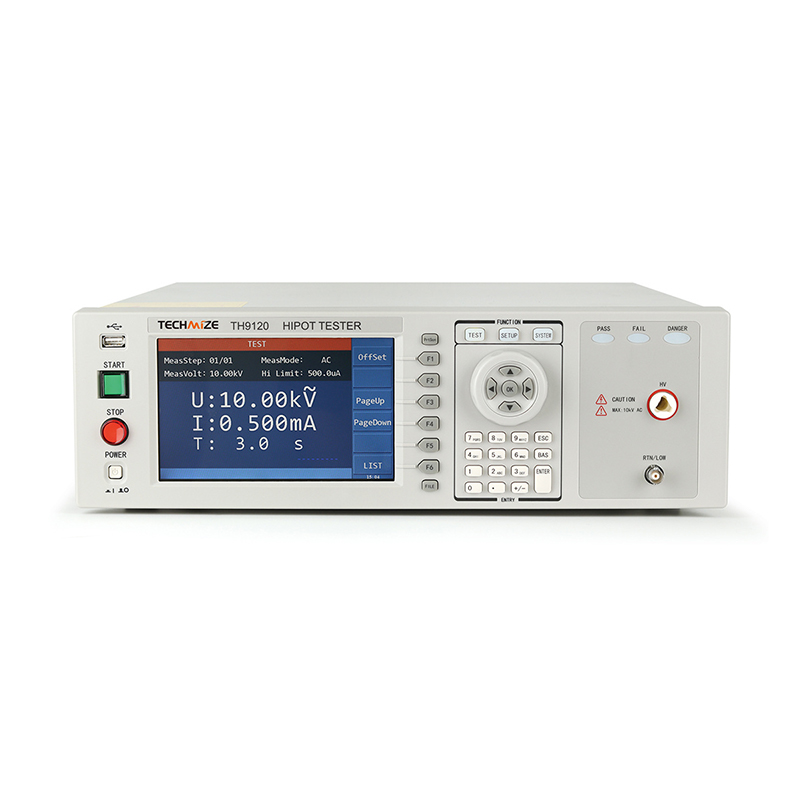
The core distinction lies in the fundamental question each test answers: hipot test determines whether the insulation can withstand a specified overvoltage without dielectric breakdown, measuring leakage current as the pass/fail criterion. Insulation resistance testing evaluates the insulation's resistive quality (typically in megohms) using a lower DC voltage, revealing contamination, moisture, or gradual degradation. A megohmmeter (insulation resistance tester) applies a stable DC voltage, while hipot testers may use AC or DC high voltage. Understanding these nuances prevents catastrophic failures and improves product reliability.
Fundamental Principles: Two Different Approaches to Insulation Quality
What Is a Hipot Test? (Dielectric Withstand Test)
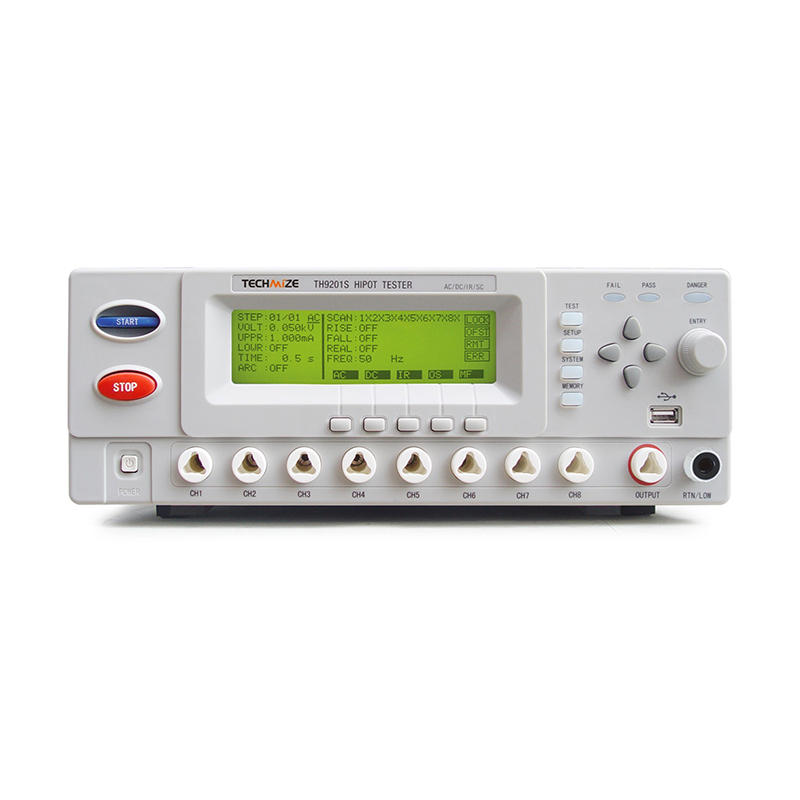
A hipot test applies a high voltage—typically 1000 V + 2× operating voltage for basic insulation, or up to 3000 V for reinforced insulation—between a conductor and ground or between isolated circuits. The test duration usually ranges from 1 to 60 seconds. The tester measures the resulting leakage current that flows through the insulation. If the current exceeds a predefined threshold (e.g., 5 mA or 10 mA depending on standard and product type), the test indicates insufficient insulation or a breakdown path. Hipot testing can be destructive; a genuine dielectric breakdown creates a permanent conduction path, often damaging the device under test.
What Is Insulation Resistance Testing?
Insulation resistance testing uses a megohmmeter to apply a regulated DC voltage (commonly 250 V, 500 V, 1000 V, or 2500 V) and measures the resistance in megohms (MΩ) or gigohms (GΩ). The test is largely non-destructive because current is limited to a few milliamperes. The measured resistance reflects the combined effect of volume resistivity, surface contamination, and moisture absorption. A typical acceptance criterion is 1 MΩ per 1000 V of operating voltage, though many specifications demand >100 MΩ for new equipment. This test excels at detecting gradual insulation deterioration due to aging, dust, humidity, or chemical attack.
Typical insulation resistance for new dry cables/motors
Leakage current trip limit for many hipot tests (Class I equipment)
Insulation resistance decrease per 10°C temperature rise (correction factor)
Key Differences at a Glance: Hipot vs Insulation Resistance
The following table summarizes the technical contrasts between hipot test and insulation resistance measurement. Understanding these parameters avoids misapplication and improves diagnostic accuracy.
Visual Guide: Hipot Test vs Insulation Resistance Workflow
The flowchart below illustrates the decision logic and measurement focus of each test, highlighting where they diverge in practice.
Technical Deep Dive: Voltage, Measurement, and Failure Mechanisms
Voltage Waveform and Stress Effects
Hipot testers often use AC voltage (50/60 Hz) because AC stresses the insulation more rigorously — the voltage alternates polarity, forcing both capacitive and resistive leakage current contributions. AC hipot also reveals clearance/creepage issues that might pass a DC test. However, DC hipot is preferred for high-capacitance loads (e.g., long cables) to avoid charging current issues. In contrast, insulation resistance testing exclusively uses DC, enabling the separation of absorption currents and providing stable resistance readings. For example, a 100-meter power cable will show a continuously decreasing charging current during the first minute; the 60-second reading standardizes the measurement.
Leakage Current Components vs Insulation Resistance Value
During a hipot test, the measured leakage current includes real (resistive) and reactive (capacitive) parts. A sudden current jump indicates ionization or imminent dielectric breakdown. For electrical safety compliance (e.g., IEC 60950, 61010), hipot test thresholds are set between 0.5 mA and 20 mA depending on equipment class. Insulation resistance, however, is the ratio of applied DC voltage to total current after the charging transient decays (typically 60 seconds). A megohmmeter applies a constant voltage and calculates R = V/I. A reading below 1 MΩ per 1000V often warns of severe contamination; values between 2–50 MΩ suggest marginal insulation that requires monitoring.
Real‑world insight: In a 480 V motor rewinding shop, routine insulation resistance tests detected a drop from 200 MΩ to 2.2 MΩ over six months due to absorbed humidity. A subsequent hipot test at 2.2 kV (2× rating + 1000 V) would have passed, but the IR trend predicted early failure. By baking the windings, the plant avoided a costly dielectric breakdown during operation.
Failure Interpretation: Go/No‑Go vs Diagnostic Trend
Hipot testing provides a binary (pass/fail) outcome based on instantaneous leakage current. It detects gross defects like insufficient spacing, pinched wires, or conductive contaminants. Insulation resistance testing offers quantitative trending data: a 30% drop in megohm values over three months indicates progressive degradation. For critical assets (transformers, switchgear, generators), polarization index (PI = 10-minute resistance / 1-minute resistance) and dielectric absorption ratio (DAR) add diagnostic depth. PI values below 1.0 imply severe moisture; above 2.0 indicates good insulation.
Application‑Specific Guidance: When to Use Each Test
- Production line & final safety testing – Mandatory hipot test for every unit (e.g., medical devices, power supplies, appliances) to verify absence of pinholes or assembly flaws. Insulation resistance spot checks supplement but do not replace hipot.
- Periodic maintenance (motors, cables, generators) – Insulation resistance trending with a megohmmeter is preferred because it reveals slow deterioration without stressing the equipment. Hipot is performed only after major repairs or when IR values fall below critical thresholds.
- Commissioning new installations – Both tests are often required: IR confirms clean, dry insulation; hipot ensures dielectric strength meets design margins. Example: for a 15 kV switchgear, the field acceptance test includes a 60‑second IR (≥1000 MΩ) followed by a 1‑minute DC hipot at 45 kV.
- Fault localization after a trip event – First perform insulation resistance to locate the phase with abnormally low MΩ. Use hipot only if a breakdown is suspected but not confirmed, and be prepared for potential destruction.
Data‑Driven Boundaries: Voltage & Threshold Ranges
Typical Hipot Test Levels
- Basic insulation (230V equipment): 1500 V AC, 1 min
- Reinforced insulation: 3000 V AC, 1 min
- DC hipot equivalent: 2120 V DC (×1.414 factor)
- Leakage trip: 5 mA for Class II, 10 mA for Class I
IR Acceptance Criteria (Common)
- New medium voltage cables: >1000 MΩ
- Motor windings (≥1 kV rated): >100 MΩ at 40°C
- Low voltage panels: >2 MΩ per 1000 V of rating
- Polarization Index (PI) >2.0 → excellent
Common Misconceptions and Technical Pitfalls
- Myth: “Insulation resistance testing also checks dielectric strength.” – False. IR uses low current, while hipot imposes high voltage with significant fault energy. A high MΩ value does not guarantee that the insulation can withstand a transient overvoltage without dielectric breakdown.
- Myth: “Hipot test replaces insulation resistance checks.” – Not true. Hipot is too coarse for trending; small IR changes (from 200 MΩ to 50 MΩ) may still pass hipot, yet signal critical degradation.
- Mistake: Using AC hipot on high‑capacitance loads without compensation. – Charging current can mask true leakage. Switch to DC hipot or use a tester with capacitive cancellation.
- Mistake: Not applying temperature/humidity correction to IR readings. – Insulation resistance halves for every 10°C rise above 20°C. Always correct or reference to standard conditions.
Pro tip: For best practice, use a megohmmeter for routine preventive maintenance (quarterly IR tests) and schedule a hipot test only after major overhauls or when IR falls below 50% of baseline. This combination maximizes safety without unnecessary destructive stress.
Frequently Asked Questions (FAQ)
Q1: Can a hipot test damage good insulation?
Yes, although modern hipot testers limit current, applying voltage well above the working voltage can accelerate aging or cause partial discharge. That’s why hipot is considered a "go/no‑go" test, not a frequent maintenance tool. For routine checks, rely on insulation resistance tests.
Q2: Which test detects moisture ingress more effectively?
Insulation resistance testing with a megohmmeter is extremely sensitive to moisture. A drop from hundreds of MΩ to a few MΩ is a clear indicator. Hipot may pass if the moisture path doesn’t create immediate breakdown, but it is not designed for moisture trending.
Q3: Do I need both tests for IEC or UL compliance?
Most product safety standards (IEC 62368-1, UL 60950) mandate a hipot test for production line dielectric strength verification. Insulation resistance is often required as a design or type test, and for field maintenance. Always consult the relevant standard for your equipment class.
Q4: What is a typical leakage current limit during hipot?
Limits vary: 0.5 mA for medical devices (IEC 60601), 5 mA for Class II appliances, and up to 20 mA for industrial motor drives. The value is set to avoid nuisance failures while catching true defects.
Q5: How often should I perform insulation resistance testing?
For motors, cables, and switchgear, annual IR testing is typical. In harsh environments (high humidity, dust, chemicals), quarterly tests are recommended. Track the 60‑second value and polarization index over time.
Q6: Is it safe to touch the device after a hipot test?
Modern safety testers include automatic discharge circuits. However, always verify zero voltage before touching. Capacitive devices (long cables, large motors) can retain dangerous charge for minutes. Follow lockout/tagout procedures.
Conclusion: Leveraging Both Tests for Robust Electrical Safety
Understanding the difference between hipot test and insulation resistance measurement is essential for any reliability or safety engineer. Hipot testing validates dielectric strength under overvoltage conditions and is mandatory for production safety compliance, while insulation resistance testing with a megohmmeter provides early warning of gradual insulation decay. Neither can fully replace the other; a comprehensive insulation assessment program uses both at appropriate intervals. Use the detailed comparison in this article to select the right method for your application, interpret results correctly, and ultimately prevent electrical failures, downtime, and safety hazards.