 English
 Español

NEWS
NEWS
NEWS
NEWS
NEWS
NEWS
NEWS
NEWS
NEWS
NEWS
NEWS
NEWS
NEWS
NEWS
NEWS
NEWS

Industry News
Home / News / Industry News / Proper Transportation and Placement of Temperature & Humidity Test Chamber
Proper Transportation and Placement of Temperature & Humidity Test Chamber
This document outlines the essential handling, transportation, and site placement specifications for industrial temperature and humidity test chambers to ensure operational longevity and measurement accuracy.
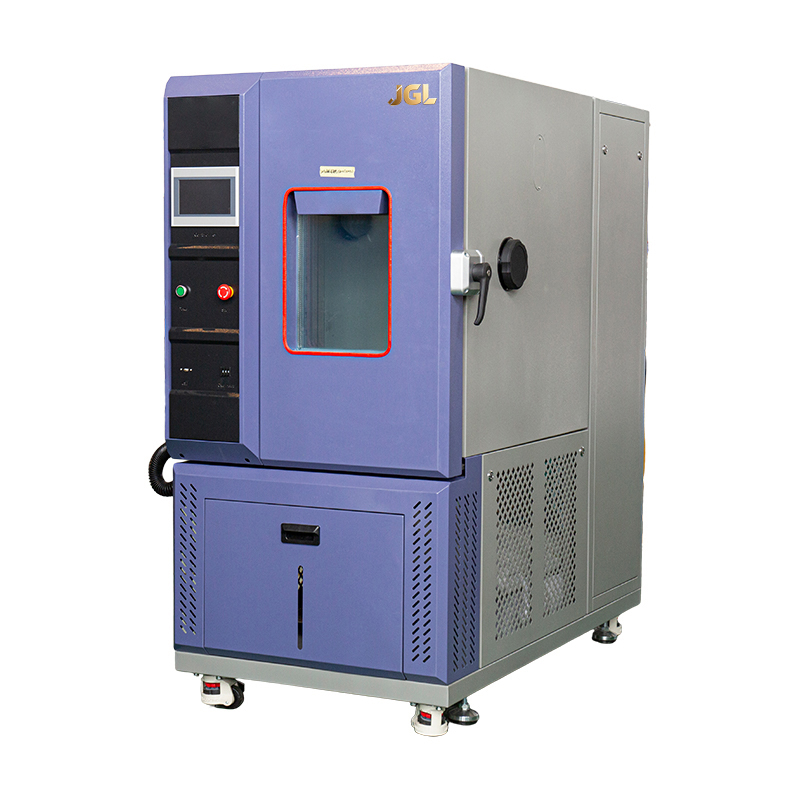
I. Handling and Transportation
- When moving the chamber, lift it by the base feet. Do not apply force on the door handle, and never drag it on the ground.
- The maximum tilting angle of the chamber shall not exceed 15°. Do not invert or lay it horizontally, otherwise the compressor may be damaged, or refrigeration oil inside the compressor may flow into the refrigeration pipeline, impairing cooling performance and likely causing the compressor suspension spring to detach.
- Protect the unit against collision, severe vibration, rain and water immersion during transit.
II. Placement Requirements
- Install the temperature & humidity test chamber away from heat sources and direct sunlight. The chamber exchanges heat with ambient air during operation and dissipates heat via the condenser. Higher ambient temperature slows down heat dissipation, raising power consumption and degrading cooling performance.
- Locate the chamber in a low-humidity area. Its enclosure, condenser, compressor and other components are made of metal. Excessively humid air will cause rusting and shorten the service life of the chamber. In addition, a humid and hot environment may lead to condensation on the chamber surface and affect equipment performance.
- Place it in a well-ventilated location. Cluttered surroundings or placement too close to walls will hinder heat dissipation and compromise cooling capacity.
- Set it on a flat, solid floor and keep the compressor level. This is required for safety; it also enables smooth compressor operation and reduces vibration and noise.
- Do not install it in areas with extremely low ambient temperature, as low temperature will make the compressor hard to start.
- Do not place the chamber in an environment with flammable, explosive or corrosive substances.
Contact Us
For professional technical support, installation guidance, or custom inquiry requirements regarding environmental testing equipment, please connect with our technical service team.
PREV:Similarities and Differences between Temperature-Humidity Alternating Test Chamber and High-Low Temperature Test Chamber
NEXT:Environmental Simulation Testing: Chamber Selection, Specs and Test Standards
NEXT:Environmental Simulation Testing: Chamber Selection, Specs and Test Standards
Interested in cooperation or have questions?
Featured Products
Related products
Quick Link
Contact Information
- Tel: +86-13861043568
- E-mail: 1840784112@qq.com
- Add: Tianting District, Changzhou City, Jiangsu Province, China, No. 6 Hecircuit
Scan Code
Copyright © JIANGSU BAISHENG INDUSTRIAL CO., LTD.
All Rights Reserved. Privacy Custom Precision Laboratory Testing Equipment Manufacturers
